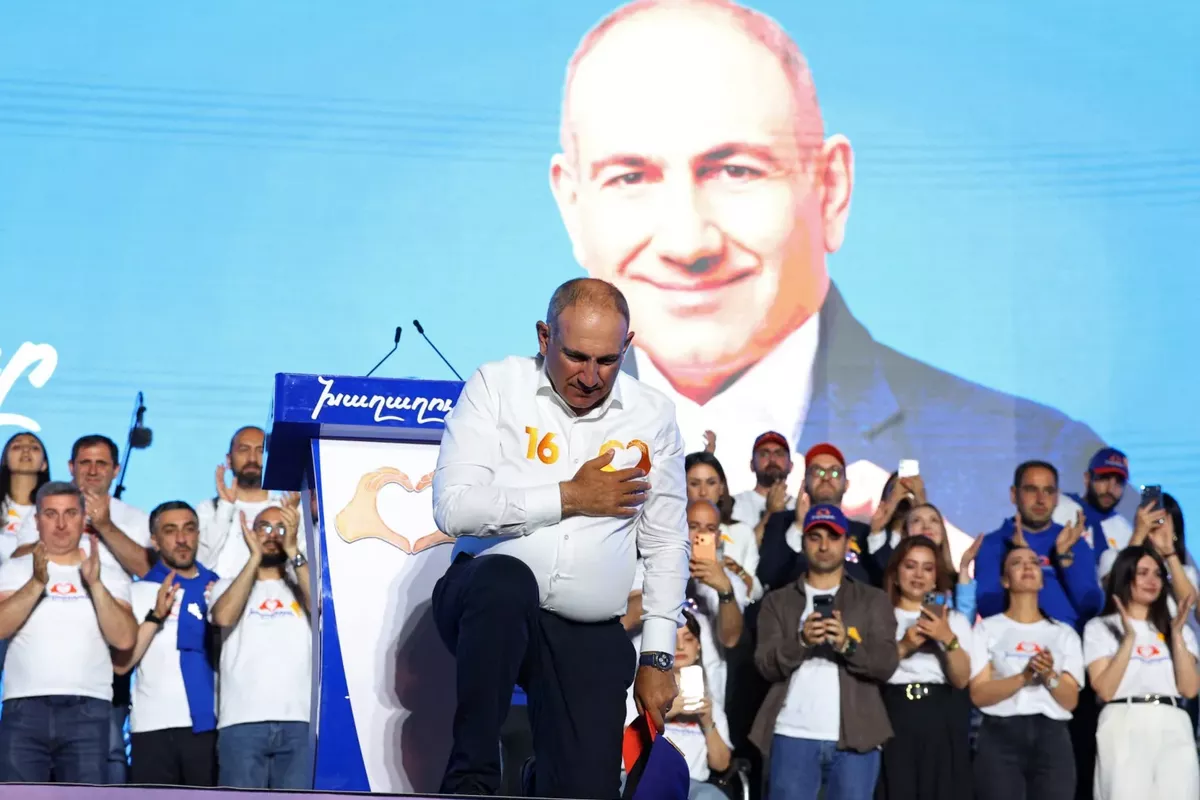
Armenian Prime Minister Nikol Pashinyan’s latest election victory may become one of the most consequential political moments in Armenia’s post-Soviet history. His Civil Contract party has secured a renewed mandate at a time when Armenia is no longer simply debating domestic reforms, economic policy, or the future of its political institutions. The real question is far larger: will Armenia finally complete its strategic break with Russia, or will it continue attempting to balance between Moscow and the West?
The answer is becoming increasingly difficult to postpone.
The symbolism of the moment is striking. US President Donald Trump congratulated Pashinyan on what he described as a decisive election victory, presenting the result as a mandate for Armenia’s new direction. At almost the same time, Moscow delivered a very different message: Yerevan must clarify its future in Russian-led structures, particularly the Russian-led Collective Security Treaty Organisation (CSTO) and the Eurasian Economic Union (EAEU). In other words, Washington sees Pashinyan’s victory as a political opportunity, while Moscow views it as a strategic warning sign.
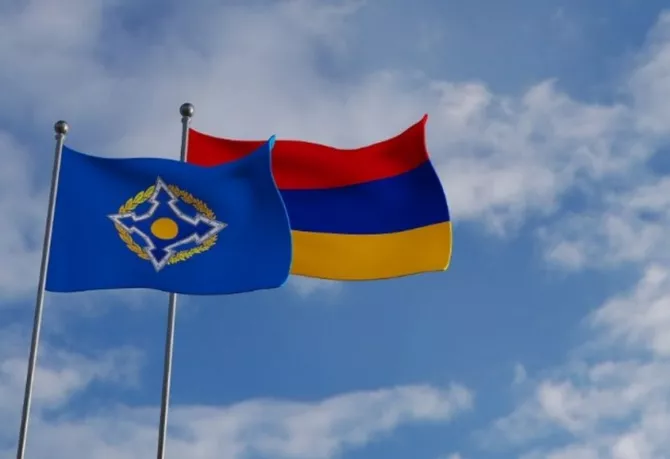
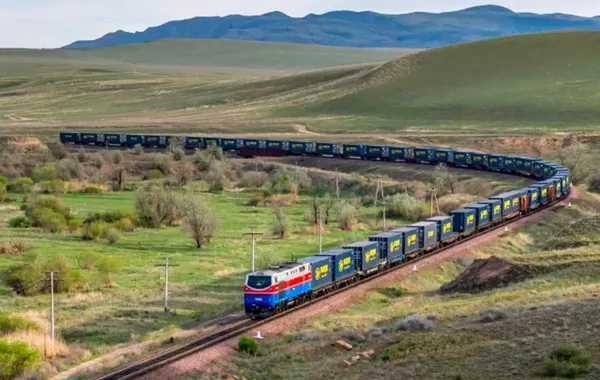
Source: Shutterstock For years, Armenia tried to live in two geopolitical realities at once. It relied on Russia for security guarantees, energy, trade, and labour migration, while increasingly turning to the European Union and the United States for political support, institutional reform, and a more independent foreign policy. That formula worked as long as Moscow’s dominance in the South Caucasus remained uncontested. But the war in Ukraine, Russia’s weakening regional leverage, and the dramatic changes following Azerbaijan’s restoration of sovereignty over Karabakh have fundamentally altered the environment.
Pashinyan’s political survival after the 2023 events is itself remarkable. Many expected the loss of Karabakh to end his political career. Instead, he managed to reframe Armenia’s strategic defeat as the beginning of a new national course: one based less on historical grievance and more on state survival, normalisation, and diversification. His message to voters was clear: Armenia cannot remain trapped in an outdated security architecture that failed to protect it. Whether one agrees with Pashinyan or not, the argument resonated with a significant part of Armenian society.
This is precisely why Moscow is alarmed. Russia is not only losing a friendly government; it is losing the underlying logic through which it has long exercised influence over Armenia. For decades, Armenia’s dependence on Russia was built on several pillars: a Russian military presence, membership in the CSTO, economic integration through the EAEU, cheap energy supplies, access to the Russian labour market, and the influence of pro-Moscow political networks inside Armenia. Pashinyan has not dismantled all of these pillars, but he has weakened the psychological foundation that sustained them.
The most important shift is that many Armenians no longer see Russia as a reliable security guarantor. The CSTO’s failure, or unwillingness, to intervene in moments of crisis created deep resentment in Yerevan. Armenia froze its participation in the bloc and began developing security ties with Western partners. For Moscow, this is not a technical disagreement; it is a direct challenge to the entire post-Soviet security system. If Armenia can openly question the CSTO and still remain politically stable, other states may draw similar conclusions.
Yet Armenia’s westward turn carries serious risks. Pashinyan has won an election, but he has not changed geography. Armenia remains a small, landlocked country surrounded by Türkiye, Azerbaijan, Georgia, and Iran. Its borders, trade routes, and energy security are not abstract concepts but matters of daily survival. Russia still retains instruments of pressure, particularly in energy, trade, migration, and information influence. Moscow may not be able to easily reverse Armenia’s political trajectory, but it can make that course costly.
The economic dimension is particularly sensitive. Armenia’s trade dependence on Russia remains significant, and any disruption could affect businesses, households, and state finances. If Yerevan moves too quickly towards EU integration while remaining within the EAEU, it will face legal and political contradictions. Moscow is already arguing that Armenia cannot move towards the European Union while remaining fully integrated into Russian-led economic structures. Sooner or later, Yerevan may be forced to choose.
This choice will not be purely ideological; it will also be social. Many Armenian citizens work in Russia, many families depend on remittances, and many businesses are tied to the Russian market. A sharp break could generate economic pain that Pashinyan’s opponents would immediately exploit. The pro-Russian camp may have lost the election, but it has not disappeared. If Western support remains largely symbolic rather than practical, public enthusiasm for a European path could weaken.
That is why the United States and the European Union now face a test of seriousness. Congratulating Pashinyan is easy; helping Armenia manage the costs of diversification is far more difficult. If the West wants Armenia to move out of Moscow’s orbit, it must offer more than political statements. It must provide investment, infrastructure support, market access, security cooperation, and assistance in building resilient institutions. Otherwise, Armenia risks becoming exposed: too independent for Moscow’s comfort, but not yet protected by the West.
For Azerbaijan, these developments require careful reading. A reduced Russian role in Armenia could open new opportunities for a peace agreement, border delimitation, and regional connectivity. Pashinyan’s victory may strengthen the camp in Yerevan that understands the need for pragmatic normalisation with Baku and Ankara. His “Crossroads of Peace” narrative depends on open borders and transport routes, not prolonged confrontation. In this sense, Armenia’s gradual break from old dependencies could support a more stable South Caucasus.
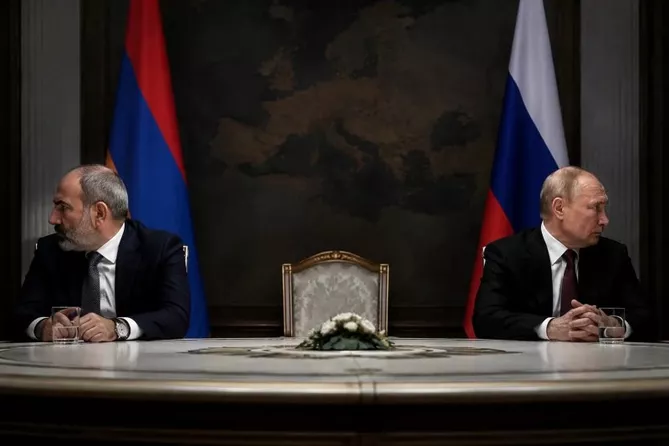
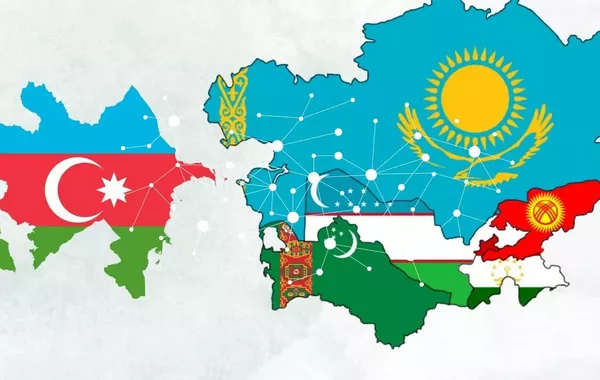
Source: AI-generated But there is also a risk. If Moscow feels it is losing Armenia, it may seek to complicate the peace process, encourage internal instability, or support forces opposed to normalisation. The South Caucasus has often been shaped not only by local interests but also by external powers seeking to preserve influence. Russia’s pressure on Armenia may therefore become a regional issue, not just an Armenian one.
Pashinyan’s victory does not mean Armenia has already left Russia’s orbit. It means Armenia has voted to continue the process of leaving it. That distinction matters. The final break with Moscow will not happen through one election, one speech, or one Western congratulatory message. It will be a long, difficult, and risky transformation involving security, economics, identity, and diplomacy.
The real question is whether Armenia has the capacity, and whether the West has the will, to make this transformation sustainable. Pashinyan has received a mandate. Now he must turn geopolitical ambition into state strategy. Moscow will not make that easy. And the South Caucasus will feel the consequences.