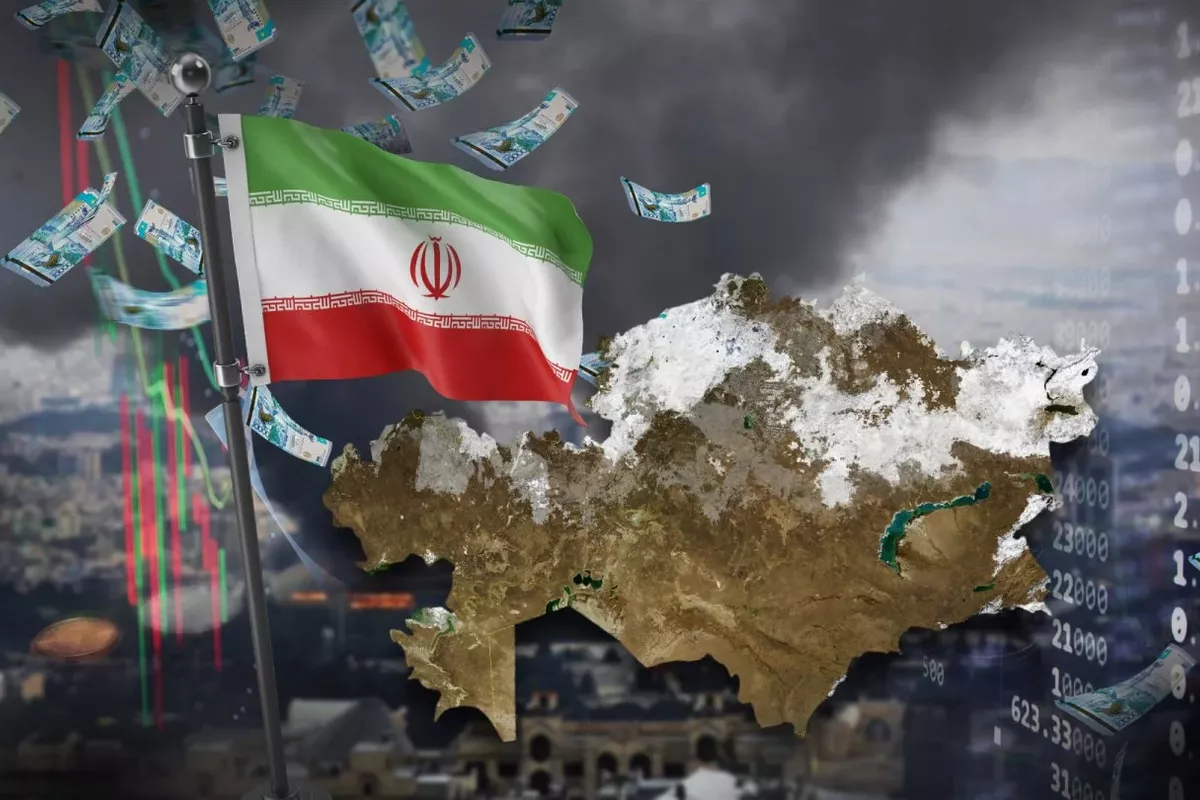
The escalation of the US and Israeli conflict against Iran is already spreading beyond the Persian Gulf, raising alarms across neighboring regions. For Central Asian countries and Kazakhstan, this is more than just headlines: growing instability could impact energy markets, disrupt trade routes, trigger migration flows, affect regional security, and intensify pressures on the foreign policies of these nations.
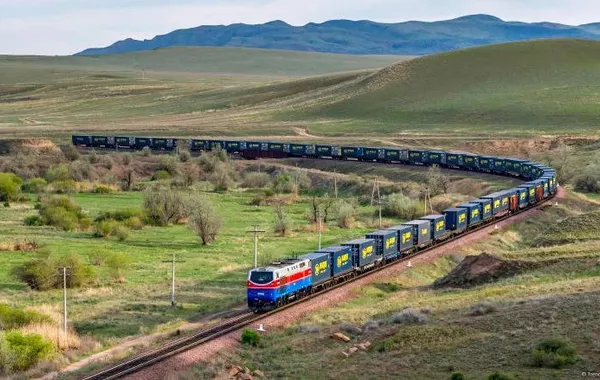
Kazakh political analyst Askar Nursha said that the primary impact of the conflict on Central Asian countries will be economic. Further escalation could disrupt supply chains and affect the transport corridor linking Central Asia to the South Caucasus and beyond, The Caspian Post reports via Kazakh media.
“But it is not in our interest for the conflict to drag on,” the analyst noted. “In a second phase, Iran could turn its attention to American economic and oil assets-even here in Kazakhstan. At the same time, Iran may rely on support from Russia-including food supplies and other resources-under a lend-lease arrangement.” He was referring to the military assistance program under which a state provides allies with weapons, equipment, and materials for temporary use, to be returned or paid for later.
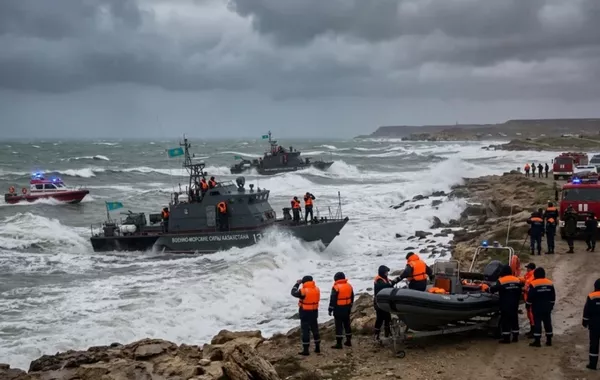
In this scenario, the expert warns, there is a risk that the Caspian Sea could become a target for missile strikes by American and Israeli air forces.
“What does this mean for us? Remember how long it took to adjust when supply chains were disrupted at the start of the Ukrainian conflict? The same risk applies here. Our alternatives-like Trans-Caspian exports, the Middle Corridor, and transporting our oil to Baku or Makhachkala, along with the ports and all our investments-could be temporarily put on hold,” he explained.
In such a scenario, he believes, Kazakhstan would find itself in a more vulnerable position.
“Under these conditions, our dependence on exports through Russia and China will increase. Considering the broader situation in Eurasia and ongoing conflicts involving Russia, this will effectively strengthen China’s influence in the region,” Nursha concluded.
The second factor, the expert notes, is the oil market. Some forecasts suggest that oil prices could surge. He also highlighted that regional countries have been actively promoting the southern trade corridor through Afghanistan and Iran.
“If the conflict continues and Afghanistan becomes drawn into its orbit, we may have to put on hold our railway construction projects through Afghanistan and our plans to export via Iranian infrastructure for some time. Overall, this would not be favorable for us,” he warned.
At the same time, Nursha allows for a more optimistic long-term scenario.
“If a leadership comes to power in Iran that sees conflict with the United States as disadvantageous-if this government is less religious and moves toward greater secularism-then we could see an opportunity for the lifting of American sanctions on Iran,” he noted.
It has been the sanctions over the past decades that have held back the region’s trade with Iran.
“Due to American sanctions, trade between Central Asian countries and Iran has never reached its full potential-over the past 30 years, it has been severely limited. If relations between Iran and the United States eventually improve, we stand to gain, as all trade routes through Iran could finally open,” he explained.
Dosym Satpaev also notes that prolonged destabilization in Iran could pose serious challenges for Kazakhstan.
“Any disruption of the North-South corridor threatens transport and logistics routes and could undermine years of Kazakhstan’s efforts to gain access to Persian Gulf ports,” he warned.
The instability will also affect aviation. Kazakh airlines may once again have to reroute flights to avoid Iranian airspace, increasing travel time and costs. In addition, the country risks losing a key market for wheat and barley exports.
Like his colleague, Satpaev also highlights the geopolitical risks in the Caspian Sea region, especially if tensions rise between Iran and Azerbaijan. The ethnic Azerbaijani population, concentrated in northwestern Iran, numbers between 25 and 35 million. Any significant destabilization could trigger humanitarian and social consequences, migration flows, and increased interethnic conflicts.
In the short term, the expert believes, Kazakhstan could benefit from disruptions in Iranian oil supplies, for example, due to closures at the Strait of Hormuz. Supply challenges affecting the Chinese market could increase Kazakhstan’s appeal as an alternative oil supplier to China.
“The Atasu-Alashankou pipeline, which runs to China’s Xinjiang, has a capacity of about 10 million tons per year but is not operating at full load. In 2025, only one million tons of Kazakh oil were exported to China through it. Notably, late last year, following a reduction in the Caspian Pipeline Consortium’s export capacity due to Ukrainian drone attacks, 50,000 tons of oil from the Kashagan field were redirected through the Atasu-Alashankou pipeline for the first time,” clarified Satpaev.
However, the political analyst warns that any benefit from rising oil prices may be short-lived.
“If Venezuelan oil supplies increase in 2026, or if the situation in Iran stabilizes and sanctions are lifted, oil prices could drop. That would be highly disadvantageous for Kazakhstan,” he warned.
At the same time, Satpaev notes that stability and the lifting of sanctions could open new economic opportunities. A rapid stabilization would allow Kazakhstan to better leverage the transport and logistics route connecting Kazakhstan, Iran, and Turkmenistan, utilize Iranian ports, and access the Iranian market with Kazakh products.
Authorities in Kazakhstan have moved to a heightened state of readiness due to escalating tensions in the Middle East. Kazakh President Kassym-Jomart Tokayev has instructed officials to prepare an emergency action plan to address potential risks and threats to national stability.