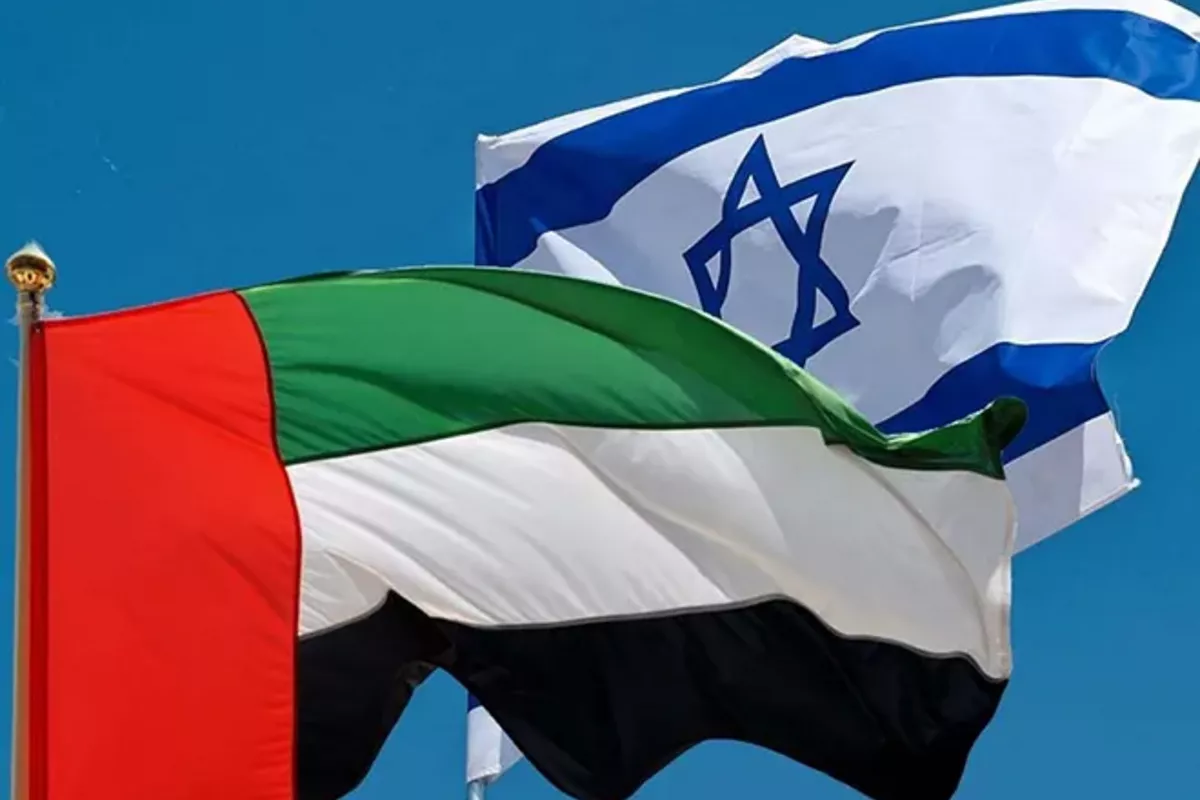
Amid the US-Israeli confrontation with Iran, striking details are emerging about the military and political interaction between Israel and the UAE. More and more information is surfacing about the behind-the-scenes activities of the two countries’ intelligence services and political leaders. It appears that, over time, the world may witness closer cooperation between the Jewish state and Arab countries in confronting a common threat.
After the outbreak of the war in Gaza in 2023, it became difficult for the Emirates to advance the cooperation with Israel that had initially developed so successfully. In this context, Abu Dhabi was forced to suspend diplomatic relations with the Jewish state. At the same time, Hamas itself, as an extremist organisation, is not held in high regard in Abu Dhabi. The Emirates support the rise to power in Gaza of alternative forces within the framework of the peace plan proposed by US President Donald Trump and the Peace Council. Nevertheless, the UAE sharply condemned the killing of Hamas leaders in Qatar, calling the strike on Doha “cowardly”.
However, this did not affect the Emirates’ commitment to peace and the fight against radicalism. The war launched in March 2026 by the United States and Israel against Iran, which seized three strategically important islands from the UAE in 1971, brought relations between the two countries back onto their previous track. A common enemy in the form of the Islamic Republic of Iran united Abu Dhabi and Jerusalem.
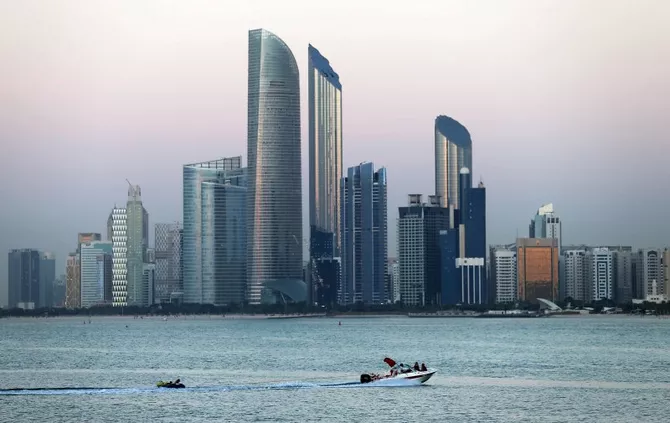
Source: Reuters
During the March war, a great deal of information appeared in the media suggesting that the UAE had become almost the main hawk of the anti-Iranian campaign in the Persian Gulf. Emirati experts called for Iran to be punished. At the official level, Abu Dhabi’s anti-Iranian stance was especially evident in the statements of Anwar Gargash, a diplomatic adviser to the UAE president. He regards Iran as the main threat to regional security and as an unmistakable aggressor.
In late April, Gargash stated: “Iran behaves like a superpower even without nuclear weapons. Imagine if it had them.” Following the ceasefire announced by Trump, the Emirati official, speaking at a session organised by the Dubai Press Club, expressed bewilderment over the position of a number of Arab countries and described the behaviour of the Arab League as “weak”.
Regarding Tehran, he was unequivocal: Iran is the UAE’s main enemy.
“We are fully aware of the position of many Arab societies, which consider Israel the main enemy, but in the Gulf states it may be different. It was Iran that attacked the countries located here with thousands of missiles and drones, and for this reason we do not trust it and consider it our main enemy,” Gargash said.
Although the leaders of Saudi Arabia, Qatar, Kuwait and other regional countries that were hit by Iran sharply criticised the authorities in Tehran, they were far from presenting Israel in a positive light. This points to a serious shift in the Emirates’ position.
It should be noted that the UAE’s grievances are directed not only at Iran, but also at Arab countries. For example, the UAE and Saudi Arabia support different sides in the conflict in Yemen, despite the common threat posed by the Houthis. The UAE supports the Southern Transitional Council, while Saudi Arabia backs Yemen’s government. In Sudan, the Emirates support the Rapid Support Forces against the army, which is backed by the Saudis and Türkiye. In Somalia, Türkiye, Saudi Arabia and many Eastern countries support the official authorities, while the UAE backs Somaliland, which was recently recognised by Israel.
Thus, Abu Dhabi’s interests largely coincide with Jerusalem’s position. In addition, Abu Dhabi’s withdrawal from OPEC and OPEC+, as well as threats that it may eventually leave the Organisation of Islamic Cooperation, indicate a sharp shift in the foreign policy direction of the Emirates. The UAE is clearly gravitating towards Israel, seeing it as a reliable and promising partner in innovation and advanced military technologies. Abu Dhabi has realised that, after Iranian threats, it cannot rely on Islamic solidarity.
Against this backdrop, a highly revealing development was the statement posted by the office of Israeli Prime Minister Benjamin Netanyahu on X, saying that “at the height of the war” against Iran, he secretly visited the UAE and met with the country’s president, Sheikh Mohammed bin Zayed Al Nahyan.
“The visit led to a historic breakthrough in relations between Israel and the UAE,” the statement said.
As expected, the UAE Foreign Ministry denied the report. It said that “any claims of unscheduled visits or undisclosed arrangements are completely unfounded unless officially confirmed by the UAE authorities”. Clearly, this is merely an excuse. Most likely, the leak was intended to emphasise that the Emirates are not alone in their confrontation with Tehran.
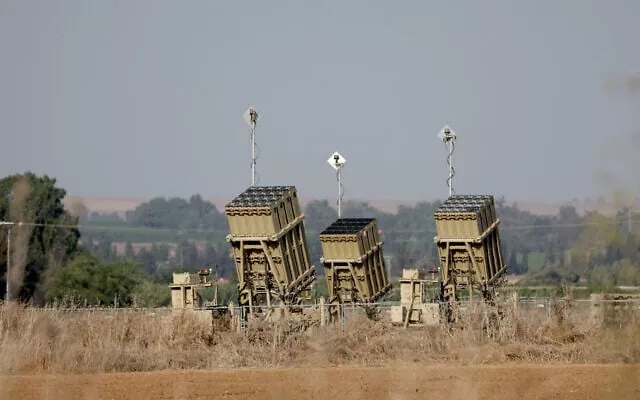
Axios reported in late April that, in early March, Israel sent an Iron Dome air defence battery to the UAE together with maintenance personnel. This information was also confirmed by US Ambassador to Israel Mike Huckabee.
As for contacts at the intelligence level, Mossad Director David Barnea visited the UAE twice - in March and April - as did the new head of Shin Bet, David Zini. According to The Wall Street Journal, the UAE secretly carried out strikes against Iran at the moment the ceasefire was announced in April. The Iranian refinery on Lavan Island reportedly came under attack. According to Bloomberg, the UAE coordinated its military manoeuvres with Israel.
Source: AFP
The US news platform Axios wrote in a report dated 26 April that, during the war, cooperation between Israel and the UAE in the military and intelligence spheres reached its highest level.
US Ambassador to Israel Mike Huckabee confirmed that, during the war, Israel sent Iron Dome batteries and military personnel to the UAE. The strengthening of the Emirati-Israeli partnership is also evidenced by the visit to Abu Dhabi by the Chief of the General Staff of the Israel Defense Forces, Lieutenant General Eyal Zamir, who met with senior UAE officials, including the country’s president, Sheikh Mohammed bin Zayed. This was reported by Kan, citing its own sources.
These developments provoked the expected reaction from Iranian Foreign Minister Abbas Araghchi, who wrote on X that Tehran intends to hold accountable those countries that act in collusion with Israel against the Islamic Republic. According to him, “Netanyahu publicly revealed what Iranian security services had long since reported” to Iran’s leadership.
However, it is not only the UAE that opposes Iran’s aggressive policy. According to Reuters, Saudi Arabia secretly carried out numerous strikes against Iran in response to attacks from Tehran. This happened during the most intense phase of the conflict in the Middle East.
Thus, the irrational policy of the ayatollah regime has laid the foundation for new blocs and alliances and accelerated the process of reshaping the entire Middle East region.