In 1967, Israel defeated Egypt in Just Six Days. Could Israel do the Same with Turkey? - Egyptian President Gamal Abdel Nasser made no secret of his views toward Israel. “We want a decisive battle in order to annihilate that germ, Israel,” he declared in July 1959.
The following year, Radio Cairo broadcast: “We are getting ready for the decisive battle, and, at the right moment, we will strike with power and with speed.”
As Syrian terror threatened to upstage Nasser in the mid-1960s, the Egyptian leader doubled down on his anti-Israel rhetoric and theatrics.
In March 1965, two years before Israel occupied the West Bank and Gaza, Nasser declared, “We shall not enter Palestine with its soil covered in sand, we shall enter it with its soil saturated in blood.” “We aim at the destruction of the State of Israel. The immediate aim: perfection of Arab military might. The national aim: the eradication of Israel,” Nasser explained eight months later.
When Nasser later closed the Straits of Tiran and Suez Canal to Israeli shipping and mobilized his army, the Israelis understood his threat was not only rhetorical.
Historians and lawyers debate the meaning of imminence, but existence should not be an academic problem or the subject of a “what went wrong” after-action study. Israel’s enemies have always had strategic depth.
Egypt is about 40 times Israel’s surface area. At its narrowest point, Israel is less than nine miles wide.
Today, history repeats. As Turkish President Recep Tayyip Erdoğan seeks to distract from economic failure and political unease at home and claim a leadership mantle abroad, he has repeated Nasser’s strategy of ramping up attacks on Israel.
Like Nasser, he has matched his rhetoric with a military build-up. Today, Erdoğan openly threatens war.
The Türkiye Threat
He has threatened to enter Israel just as Türkiye had in Nagorno-Karabakh.
Ultimately, Azerbaijani forces backed by Türkiye ethnically cleansed the entire population, beheading the few who chose to remain behind in their homes.
In April 2026, Türkiye began a “soft” blockade by demanding that ships docking in its ports have no connection with Israel. On April 10, 2026, Erdoğan’s government indicted Israeli Prime Minister Benjamin Netanyahu for intercepting a flotilla seeking to supply Hamas, demanding more than 4,500-years in prison.
Behind-the-scenes, Türkiye not only seeks to enhance Syria’s capability to attack Israel but has also replaced Iran as a lifeline to Hezbollah, according to defense and intelligence professionals from multiple countries in the region.
Türkiye’s drone factories churn out weaponry that could overwhelm Israeli defenses. A potential Trump administration sale of F-35 Joint Strike Fighters to Türkiye could erode Israel’s qualitative edge. Meanwhile, the likelihood that Türkiye will follow Iran’s path to nuclear weapons capability looms.
Diplomats may seek to downplay the tension, but to those in the region, reality matters more than wishful thinking. Türkiye 2026 is equivalent to Egypt 1966. Dictators seek to whip up public frenzy against the Jewish state.
Ideological reasons over which there can be no compromise motivated Nasser and fuel Erdoğan’s hatred. Israeli leaders should harbor no illusion that Erdoğan would make good on his rhetoric.
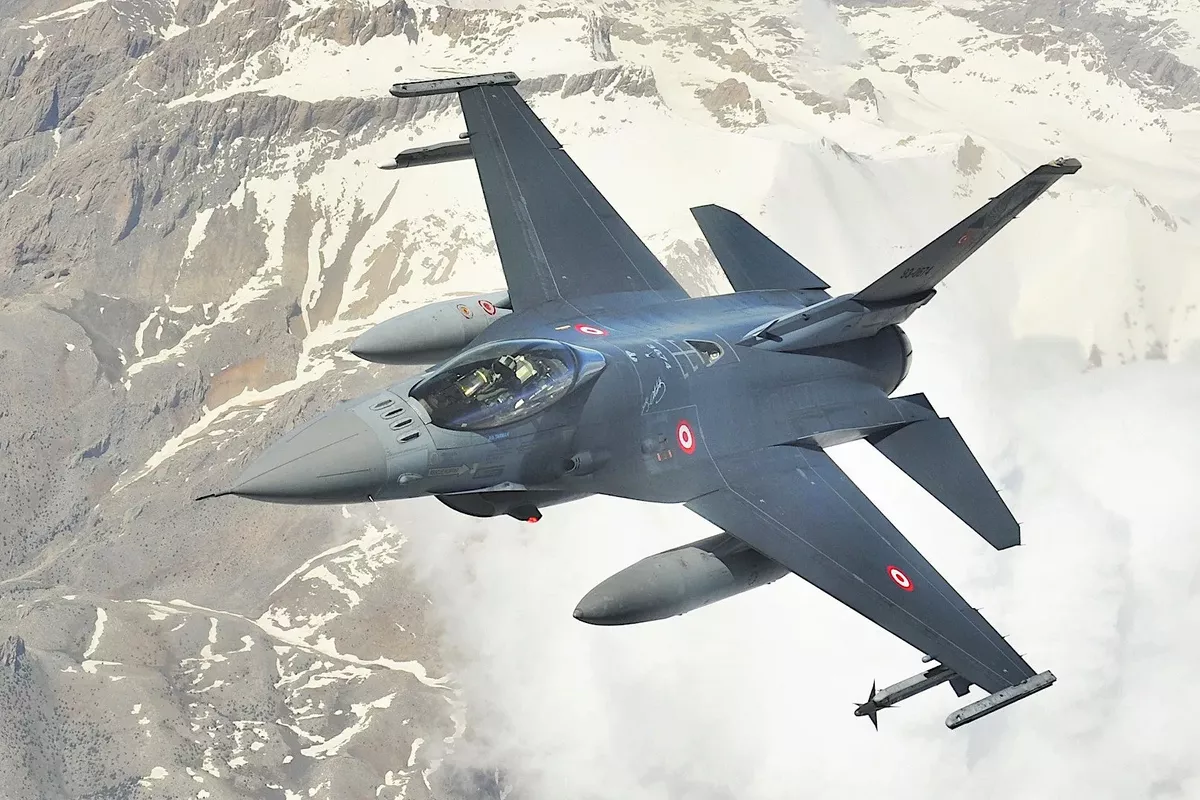
U.S. inaction after Erdoğan’s recent F-16 deployment to occupied northern Cyprus only encourages the Turkish leader to believe he can get away with anything.
The White House Should Be Worried
The White House should harbor no illusions about what could come next. On June 5, 1967, Israel launched Operation Focus, destroying the Egyptian air force, over 300 Egyptian aircraft on the ground.
The nature of existential threats is that they require desperate measures.
Simply put, if Israel fears Türkiye’s air power, navy, and military-industrial plants pose a threat to the Jewish state’s existence, then Israel will have no choice but to launch a new Operation Focus to pre-empt the threat. Nasser’s army in 1967 was the equivalent of Erdoğan’s today, large but overestimated.
Erdoğan’s ideological purges have also undermined Turkish capabilities. Because of the paranoia that surrounds the Turkish leadership, the Israeli Air Force should time its operations to occur when Erdoğan leaves the country for one of his occasional visits abroad. Erdoğan relies on second-tier leaders like former intelligence chief Hakan Fidan and his successor İbrahim Kalın, but they are as much rivals as allies. Hitting one or both would compound the vacuum.
What Israel Could Do
Israel could then strike at Turkish F-16s and other aircraft at bases in northern Cyprus, Incirlik, Izmir, Diyarbakir, and a half dozen other cities. Israeli warplanes would likely need to target the Turkish Navy’s principal base at Gölcük, as well as Aksaz, Foça, and Iskenderun, in occupied Hatay.
To hamper Türkiye’s response and recovery, Israel should also target Turkish Aerospace Industries (TUSAŞ) plants, where Türkiye produces most of its arms. Baykar headquarters, personnel, and plants will also likely need to be hit due to its role in producing the Bayraktar TB2 and Akinci.
BMS Savunma, based in Ankara, produces surveillance drones and may also be a possible target. Turkish radar and anti-aircraft systems will likely be eliminated in the initial minutes.
What About NATO?
Turkey may believe itself safe behind a NATO shield, but it is not.
The North Atlantic Treaty’s Article V-the collective-defense clause-is ridden with loopholes. What qualifies as an “armed attack” is open to question, especially if NATO members see Erdoğan’s threats as provocative.
A UK F-35 flies above the Baltics on 25 May 2022. UK and Czech fighter jets have been taking part in air defence training over the Baltic region. UK Eurofighter Typhoons, F-35s and Czech Gripens were involved in an exercise as part of Neptune Shield 22 (NESH22), a multinational maritime vigilance activity. NESH22 has seen a range of multi-domain activities between air, land and maritime assets across Europe and in the Baltic and Mediterranean Seas. It runs from 17 to 31 May 2022.
Because NATO operates by consensus, any NATO member could theoretically block Article V activation, in a sense flipping the script on Türkiye, which has long used threats to block NATO consensus to its material and diplomatic advantage.
From Bad to Worse
Israel would need, of course, to be prepared for a Turkish response; it will have a robust one. But, if war between Türkiye and Israel is inevitable, pre-emption will become increasingly necessary so Jerusalem can determine the timing of the attack and position itself to maximum advantage.
Given that, unlike Egypt, Türkiye does not border on Israel, and the international community will seek calm, Israel could also replicate the traditional Arab state strategy of attacking and then seeking a ceasefire. In such a case, the U.S. Navy might deploy to the Eastern Mediterranean to ensure calm.
See the original article here