When Türkiye's Monetary Policy Meets Global Geopolitics
The MPC decision will not only involve a rate adjustment, but also serve as a test of Türkiye's commitment to maintaining policy confidence amid global economic shocks.
To maintain a sense of intellectual continuity, I would like to begin by revisiting some reflections from my article dated Dec. 25, 2025, titled "Why Economic Forecasts Will Fail More Often in 2026," The Caspian Post reports, citing Turkish media.
At that time, I drew attention to the fact that we were entering a year when economics would evolve from a technical discipline into a field of psychological equilibrium, causing forecasts to falter more frequently. The global economy is no longer primarily shaped by market cycles. Instead, it is driven by geopolitical decisions, policy interventions, and sudden shocks. Models designed for a predictable world are now being asked to explain an economy governed by uncertainty. As trust in global trade and monetary policy deepens, or rather, as the crisis of confidence deepens, and the economic costs of security-driven preferences rise, forecasting errors become inevitable.
My observations regarding Türkiye were particularly significant. Scarcely three months ago, I noted that 2026 would serve as a "threshold to test whether hard-earned trust can be preserved," emphasizing the vital importance of managing expectations and "policy confidence."
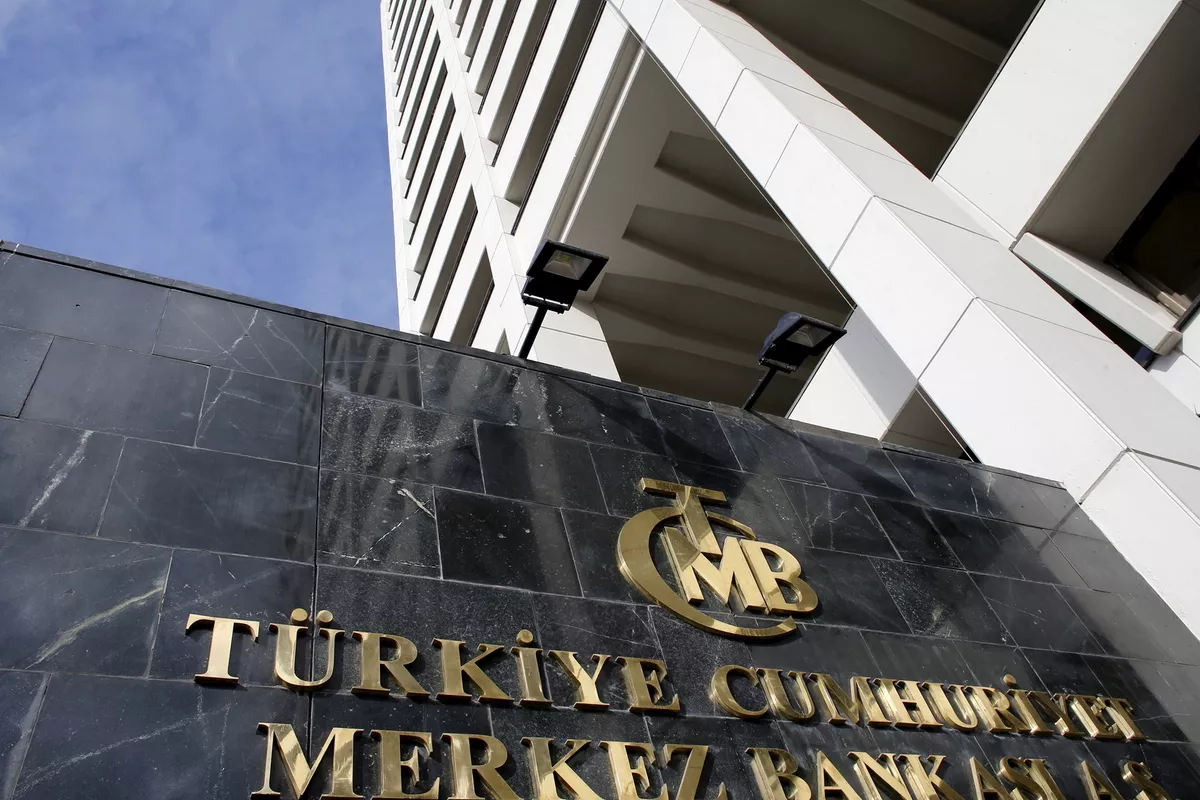
The first major threshold this year is the Monetary Policy Committee (MPC) meeting, scheduled for today. The decision to be announced at this meeting, and its subsequent impact on the disinflation process, will represent far more than a mere interest rate adjustment. It will be a decisive moment for the very credibility we seek to maintain.
Economic Policy as Choice
At this juncture, it is worth opening a conceptual parenthesis: What exactly is economic policy? In the complex global climate of 2026, this discipline is no longer a mere optimization of figures; it is a delicate art of balance struck between conflicting interests, diverging goals, and societal expectations.
The oldest yet most contemporary dilemma in economic history is the tense relationship between "growth" and "price stability." While the growth performance, so highly praised in international reports, serves as "lifeblood" for producers and exporters, an inflation rate that remains far from its target signifies a systematic loss of purchasing power for households and fixed-income earners. Here, the government’s policy priorities serve as an arbiter. However, it must not be forgotten that growth achieved in an environment where inflation cannot be reined in risks turning into a self-consuming "illusion" in the long run.
In a modern economy, success is measured not by the individual technical excellence of institutions, but by the dialogue and coordination between them. It is imperative that the steps taken by the Central Bank of the Republic of Türkiye (CBRT) toward the disinflation target are in full harmony with fiscal policy. If budget discipline loosens or public spending drifts in a different direction while the Central Bank attempts to cool demand, "policy confidence" suffers a severe blow. Trust is built when institutions look at the same data and speak the same language.
Every economic policy choice grants an advantage to one segment of society while imposing a "cost" on another. The real test for politics here is to ensure the fair distribution of this cost and to persuade broad segments of society to accept today’s sacrifices for "tomorrow’s stability." It is at this very point that today's decisions will transcend being mere matters of "basis points." It evolves into a communication manifesto, demonstrating the state’s will to manage these conflicts of interest and its determination to preserve "hard-earned trust."
EBRD Paradox
The European Bank for Reconstruction and Development (EBRD)’s recent upgrade of Türkiye’s 2026 growth outlook to 4.0% serves as a significant validation of the economy’s inherent "muscularity." However, this optimism, when paired with EBRD President Odile Renaud-Basso’s urge to "stay on course" in the fight against inflation, confirms the very dilemma I outlined at the beginning of this piece.
While the EBRD applauds our growth resilience, it simultaneously points to how energy shocks from the Strait of Hormuz and the Iran conflict have pushed monetary policy toward a "high-risk" junction. The 12% spike in crude prices is the unmistakable sound of the "Grey Rhino" that standard models failed to anticipate.
This brings us back to today's decision: To be swayed by international growth praise while ignoring the looming energy-driven inflation would be to risk shattering the most fragile asset of 2026, "policy confidence." As Renaud-Basso emphasized, the real challenge is to maintain the anchor of price stability even when the winds of growth are blowing in our favor. Today's decisions will provide a global answer as to just how sturdy that anchor truly is.
Numbers, Risks
The greatest risk in economic management is losing the warnings whispered by the numbers within the noise of theoretical models. Lest we forget, the CBRT's Inflation Report on Feb. 12 painted a remarkably sanguine picture, basing its assumptions on oil prices at $60.9 for 2026.
Today, however, we are confronted by a "Hormuz moment" and a geopolitical storm centered in Iran that has effectively stripped us of the luxury of a "wait-and-see" approach. This is a concrete manifestation of the structural fracture I highlighted in my January article, the very reason forecasts are failing so frequently.
While the market was pricing in a trajectory with interest rates sliding down to the 28-30% band by year-end, the sharp surge in energy prices has disrupted the entire equation. For an energy-importing economy, the course of oil is not merely a cost item; it is the "soft underbelly" of both the current account balance and the disinflation process. The "prudence mode" signalled by Governor Fatih Karahan in February has now become an absolute necessity.
In this context, my projection for today's MPC meeting is clear: CBRT will pause its rate-cutting cycle. Taking any further step toward "easing" before the waters in global energy markets settle, and before the inevitable revisions are made in the May 14 Inflation Report, would risk shattering our most precious asset: "policy confidence."
The market is currently testing not just what the CBRT will do, but how firmly it can stand behind its own messaging. With the baggage of past "decisions disconnected from reality" still lingering in memory, the March 12 decision will be far more than a technical adjustment of a rate, it will be a declaration of how resolutely the CBRT can hold its course against the global storm.