Will Armenia appear on the list of countries importing Azerbaijani gas?
The answer to this question is extremely important for Armenia. It should be recalled that in late May, Russia, Armenia’s main gas supplier, announced its intention to revise the fuel price for Yerevan if the country continues moving toward the West. A corresponding letter was sent to Yerevan.
In a letter from Russian Energy Minister Sergey Tsivilyov to Armenia’s Ministry of Territorial Administration and Infrastructure, it was stated that Russia may suspend or unilaterally denounce the agreement on supplies of natural gas, petroleum products, and unprocessed diamonds to Armenia, signed in December 2013, if Yerevan continues the process of accession to the European Union.
Under the 2013 agreement, Russia abolished export duties on supplies of petroleum products, gas, and diamonds to Armenia for an indefinite period. An additional agreement to the 2013 contract, signed in late 2019, set the price of Russian gas for Armenia at $165 per thousand cubic meters. Today, according to Russian media, Armenia receives Russian gas at $177 per thousand cubic meters, while gas supplied to Europe costs around $600. The difference is significant and stems from the preferences granted by membership in the EAEU and the Customs Union, as well as from Armenia’s once-established status as Russia’s outpost and “natural ally.”
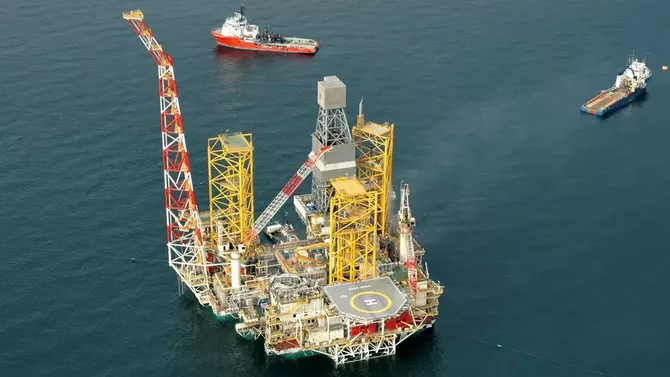
photo: eurasianet
Now that Yerevan has clearly charted a course toward Europe, the word “if” is no longer necessary. Everything suggests that Russian gas will become as expensive for EU-aspiring Armenia as it is for other European Union countries. At the same time, the likelihood of Armenia being admitted to the EU is effectively zero, at least in the medium term. This means the country may end up with neither EU membership nor cheap gas.
Unlike apricots, tomatoes, and brandy rejected by Russia, which the EU has already promised to help place on its markets, Europe will not be able to help Armenia with gas.
Could neighbouring Iran help? Here the issue is price, which has never suited the Armenian side, while Iranian partners have no intention of reducing it. Armenia receives small volumes from Iran through barter arrangements in exchange for electricity.
A few days ago, Mesrop Mesropyan, Chairman of Armenia’s Public Services Regulatory Commission, told journalists that Armenia could begin purchasing gas from Azerbaijan, Turkmenistan, and Iran if the price of Russian gas increases. According to him, the Armenian authorities are considering all possible scenarios in this regard.
Current gas tariffs will remain in place until the beginning of 2027. After that, the situation will become clearer.
Armenia receives more than 2 billion cubic meters of Russian gas annually at a preferential price. According to Russian experts, Yerevan will not be able to replace these supplies. The limited volumes coming from Iran are subject to certain constraints. In winter, northern Iran usually faces fuel shortages, and supplies effectively come to a halt.
As for purchases from Azerbaijan, Russian experts are less categorical in their assessments. Supplies of Azerbaijani gas are considered quite realistic. But what would the price be? In addition, the infrastructure was destroyed during the years of conflict. Georgia receives Azerbaijani gas at a preferential price because, in relations with that country, politics is more important for Baku than commerce. Armenia, experts believe, should not expect such benefits.
Meanwhile, the question of the price of Azerbaijani gas for Armenia is not as clear-cut as Russian experts suggest.
Speaking at the international forum “COP29 and Green Vision for Azerbaijan” at ADA University, President Ilham Aliyev said that Armenia could potentially become a recipient of Azerbaijani gas, following Georgia’s example. This would be beneficial for Armenia, taking into account the preferential price at which gas is supplied to Georgia.
“Both in terms of proximity and infrastructure, it would, of course, be natural to have this kind of cooperation,” the head of state said.
Yerevan reacted immediately. Armenian Parliament Speaker Alen Simonyan stated that Armenia is ready to discuss the issue of purchasing gas from Azerbaijan. In his opinion, it would be positive if Armenia began buying Azerbaijani gas.
Both the opening of transit routes and the supply of fuel to Armenia are political decisions. Armenia receives gasoline from Azerbaijan at a preferential price, and this is also an important political decision.
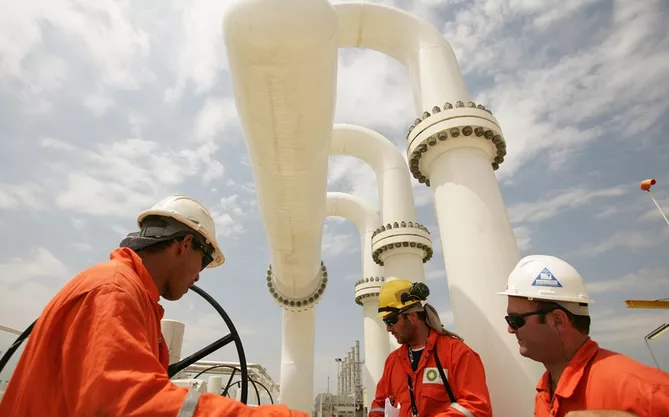
photo: eurasinet
In Armenia, when officials speak about the desire to receive Azerbaijani gas, they say nothing about the absence of the necessary infrastructure. Unlike oil, gas cannot be transported by rail - unless we are speaking about liquefied natural gas (LNG). But here the issue is pipeline gas, and Armenian officials appear to be referring to pipeline gas as well. For consumers, pipeline gas is more cost-effective, while LNG is more expensive due to the costs of liquefaction, transportation, and regasification.
Armenia is, one might say, located on the other side of the street. Yet gas supplies there are currently impossible due to the absence of gas transportation infrastructure.
Armenia’s gasification began with Azerbaijani gas. The ceremony took place on 12 February 1960 on Theater Square. Supplies continued until the fourth quarter of 1991.
Gas was delivered through the main Hajigabul-Gazakh-Ijevan-Yerevan pipeline. In 1976, construction began on new gas pipeline infrastructure - the Yevlakh-Barda-Aghdam-Asgaran-Khankendi-Shusha-Lachin-Gorus-Shahbuz pipeline, leading to the Nakhchivan Autonomous Republic. The main pipeline was built over two years. In the 1980s, an additional 70-kilometre pipeline was built from the border of the Nakhchivan Autonomous Republic to Yerevan.
During the years of the Karabakh conflict, the pipeline remained inactive and fell into disrepair. This greatly complicates Yerevan’s ability to resolve the issue of importing gas from Azerbaijan. In order to receive Azerbaijani gas, a pipeline would first need to be built. Who would implement such a project, and with what funds, is for Yerevan to decide.
By Tural Heybatov