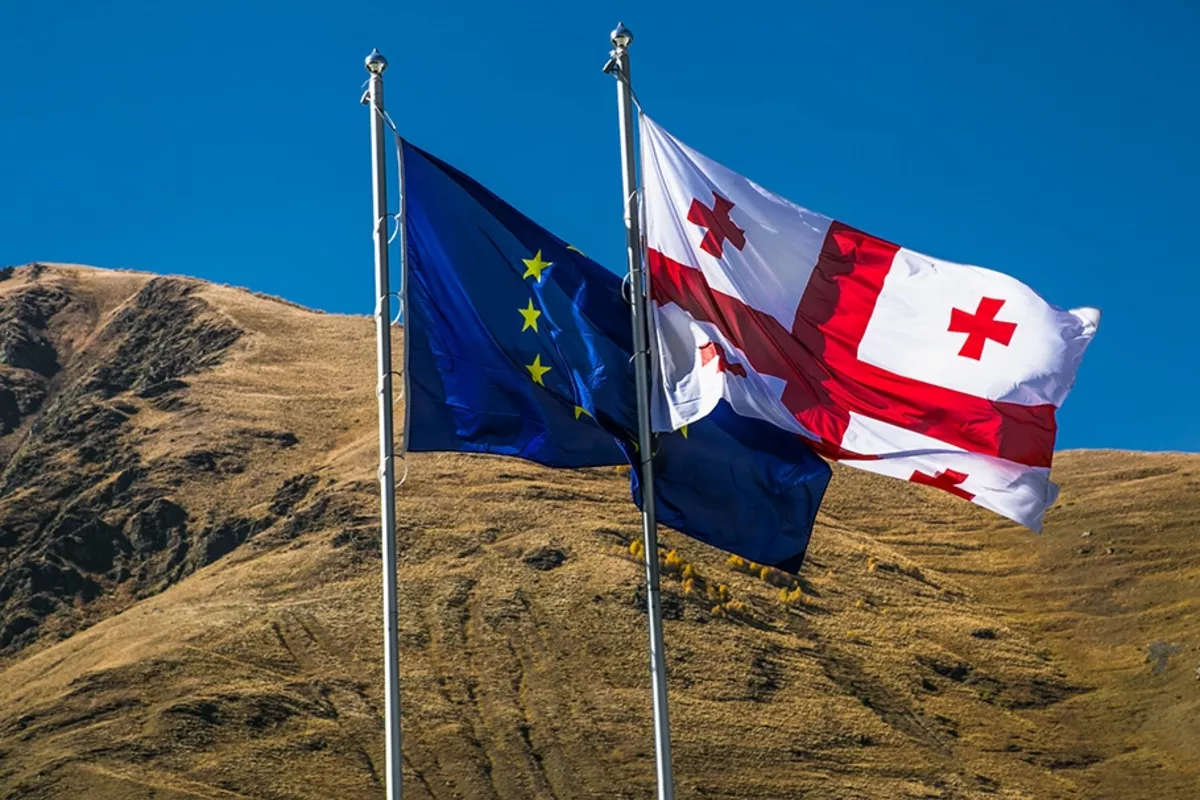
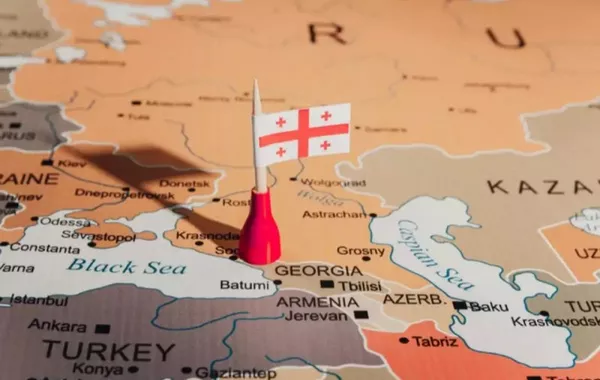
For more than two decades, Georgia’s political narrative has been anchored to a clear and powerful idea: the country’s future lies in Europe. This orientation has shaped state policy, electoral rhetoric, constitutional commitments, and-crucially-public identity. “Europe” in the Georgian context has never been merely a geographical reference. It has functioned as a political promise, symbolizing sovereignty, democratic governance, economic modernization, and a definitive break from Moscow’s post-Soviet shadow.
Yet in recent years, and especially since 2024, that promise has entered a period of acute tension. Georgia now exemplifies how European Union aspirations can clash with domestic political incentives, institutional fatigue, and hard geopolitical realities. While public support for EU integration remains robust and deeply rooted, the actions of the governing authorities increasingly point in the opposite direction: toward centralization of power, restrictions on civil society and media, pressure on political opponents, and an openly adversarial tone toward Brussels and Western partners.
The result is a widening gap between society and state-between a population that overwhelmingly identifies its future with Europe and a governing system that appears to be adopting elements of managed democracy. This contradiction has turned Georgia’s EU path from a unifying national project into a central arena of political conflict, manifested most visibly in sustained protest movements, legislative crackdowns, and a frozen accession process.
From candidate breakthrough to stalled momentum
Georgia’s attainment of EU candidate status in 2023 marked a historic milestone. It validated years of reform-oriented rhetoric, diplomatic alignment with Brussels, and persistent pressure from civil society organizations that framed European integration as both a strategic necessity and a moral imperative. For many Georgians, candidate status symbolized recognition of their European identity rather than the completion of a technocratic checklist.
However, that status came with explicit conditions. The European Union made clear that candidate designation was not an endpoint but an invitation to deliver tangible reforms. Expectations focused on strengthening judicial independence, curbing oligarchic influence, reinforcing anti-corruption mechanisms, safeguarding media freedom, and reducing extreme political polarization. Progress in these areas was intended to determine whether accession negotiations could begin.
Instead of acceleration, relations deteriorated. Throughout 2024, the Georgian government advanced legislation that drew sharp criticism from Brussels and European institutions, particularly laws regulating “foreign influence.” These initiatives were widely compared to legal frameworks used in more restrictive political environments to stigmatize and constrain civil society organizations and independent media outlets reliant on foreign funding.
By mid-2024, the European Union effectively froze Georgia’s accession trajectory. EU officials linked the decision directly to democratic regression and the adoption of legislation seen as incompatible with European norms. Assessments from European bodies, echoed by parliamentary research in the United Kingdom and monitoring institutions across Europe, highlighted the foreign influence law as a central factor behind the pause.
The rupture deepened later that year when Georgian authorities announced that efforts to open accession talks would be suspended until at least 2028. This declaration marked a dramatic departure from previous commitments and triggered an immediate political backlash at home. Brussels responded with open regret, reiterating that progress toward membership depended on a clear reversal of course. At that point, Georgia’s European path entered a state of suspension-symbolically intact, but operationally stalled.
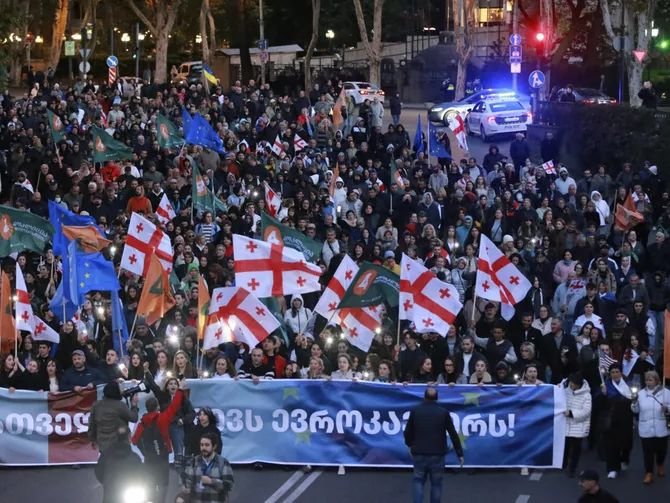
Photo: AFP
Protests and polarization: Europe as a domestic fault line
The government’s decision to halt accession efforts transformed European integration from a long-term strategic goal into an urgent domestic battleground. Beginning in late November 2024, large-scale protests erupted in Tbilisi and spread to other cities. What initially appeared to be a wave of demonstrations evolved into a prolonged political season, with near-daily mobilizations continuing well into 2025.
These protests were not only about EU membership as an abstract aspiration. They became expressions of deeper frustration over governance, accountability, and perceived democratic erosion. Europe served as both a symbol and a rallying point-representing a set of values that protesters believed were being undermined by the authorities.
Equally significant was the state’s response. Rather than acting as an arbiter between competing political forces, the government moved to tighten regulations on public assembly, increase penalties for protest-related offenses, and expand the scope of enforcement. Arrests became more frequent, and security measures more visible. International observers and civil society groups characterized these steps as deliberate efforts to raise the cost of dissent.
By late 2025, Georgia was described in international reporting as experiencing a full year of continuous protest activity. While early demonstrations occasionally involved clashes, the broader trend was one of persistent mobilization met by an increasingly securitized state response. This dynamic reinforced a central dilemma for the EU: accession is not solely a legislative process but a judgment about democratic compatibility. A political environment defined by routine protests and restrictive state reactions undermines the credibility of further integration steps.
Power, reform, and the logic of resistance
Understanding Georgia’s stalled EU trajectory requires moving beyond simplistic geopolitical binaries. The central tension is not merely between pro-European and pro-Russian orientations but between reform-driven integration and domestic power preservation.
EU accession offers clear benefits: economic integration, political legitimacy, investment confidence, and long-term security anchoring. At the same time, it demands reforms that directly challenge informal power structures. Independent courts, robust anti-corruption enforcement, transparent procurement, and pluralistic media ecosystems all reduce the capacity of ruling elites to manage competition and control outcomes.
This creates what might be called elite-level reform fatigue. While society often grows tired of delayed benefits, governing actors may resist reforms precisely because they work. In highly polarized systems, restrictions on civil society and opposition are easily justified as measures to preserve stability. In Georgia, this logic has translated into narratives portraying NGOs, journalists, and opposition networks as instruments of foreign interference rather than legitimate political actors.
European assessments in 2025 reflected this concern. Public summaries of the European Commission’s evaluation emphasized democratic backsliding and confrontational rhetoric toward the EU. One senior EU diplomat described the findings as devastating, noting that Georgia appeared further from membership than it had been at the moment candidate status was granted.
The foreign influence agenda as a turning point
Few issues illustrate Georgia’s current trajectory more clearly than the evolving framework of “foreign influence” legislation. Initially presented as transparency measures, these laws require organizations receiving foreign funding to register under special regimes, subjecting them to additional reporting requirements and public labeling.
Critics argue that the real effect is not transparency but stigmatization and administrative pressure. In small economies with limited domestic funding sources, foreign grants are a primary lifeline for civil society and independent media. Regulating them through politicized frameworks introduces legal uncertainty and chills critical activity.
In 2025, the legislative scope expanded further. Parliament adopted laws restricting the receipt of foreign grants without prior government approval, signaling a broader effort to centralize oversight of civic activity. International reporting framed these moves as part of a sustained crackdown following months of protest.
European institutions responded accordingly. Legal opinions issued by bodies such as the Venice Commission raised concerns about compatibility with freedom of association and expression. The speed with which these laws were introduced and implemented underscored how rapidly the regulatory environment was being reshaped.
From the government’s perspective, such measures are framed as assertions of sovereignty. From Brussels’ perspective, they represent a shrinking of civic space that directly contradicts accession requirements.

Photo: Shutterstock
Layers of fatigue: societal, political, institutional
Reform fatigue in Georgia is multidimensional. At the societal level, citizens have endured decades of transformation with uneven results. Structural reforms promise long-term benefits, but immediate concerns-economic pressure, employment, and security-often dominate public priorities.
Politically, the country has lived in a state of near-permanent crisis. Disputed elections, parliamentary boycotts, and cycles of protest have normalized confrontation. Over time, this erodes optimism and can lead to oscillation between mobilization and resignation. By late 2025, international observers noted both continued determination among protesters and growing exhaustion as repression intensified.
Institutionally, parts of the state apparatus have internalized a defensive mindset. Reform is increasingly seen not as modernization but as a threat to cohesion and control. This encourages regulatory expansion, securitization, and resistance to external scrutiny.
In such an environment, EU conditionality becomes explosive. Brussels is demanding precisely those changes that domestic power managers perceive as destabilizing. And as accession prospects fade, incentives for compliance weaken further.
Geopolitics and asymmetric pressure
Georgia’s strategic environment compounds these domestic tensions. The legacy of the 2008 war and the continued presence of Russian forces in Abkhazia and South Ossetia shape every security calculation. This proximity generates persistent fears of escalation, economic vulnerability through trade and transit dependencies, and exposure to information warfare.
At the same time, the EU’s influence operates through slow, conditional mechanisms. Despite renewed urgency around enlargement following Russia’s invasion of Ukraine, the process remains bureaucratic and politically constrained within the Union itself. Even optimistic enlargement timelines increasingly exclude Georgia, which is now often cited as a case of regression rather than momentum.
This creates an asymmetric pressure landscape. Russia can act quickly and coercively; the EU acts gradually and conditionally. Georgian society overwhelmingly prefers the European anchor, but governing elites face incentives to hedge, delay, or reinterpret integration commitments.
Competing legitimacy systems
At the core of Georgia’s dilemma lies a clash of legitimacy models. European legitimacy depends on rule-of-law credibility, open civic space, and competitive democracy. Domestic governing legitimacy in polarized contexts often relies on institutional control, narrative dominance, and the marginalization of challengers.
When these logics align, EU accession becomes a shared national project. When they diverge, accession turns into a source of conflict. Georgia currently appears closer to the latter scenario. Brussels conditions progress on democratic reversal; the government frames conditionality as interference. Meanwhile, protests persist because large segments of society believe their European future is being deferred or denied.
Paths ahead
Several scenarios now define Georgia’s near-term outlook.
One possibility is prolonged stagnation: continued pro-European rhetoric paired with restrictive governance, leaving the country a “candidate in name only.” Another is a negotiated reset, in which sustained pressure-economic, political, and societal-forces a partial rollback of controversial measures and reopens dialogue with Brussels. European messaging suggests this door remains ajar.
A darker scenario involves escalation. Further crackdowns could deepen isolation, shrink civic space, and entrench an illiberal model. This risks either widespread demobilization through fear and fatigue or radicalization driven by a sense of stolen futures.
The meaning of Europe for Georgia
Georgia’s European aspiration remains socially entrenched, but it is under unprecedented strategic pressure. Symbolism alone cannot secure membership. Candidate status without democratic convergence becomes hollow; protest without institutional pathways breeds exhaustion.
For the EU, the challenge is balancing solidarity with Georgian society against the credibility of its own values. For Georgia, the question facing 2026 is more fundamental than accession timelines: can the state be realigned with the society’s European choice before repression, fatigue, and geopolitical drift render that choice permanent only as memory?