In today’s world, geopolitics is increasingly defined not by the number of tanks or missiles a country possesses, but by who controls energy flows, critical technologies, and global supply chains. Energy has become one of the central battlegrounds in the strategic competition between the United States and China, and Washington is now pursuing a systematic, multi-layered plan to contain Beijing’s growing energy influence. This effort is not based on isolated measures but on a broad strategy that combines trade restrictions, industrial policy, alliance building, supply chain restructuring, and technological competition in clean energy.
Over the past two decades, China has transformed itself into a dominant force across nearly every segment of the global energy landscape. It is the world’s largest importer of oil and natural gas, a leading consumer of coal, and the undisputed leader in manufacturing equipment for renewable energy. Chinese companies produce the majority of the world’s solar panels, control a large share of wind turbine manufacturing, and dominate battery production as well as the processing of key components for electric vehicles. Even more important, China has established a commanding position in the mining and refining of critical minerals such as lithium, cobalt, nickel, and rare earth elements, which are essential for the global energy transition.
For U.S. policymakers, this concentration of power in the hands of a strategic rival represents a long-term national security risk. Washington increasingly views energy dominance as inseparable from technological and geopolitical dominance. If China controls the technologies and materials that power future economies, it will also gain leverage over countries that depend on those systems. This concern has become a core driver of U.S. foreign and economic policy.
Photo: Global Times
One pillar of America’s containment strategy is trade and regulatory pressure. The United States has imposed tariffs, export controls, and investment restrictions on a wide range of Chinese firms involved in advanced manufacturing, clean energy technologies, and critical materials. Officially, these measures are justified by national security concerns, unfair trade practices, and intellectual property protection. Strategically, however, they are designed to slow China’s industrial ascent and limit its access to advanced equipment and foreign markets.
At the same time, Washington is working to rebuild its own industrial base. Massive public spending programs, tax incentives, and subsidies are being directed toward domestic manufacturing of batteries, solar panels, semiconductors, and other strategic technologies. The goal is not only to increase U.S. production capacity but also to ensure that future energy systems are built on supply chains that are resilient and politically reliable. In this sense, industrial policy has become a tool of geopolitical competition.
A central concept in this approach is the creation of alternative supply chains outside China. The United States is actively encouraging companies to relocate or diversify production to countries considered politically aligned with Washington. Canada, Australia, Japan, South Korea, and members of the European Union play a key role in this strategy. These countries possess advanced industrial capabilities, stable regulatory environments, and, in many cases, significant mineral resources. By coordinating investment and policy with these partners, the U.S. hopes to weaken China’s grip on critical stages of the energy value chain.
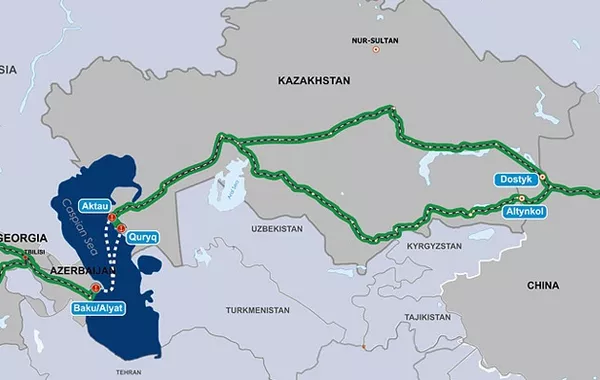
Washington is also expanding its diplomatic and economic engagement with resource-rich regions. In Latin America, U.S. officials are seeking closer cooperation with lithium producers such as Chile and Argentina. In Africa, the focus is on reducing China’s dominance in cobalt and rare earth supply chains. In Central Asia, where China has invested heavily in oil, gas, and infrastructure, the United States is attempting to reassert influence through diplomatic initiatives and targeted investment programs. These efforts reflect a broader attempt to compete with Beijing for access to the raw materials that will shape future energy systems.
Clean energy has become one of the most intense arenas of this rivalry. China’s overwhelming scale in solar, wind, and battery manufacturing allows it to offer low-cost products that few competitors can match. This cost advantage has helped accelerate global adoption of renewable energy but has also created widespread dependence on Chinese suppliers. U.S. officials fear that this dependency could one day be exploited for political leverage, similar to how energy exporters have used oil and gas as strategic tools in the past.
As a result, American climate policy is increasingly intertwined with national security concerns. The United States is no longer focused solely on reducing emissions; it is also focused on who builds the technologies that enable decarbonization. This shift explains why Washington is willing to subsidize domestic clean energy industries at enormous cost and impose restrictions on cheaper foreign alternatives.
Another important element of the U.S. strategy is technological competition. Washington is investing heavily in next-generation batteries, hydrogen technologies, advanced nuclear reactors, and grid-scale energy storage. The expectation is that technological breakthroughs could allow the United States to leapfrog existing Chinese advantages. Rather than trying to outproduce China in today’s technologies, American policymakers hope to define tomorrow’s standards.
However, this strategy faces serious challenges. China’s manufacturing ecosystem benefits from massive scale, deep integration, and strong state support. Recreating comparable industrial networks in the United States and allied countries will take many years and enormous financial resources. Moreover, many U.S. partners remain economically intertwined with China and are reluctant to fully decouple. For them, cooperation with Beijing is often a practical necessity, even as they align politically with Washington.
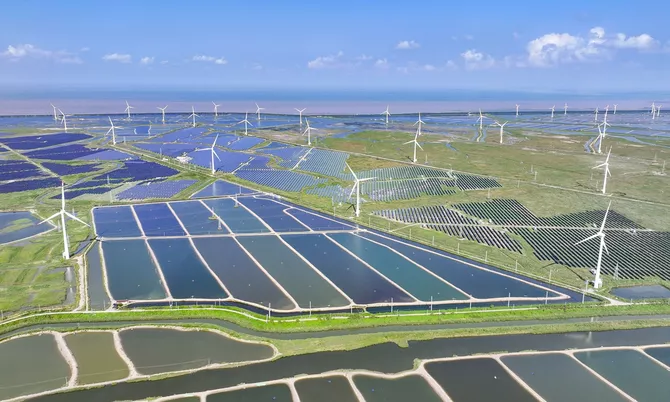
Photo: VCG
There is also a fundamental tension between containment and climate goals. Chinese clean energy technologies are often significantly cheaper than Western alternatives. Restricting their use could slow the global energy transition, particularly in developing countries that cannot afford higher-cost equipment. Critics argue that a fragmented clean energy market divided along geopolitical lines could undermine global efforts to combat climate change.
Despite these risks, Washington appears determined to move forward. From the U.S. perspective, the long-term danger of allowing China to dominate future energy systems outweighs the short-term economic and environmental costs. Energy, in this worldview, is not simply a commodity but a strategic asset that shapes global power relationships.
Ultimately, the U.S. plan to contain China’s energy expansion is an attempt to reshape the global economic order. By redirecting investment flows, reorganizing supply chains, strengthening alliances, and competing for technological leadership, Washington is seeking to prevent the emergence of a China-centered energy system. Whether this effort will succeed remains uncertain. What is clear, however, is that energy competition between the United States and China will be one of the defining features of international politics for decades to come, influencing not only markets and technologies but also the broader balance of power in the world.
By Tural Heybatov