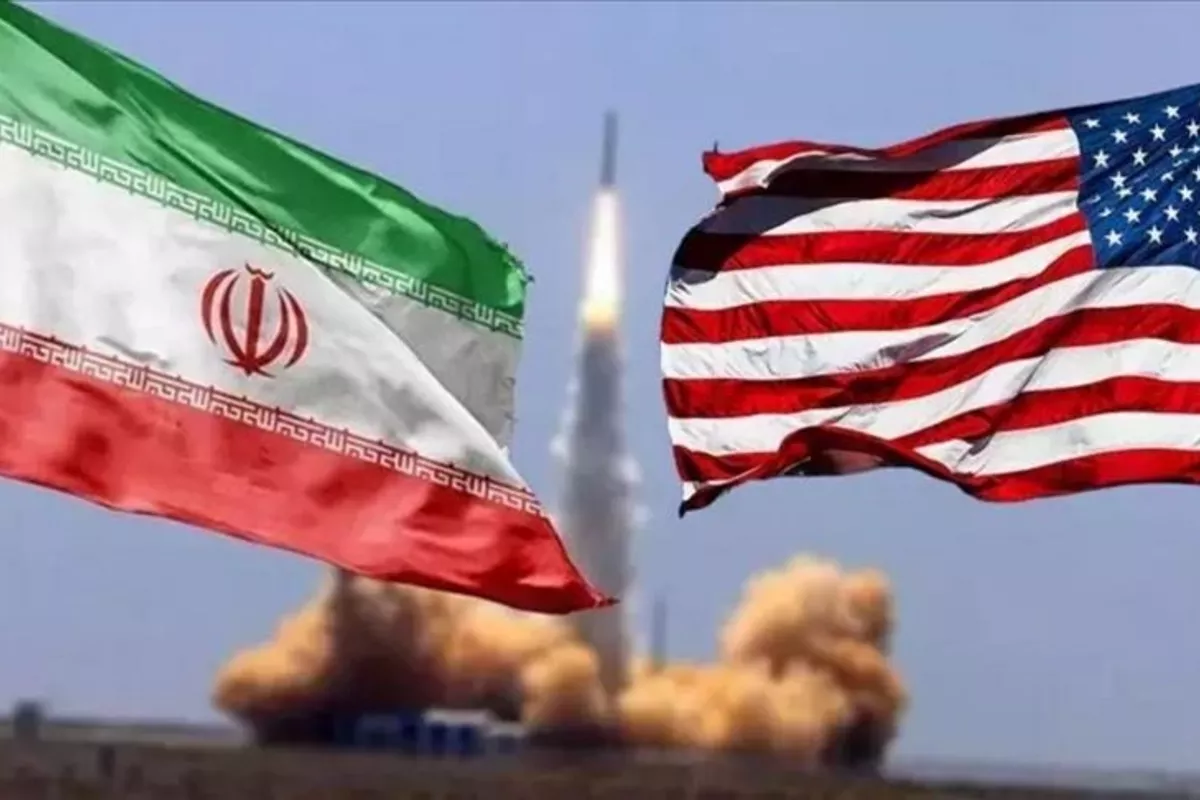
As the United States positions forces around Iran, concern is spreading across the Middle East over the risk of a new military confrontation. A recent analysis by Newsweek examines the potential scenarios and consequences of a U.S. strike on Iran, assessing how such an attack could unfold and what it might mean for regional stability.
The Caspian Post republishes the article.
With the U.S. having moved into attacking positions in key spots around Iran, there are jitters throughout the Middle East at the prospect of another military conflict.
President Donald Trump has warned Tehran that "time is running out" and that it faces a "far worse" attack than the U.S. strikes on Iran's nuclear bases last summer.
Iran, in response, has said its forces have "their fingers on the trigger," while warning Trump that he might be starting a war with consequences he won't be able to control.
"The Islamic Republic’s regime is now operating on the assumption that a war can happen at any moment," Hamidreza Azizi, an Iran expert at the SWP Berlin think tank, told Newsweek.
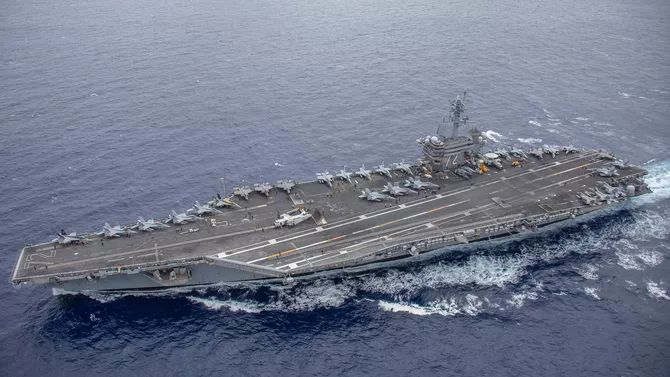
Photo: US Navy
What Could the US Do?
On Monday, aircraft carrier the USS Abraham Lincoln entered the Indian Ocean ahead of what were supposed to be planned drills. Its positioning means that considerably more U.S. forces are within striking distance of Iran, while also being able to protect regional allies from any retaliation.
Trump is considering targeting commanders and institutions he holds responsible for the Iranian regime's recent violent crackdown against protesters, with at least 6,000 people killed, say rights groups.
Analysts believe that the U.S. could launch precise strikes targeting either military assets belonging to the Islamic Revolutionary Guard Corps (IRGC) or government buildings.
How Might Iran React?
The U.S. vastly overpowers Iran’s military, but the Islamic Republic could still respond to any attack with its arsenal of ballistic missiles and drones, targeting American facilities in the Gulf, notably in Bahrain and Qatar.
Gulf states hosting American bases are concerned they would be the first targets for retaliation-Iranian missiles or drone attacks from the Tehran-aligned Houthis in Yemen.
When the U.S. and Israel struck Iran in June 2025, Tehran responded with strikes on a U.S. air base in Qatar. The U.S. has evacuated its troops from that base in recent weeks in anticipation of possible retaliatory action.
Saudi Arabia, Qatar, Oman and Egypt have all urged Washington to avoid taking military action against Iran. Saudi Crown Prince Mohammed bin Salman said he wouldn't allow his country's airspace or territory to be used by U.S. forces for an attack.
Would US Strikes Help Iranian Protesters?
One view is that U.S. strikes on targets could further embolden Iran's protest movement, already calling for change after a prolonged period of economic suffering.
In the first week of the year, Trump had told Iranians to keep protesting and take over their institutions, saying, "help is on its way." Barely two weeks later, he moved the aircraft carrier and its fighter jets into the Gulf.
But Arab and Western officials suggest that instead of bringing people onto the streets, a U.S. attack could weaken the protest movement, which has faced the bloodiest crackdown by authorities since the 1979 Islamic Revolution.
Rights groups tracking deaths say about 6,000 protesters were killed by the government in demonstrations in the first week of January. Iranian officials have acknowledged a death toll of about 3,100 people.
Any U.S. attack could incite more violence from the regime, says Ali Vaez, director of the Iran Project at the International Crisis Group.
"A regime that massacred its own people under the threat of foreign military intervention is likely to become even more aggressive, if that threat is materialized," he told Newsweek.
Tehran might conclude, says Vaez, that its restraint so far has only invited escalation from the U.S. and Israel. As such, it's likely to treat any kinetic action, regardless of its scale and scope, as cause for disproportionate retaliation.
"As such, even a limited U.S. strike could lead to an all out confrontation or a regional conflagration," he says.
Iranian Foreign Minister Abbas Araghchi said Friday that Tehran had no plans for talks with U.S. officials under current conditions, while Abdollah Hajji Sadeghi, a representative of Iran’s supreme leader in the IRGC, said the U.S. was bluffing "because it knows any miscalculation would have heavy costs.”
On Thursday, Trump said, "we have a lot of very big, very powerful ships sailing to Iran right now. and it would be great if we didn't have to use them,” as he said he had made demands to Tehran: "Number one, no nuclear and number two, stop killing protesters."
Could There Be Regime Change?
After Israeli strikes last June wiped out much of Iran’s senior leadership, Supreme Leader Ayatollah Ali Khamenei is not involved in the day-to-day running of the country.
That has shifted to figures aligned with the Islamic Revolutionary Guard Corps (IRGC), including senior adviser Ali Larijani, Reuters reported.
However, regional diplomats cited by Reuters fear that with no clear successor to the elderly Khamenei, the IRGC could enter the vacuum, doubling down on Tehran’s hard-line rule, and increasing its nuclear standoff with the West.
"Whatever is left is likely to calcify in the very short term," Behnam Ben Taleblu, senior director of the Iran Program at the Foundation for Defense of Democracies (FDD), told Newsweek. "Even before the 12-day war [with Israel in June], there were questions as to how much [an] 86-year-old man [can] really manage strategic competition with two conventional superpowers."
If Khamenei were eliminated, his son Mojtaba Khamenei and other clerics would be potential successors. Other U.S. targets include military and political figures like members of the Supreme National Security Council (SNSC) and Defense Council.
"The Trump administration has talked about Iran needing a different kind of leadership but I struggle to understand why the administration doesn't see the imperative of trying to put its shoulder to the wheel of history to push past the Islamic Republic," Taleblu said.
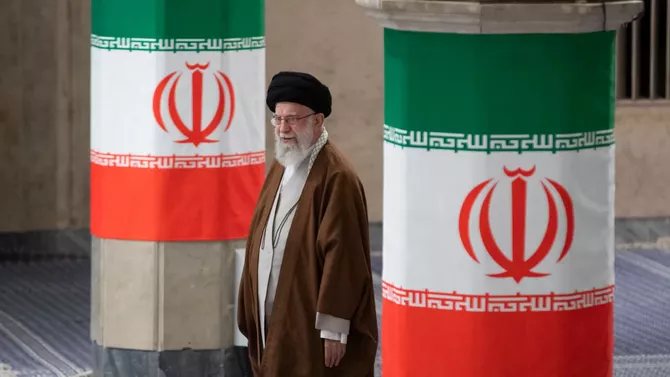
Photo: Getty Images
Iran Regime Has Been Pushing Diplomacy
Trump’s brinkmanship could be a ploy to pressure Iran into talks, and he has touted the prospect of an unspecified deal with Tehran.
However, the problem is that Iranian officials want negotiations to be limited to the nuclear program while the U.S. wants to tackle Tehran’s ballistic missiles and support for its regional Axis of Resistance proxies, says Azizi from SWP Berlin.
"The prospect of an imminent war or military campaign by the United States is taken quite seriously by the Iranian officials but at the same time, they are trying to see if there could be a way to delay that," he told Newsweek.
This is partly an attempt to buy time or shift the blame for initiating a confrontation to the U.S. by presenting itself as being open to talks, Azizi added.
Matt Gertken, chief geopolitical strategist at BCA Research, told Newsweek that Washington will avoid attacking the core elements of the regime and attempting to change it until it is highly confident that it can preemptively disarm Iran's asymmetric military ability to disrupt regional oil production and shipping.
"Immunity to Iran's retaliation is not something the administration can be confident about right now, though a risky gamble cannot be ruled out," he said.