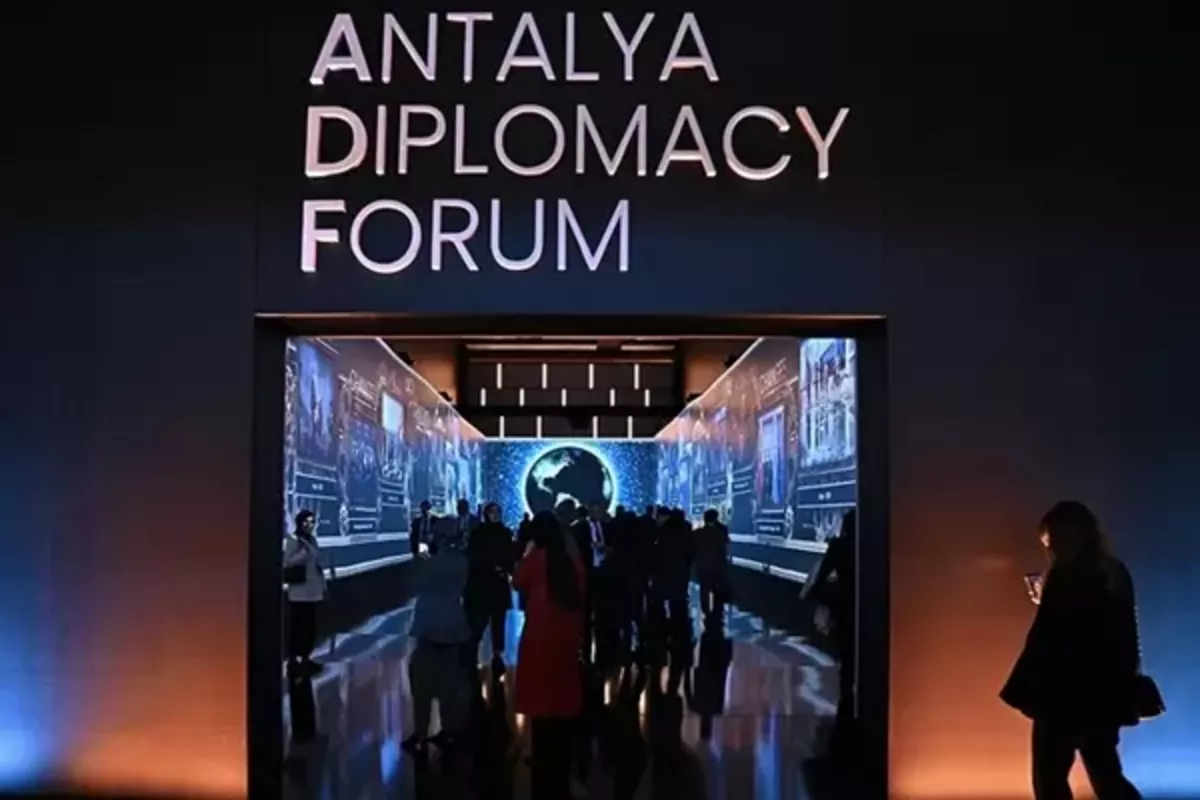
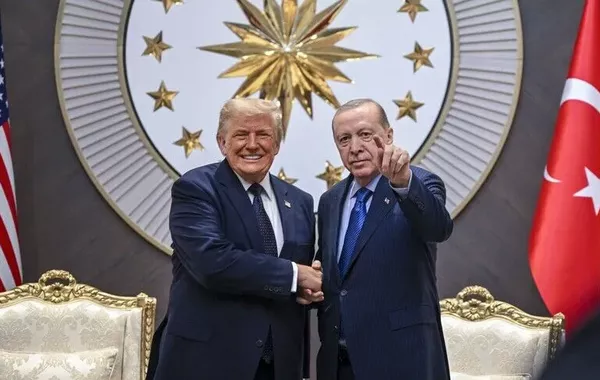
The 5th Antalya Diplomacy Forum (ADF2026), scheduled for April 17-19, is set to become one of the most significant diplomatic gatherings of the year. Held under the theme “Navigating Uncertainty in a Changing World,” the forum comes at a time when global politics, security structures, and economic systems are undergoing rapid and often unpredictable transformation.
Hosted under the auspices of President Recep Tayyip Erdoğan and organized by Türkiye’s Ministry of Foreign Affairs, the event reflects Ankara’s continued ambition to position itself as a central hub for international dialogue and mediation in an increasingly fragmented global order.
With participation expected from more than 20 heads of state and government, around 15 vice presidents and deputy leaders, and over 50 ministers-including more than 40 foreign ministers-the forum underscores the growing importance of diplomatic engagement in managing global instability.
A Broad and Diverse Diplomatic Gathering
One of the most striking features of ADF2026 is its scale and diversity. According to diplomatic sources, the forum will host more than 460 high-level participants, including representatives from 75 international organizations. In total, nearly 5,000 attendees are expected to participate, ranging from policymakers and diplomats to academics and students representing more than 150 countries.
This wide participation highlights the forum’s evolution from a regional diplomatic platform into a global meeting point for dialogue. The inclusion of non-governmental actors, academics, and youth participants also reflects an increasing recognition that contemporary global challenges require multi-layered and inclusive approaches beyond traditional state-to-state diplomacy.
The presence of international organizations further emphasizes the multilateral dimension of the forum. As global governance institutions face growing pressure due to geopolitical tensions, economic fragmentation, and climate-related crises, platforms like ADF provide opportunities to reaffirm cooperation and explore new frameworks for collective action.
Agenda: Addressing a Fragmented World Order
ADF2026 will feature more than 40 events and thematic sessions, including leader-level panels that will address pressing global issues across political, economic, environmental, and technological domains.
The central theme-“Navigating Uncertainty in a Changing World”-captures the defining characteristic of the current international system. Traditional alliances are being tested, new power centers are emerging, and global risks are becoming increasingly interconnected.
Key discussions are expected to focus on:
- Geopolitical instability and regional conflicts
- Global economic uncertainty and trade fragmentation
- Energy security and supply chain resilience
- Climate change and environmental sustainability
- The impact of artificial intelligence and emerging technologies on governance
In particular, the intersection of technology and geopolitics is likely to gain prominence. As artificial intelligence, cyber capabilities, and digital infrastructure increasingly shape global power dynamics, policymakers are under growing pressure to develop regulatory frameworks that balance innovation with security and ethical considerations.
Türkiye’s Expanding Diplomatic Role
The Antalya Diplomacy Forum also serves as a reflection of Türkiye’s broader foreign policy strategy. Under the leadership of President Erdoğan and Foreign Minister Hakan Fidan, Türkiye has increasingly positioned itself as a mediator in regional and global conflicts while maintaining active engagement across multiple geopolitical blocs.
Minister Fidan is expected to participate in several high-level meetings on the sidelines of the forum, reinforcing Türkiye’s multi-vector diplomacy. These include:
- The third meeting of the Balkan Peace Platform’s foreign ministers
- An eight-party meeting focused on the Gaza situation
- An informal meeting of the Organization of Turkic States Foreign Ministers Council
- A Türkiye-Pakistan-Saudi Arabia-Egypt meeting
These engagements illustrate Ankara’s attempt to maintain dialogue across diverse and sometimes competing regional groupings. The inclusion of discussions on Gaza highlights the urgency of Middle Eastern stability, while meetings involving Balkan and Turkic states reflect Türkiye’s sustained regional outreach.
At the same time, Türkiye’s engagement with countries such as Pakistan, Saudi Arabia, and Egypt signals a broader effort to strengthen partnerships across the Muslim world and beyond, particularly in areas of security cooperation, economic coordination, and diplomatic alignment.
ADF as a Reflection of Global Diplomatic Transformation
The Antalya Diplomacy Forum has steadily grown into a prominent fixture on the international diplomatic calendar. Unlike traditional conferences that often focus narrowly on security or economic issues, ADF is designed as a comprehensive platform where interconnected global challenges are addressed simultaneously.
This approach reflects a broader shift in international relations: the recognition that crises no longer exist in isolation. Conflicts are increasingly linked to energy markets, climate pressures, technological disruption, and financial instability. As a result, diplomatic forums must adapt to multidimensional realities.
ADF2026’s emphasis on uncertainty is particularly relevant in this context. The global system is currently characterized by overlapping crises-ranging from regional wars and great-power competition to inflationary pressures and climate emergencies. In such an environment, diplomacy is no longer only about resolving disputes but also about managing complexity and anticipating systemic risks.
Soft Power and Strategic Messaging
Beyond its policy discussions, the Antalya Diplomacy Forum also serves as a strategic soft power instrument for Türkiye. By hosting leaders, ministers, and experts from across the world, Ankara reinforces its image as a convening power capable of bringing diverse actors together.
This role is increasingly important in an era of geopolitical polarization, where trust between major powers has weakened and multilateral institutions face growing challenges. Platforms like ADF allow middle powers such as Türkiye to amplify their diplomatic influence by facilitating dialogue and encouraging cooperation.
The presence of thousands of participants from over 150 countries also contributes to Türkiye’s cultural and intellectual outreach, strengthening its visibility in global academic and policy networks.
Conclusion: Diplomacy in an Era of Uncertainty
As the world enters another period of geopolitical volatility, the 5th Antalya Diplomacy Forum arrives at a critical moment. With its broad participation, diverse agenda, and emphasis on global uncertainty, ADF2026 reflects both the challenges and opportunities of contemporary international relations.
While it remains to be seen whether the discussions will translate into concrete policy outcomes, the forum’s significance lies in its ability to sustain dialogue at a time when fragmentation often dominates global politics.
In a world increasingly defined by instability, the Antalya Diplomacy Forum stands as a reminder that diplomacy-despite its limitations-remains an essential tool for navigating uncertainty and shaping a more cooperative international future.