In high-level politics, what matters is not only what a leader says, but sometimes also when he leaves and where he goes next.
On September 1, Bishkek remained at the center of Eurasian diplomacy. Leaders attending the Shanghai Cooperation Organisation (SCO) summit continued their negotiations, held bilateral meetings, and discussed security, trade, transport corridors, and the future of the organization.
But at a certain point, the focus shifted elsewhere.
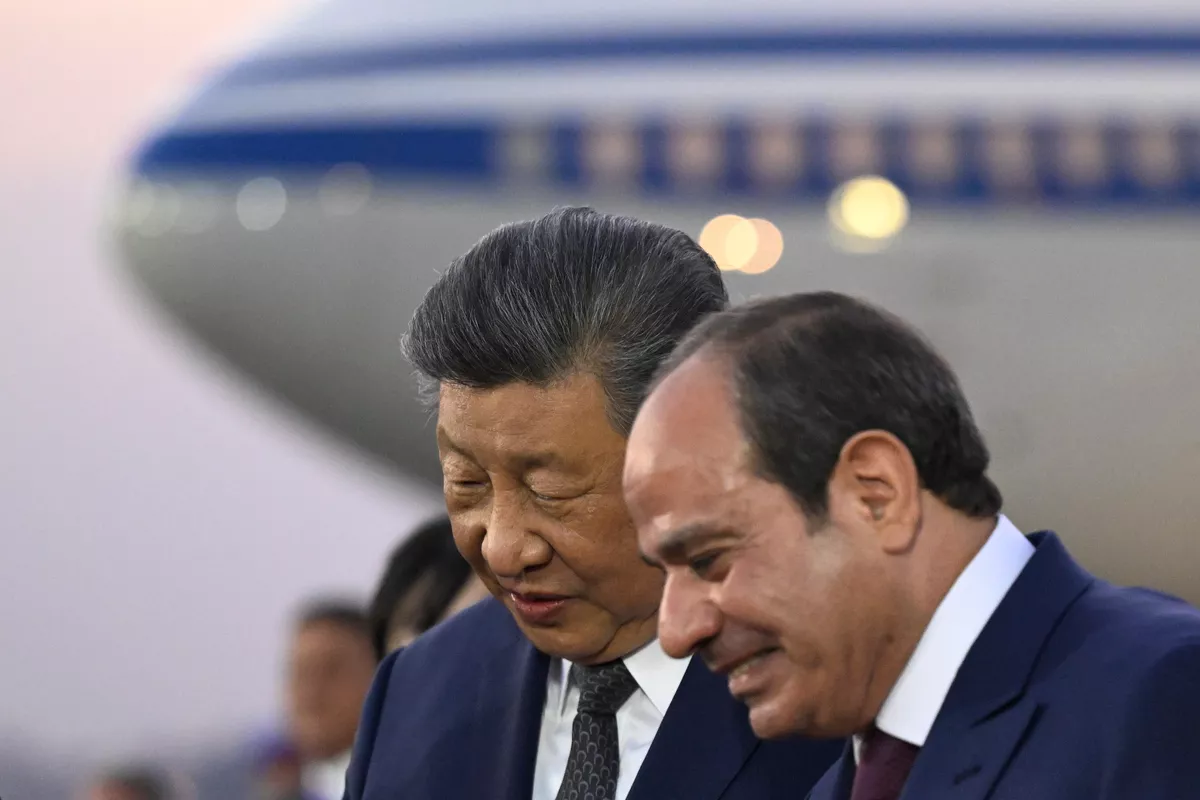
Chinese President Xi Jinping, having completed the main part of his program at the SCO summit, left Bishkek and headed not back to Beijing, but to Cairo.
Formally, there was nothing sensational about this. The visit to Egypt had been planned in advance, and the Chinese side had announced Xi Jinping’s itinerary before the summit. It would therefore be inaccurate to suggest that the Chinese leader unexpectedly or demonstratively walked out of an SCO meeting.
Yet in diplomacy, form can sometimes be almost as revealing as substance.
While Bishkek was still immersed in the atmosphere of a major Eurasian summit, the Chinese leader’s aircraft was already heading toward the Middle East. The scene was almost symbolic: China had helped shape the SCO agenda, reaffirmed its presence in Central Asia, and then almost immediately shifted the center of its diplomatic attention to Cairo.
It was, in its own way, a demonstration of the scale of China’s current foreign policy.
The SCO matters to Beijing, but China’s world has long extended far beyond the SCO.
Chinese diplomacy today operates simultaneously across several geopolitical chessboards. Central Asia, Russia, India, the Middle East, Africa, Europe and relations with the United States are all becoming components of a much larger strategy.
That is why the Bishkek-Cairo route is far more interesting than an ordinary flight between two official visits.
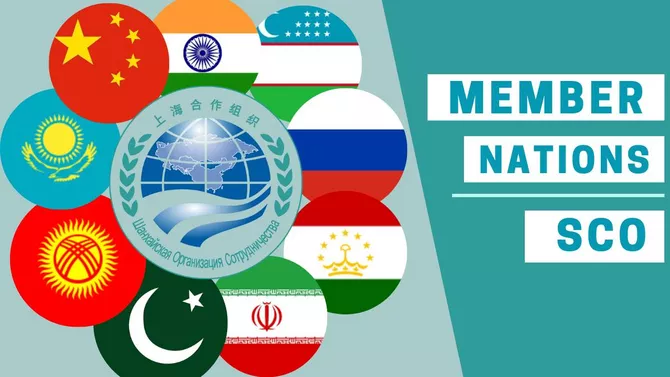
photo: Jagran Josh
From Eurasia Straight to the Middle East
In Bishkek, Xi Jinping was operating in a political environment that has become increasingly familiar to China.
Over the past several years, the Shanghai Cooperation Organisation has evolved into one of the largest international platforms outside the Western system of alliances. Its members include China, Russia, India, Pakistan, Iran and the countries of Central Asia, while an even broader circle of partners has developed around the organization.
For Beijing, the SCO is simultaneously an instrument of security, political dialogue and influence across Eurasia.
Yet immediately after the Bishkek summit, Xi moved into a completely different geopolitical space.
Egypt is not simply another Middle Eastern country.
It is the Suez Canal, the Mediterranean and Red Seas, Africa, the Arab world and one of the most strategically important transit hubs connecting Asia and Europe.
In the space of just a few hours, Xi Jinping’s diplomatic route therefore linked Central Asia with one of the world’s most important geopolitical crossroads.
There was a certain political elegance to the sequence.
Beijing appeared to be sending a message: China can simultaneously act as one of the central powers of Eurasia while aspiring to a much wider role - from Middle Eastern security to African infrastructure and global trade.
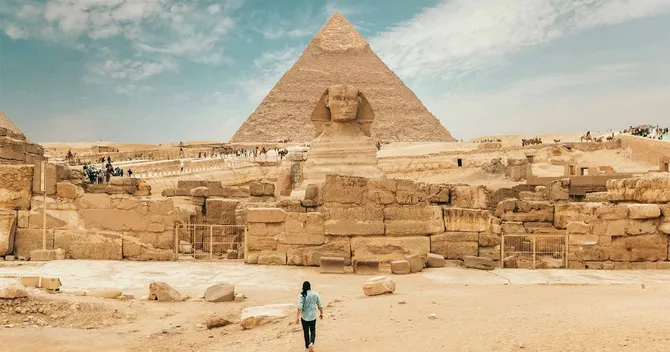
photo: getty images
Why Egypt?
The choice of Cairo is especially revealing.
For decades, Egypt has remained one of Washington’s most important partners in the Arab world and a major recipient of US military assistance. At the same time, President Abdel Fattah el-Sisi has steadily expanded relations with China, Russia, European states and other centers of global power.
For Cairo, such a policy reduces excessive dependence on any single foreign partner.
For Beijing, it creates opportunities.
China already has a significant economic presence in Egypt, including projects around the Suez Canal, industry, infrastructure, energy and new technologies.
The relationship is also acquiring a growing military and political dimension. China and Egypt have held joint air force exercises, while Xi Jinping’s current visit has been accompanied by calls for broader security cooperation in the Middle East.
That is why Egypt represents much more for China than just another partner in the Arab world.
Through Egypt, Beijing gains access to several strategic spaces at once: the Mediterranean, the Red Sea, Africa and the Middle East.
And the Suez Canal remains one of the central arteries of global trade between Asia and Europe.
photo: National Endowment for Democracy
China No Longer Wants to Wait for Others to Define the World Order
There is also a broader context.
For a long time, China concentrated primarily on economic growth and generally sought to avoid deep political involvement in regions far from its immediate neighborhood.
That model is gradually changing.
Beijing increasingly seeks not merely to adapt to the existing international system, but to participate in defining its rules.
China is promoting its own global development and security initiatives, expanding political ties across the Global South, strengthening its presence in the Middle East and Africa, and simultaneously reinforcing institutions such as the SCO and BRICS.
Xi Jinping’s diplomatic route therefore carries an additional meaning.
Bishkek represents China as a leading power in continental Eurasia.
Cairo represents China as a global actor whose ambitions extend far beyond its immediate geopolitical environment.
The Chinese leader’s subsequent international engagements are likely only to reinforce this picture.
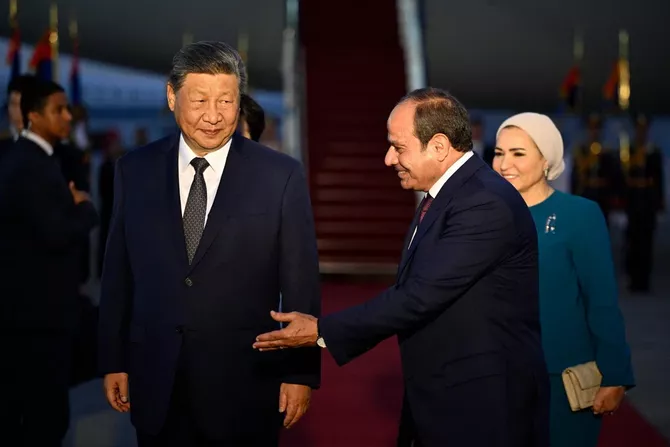
photo: thinkchina.sg
A Carefully Choreographed Diplomatic Gesture - Even If It Was Planned
Of course, there is no need to search for hidden meaning in every movement of the Chinese president’s aircraft.
The Egypt visit had been announced in advance. Xi Jinping did not storm out of the summit, nor did he leave the SCO as a gesture of dissatisfaction.
But the travel schedules of world leaders are never random.
And the sequence was highly revealing.
Xi arrived in Bishkek, participated in the SCO’s key events, held talks and outlined China’s approach to the future international order.
Then, while Bishkek was still full of presidents, prime ministers, diplomats and journalists, the Chinese leader was already heading toward the next arena of global politics.
It was not a departure from the SCO.
Rather, it looked like a transition to the next level of the diplomatic game.
And perhaps this is exactly what increasingly distinguishes China from many other powers: Beijing no longer wants to choose between Central Asia, the Middle East, Africa or Europe.
It seeks to be present wherever the future balance of power is being shaped.
That is why the image of Xi Jinping’s aircraft departing Bishkek can be interpreted almost symbolically.
The SCO summit continued to follow its own agenda.
China had already moved on.
By Samir Valiyev