When the Treaty on the Non-Proliferation of Nuclear Weapons (NPT) opened for signature simultaneously in Moscow, Washington and London on July 1, 1968, it was intended to prevent the world's most destructive weapons from spreading beyond the handful of states that already possessed them.
The treaty established a framework aimed at curbing nuclear proliferation, promoting the peaceful use of nuclear energy and advancing nuclear disarmament.
Nearly six decades later, it remains the cornerstone of the global nuclear non-proliferation regime, with 191 member states making it one of the world's most widely adhered-to international security agreements.
Yet experts also describe it as one of the most frequently challenged agreements, citing alleged violations, disputes over compliance and continuing concerns about nuclear proliferation.
Origins of the Treaty
By the mid-1960s, the US and Soviet Union had amassed enough nuclear weapons to inflict severe damage on each other, regardless of who formally won.
Politicians, scientists and philosophers viewed the nuclear standoff between the two superpowers as an existential threat to human civilization. They also feared the consequences if nuclear weapons spread to a much larger number of states.
Against this backdrop, the countries of the socialist and Western blocs established a joint working group to draft the Treaty on the Non-Proliferation of Nuclear Weapons.
The document was drafted by the UN Disarmament Committee, approved by the UN General Assembly on June 12, 1968, opened for signature on July 1, 1968, and was designed to balance the interests of nuclear and non-nuclear states.
The NPT rests on three interconnected pillars: non-proliferation, peaceful use of nuclear energy and disarmament.
Compliance with the NPT is monitored by the International Atomic Energy Agency (IAEA), the UN's nuclear watchdog based in Vienna, which strengthened its inspection regime after inspectors uncovered undeclared nuclear programs in the 1990s.
Today, the IAEA remains central to global efforts to verify compliance with the treaty and investigate concerns over suspected nuclear weapons activities.
Built-in Contradictions
Although the NPT has become one of the world's most successful arms control agreements, critics argue it was built on an inherent imbalance.
The treaty recognizes only five nuclear-weapon states - China, France, Russia, the United Kingdom and the United States - because they had tested nuclear weapons before Jan. 1, 1967, something that has been called an arbitrary cutoff date.
All other signatories agreed to permanently forgo nuclear weapons in exchange for those in the “nuclear club” promising not to transfer nuclear weapons or assist other countries in acquiring them.
At the same time, the treaty guarantees every country the right to pursue peaceful nuclear technology for electricity generation, medicine, agriculture, scientific research and other peaceful purposes, subject to international safeguards.
Former International Atomic Energy Agency (IAEA) Director Mohamed ElBaradei has described this as the "Achilles' heel" of the non-proliferation regime because the technical gap between enriching uranium for civilian purposes and producing material suitable for a nuclear weapon is relatively small.
The treaty also commits all parties under Article VI to pursue negotiations toward nuclear disarmament.
That provision remains one of the treaty's most controversial aspects, as many non-nuclear states argue that nuclear powers have failed to make meaningful progress toward reducing their arsenals, while nuclear-armed states maintain that any reductions must preserve strategic stability and international security.
Many non-nuclear states also point to the continued modernization of nuclear arsenals by the world's major powers as evidence that progress toward disarmament has fallen short of the treaty's original ambitions.
The Other Nuclear Powers
The treaty has significantly slowed the spread of nuclear weapons, but it has not prevented additional countries from joining the nuclear club.
India, Pakistan and Israel never joined the NPT and are widely believed to possess nuclear weapons.
Israel has maintained a long-standing policy of nuclear ambiguity, neither confirming nor denying that it possesses nuclear weapons. It is widely believed to have developed its nuclear capability around the Dimona reactor built with French assistance during the 1950s and 1960s.
India and Pakistan likewise developed nuclear weapons outside the treaty after declining to join it.
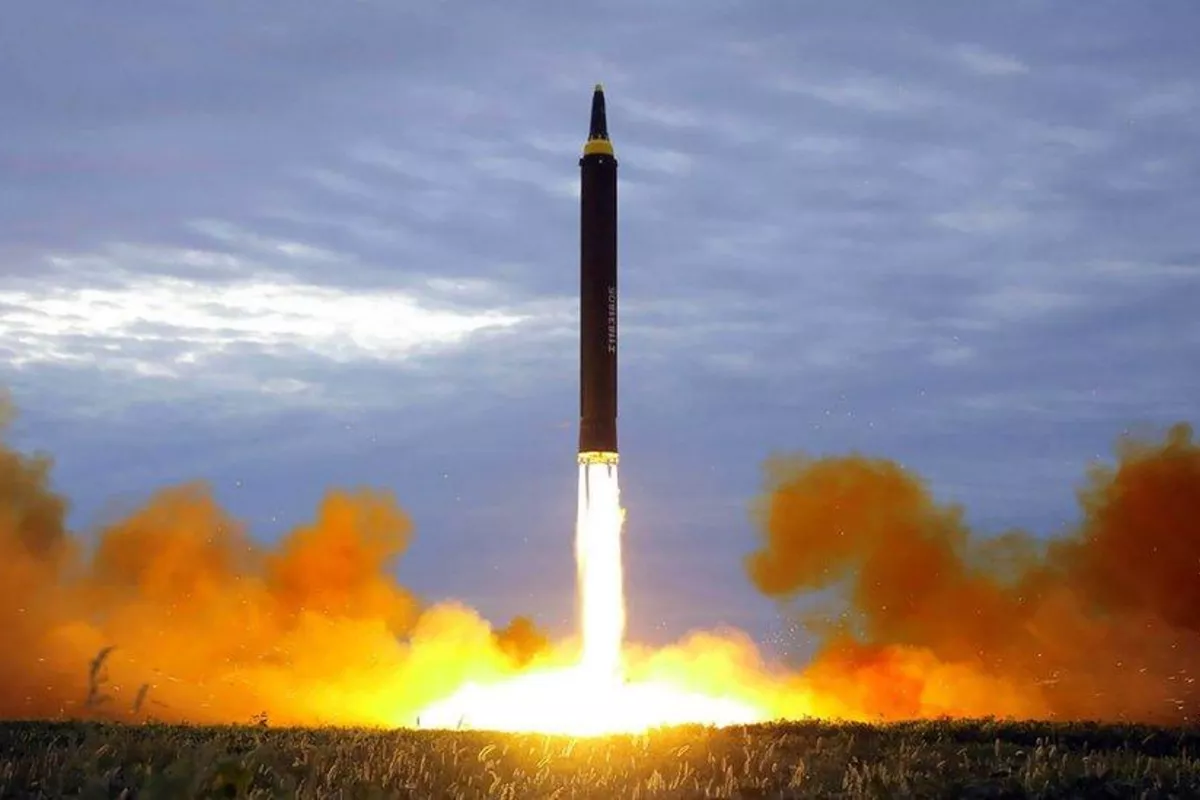
North Korea took a different path. It joined the treaty in 1985, withdrew in 2003 and later carried out a series of nuclear tests, becoming the only country to leave the NPT before developing nuclear weapons.
Iran presents another challenge.
Unlike Israel, India and Pakistan, Tehran remains a member of the treaty and insists its nuclear program is exclusively peaceful. However, its advanced uranium enrichment capabilities have led many analysts to classify it as a threshold nuclear state capable of producing weapons-grade material should it choose to do so.
Taiwan also pursued a covert nuclear weapons program during the Cold War while publicly presenting it as civilian research, but abandoned the effort under US pressure before successfully developing a bomb.
A Rare Example of Nuclear Rollback
While several countries have developed nuclear weapons outside the treaty, South Africa remains the only country to have voluntarily dismantled an indigenous nuclear arsenal.
The apartheid government secretly built several nuclear warheads during the Cold War as international isolation deepened and regional conflicts intensified.
Rather than using the weapons on the battlefield, the arsenal was intended primarily as a political deterrent designed to draw international attention in the event of a major national security crisis.
Following the end of apartheid, South Africa dismantled its nuclear weapons program, joined the NPT in 1991 and opened its facilities to international inspections, making it one of the treaty's most significant success stories.
In addition to South Africa's disarmament, Belarus, Kazakhstan and Ukraine relinquished the Soviet nuclear weapons stationed on their territories after the collapse of the Soviet Union and joined the treaty as non-nuclear-weapon states.
Treaty Under Pressure
Meanwhile, growing geopolitical tensions and the deterioration of several Cold War-era arms control agreements have raised concerns about the future of the broader nuclear arms control architecture.
Few issues illustrate the treaty's challenges more clearly than Iran's nuclear program.
Tehran insists its nuclear activities are exclusively peaceful and permitted under the NPT, while Western governments have long argued that its uranium enrichment program could provide the capability to produce nuclear weapons.
Iran's nuclear program dates to the 1950s but became the focus of international diplomacy after indications in the early 2000s that Tehran had conducted activity pertinent to acquiring a nuclear weapon.
Years of negotiations culminated in the 2015 Joint Comprehensive Plan of Action (JCPOA), under which Iran accepted significant restrictions on its nuclear activities in exchange for sanctions relief.
The agreement was thrown into uncertainty after the US withdrew in 2018 and reimposed sanctions, prompting Iran to gradually reduce its compliance with several of the deal's commitments.
This year, the US and Israel launched strikes on the country, citing the need to destroy the country’s nuclear program. However, negotiations on the country’s nuclear program have again restarted amid the ceasefire.
For many analysts, Iran has become the clearest illustration of the treaty's central dilemma: how to distinguish between a state's legitimate right to pursue peaceful nuclear technology and its potential ability to rapidly develop nuclear weapons.
Against this backdrop, the NPT's implementation is reviewed every five years at Review Conferences, where member states assess progress on non-proliferation, peaceful nuclear cooperation and disarmament.
Recent conferences have exposed widening divisions over nuclear disarmament, regional security crises and the continued modernization of nuclear arsenals, making consensus increasingly difficult to achieve.
Yet despite its shortcomings, supporters argue that while it has not prevented every country from acquiring nuclear weapons, it has significantly limited their spread and established international norms governing nuclear technology and arms control.
Find the original article here