The Times of Central Asia has published an in-depth analysis examining the overthrow of Bashar al-Assad in Syria and assessing how an emerging regional order in the Middle East could reshape political and security dynamics in Central Asia.
The Caspian Post republishes the article.
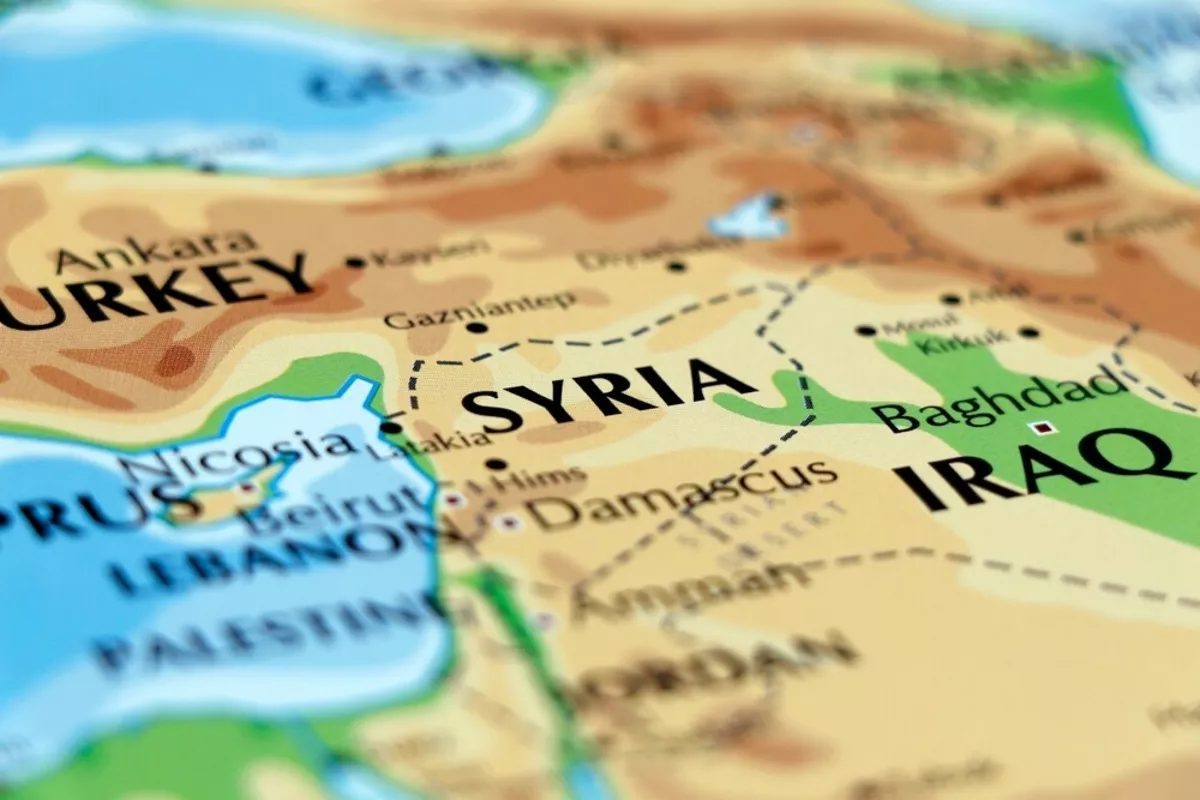
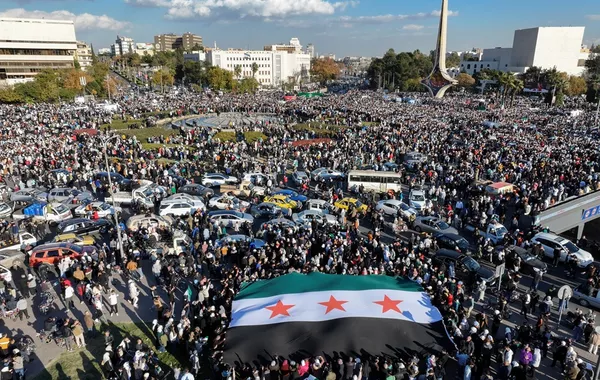
The overthrow of Bashar al-Assad in December 2024 fundamentally reshaped Syria’s regional position. The collapse of the old power structure weakened Iran’s entrenched military and economic networks and left Russia’s previously secured foothold uncertain. As Damascus enters a new political phase, external actors are recalibrating their strategies in a landscape that looks markedly different from that of the past decade.
For Central Asian governments, the shift is not merely regional. Syria is becoming a testing ground for how mid-sized states navigate post-conflict environments shaped by larger powers, and a potential arena for economic and diplomatic outreach. As influence is redistributed and new investment and trade corridors are reconsidered, decisions taken in Damascus will increasingly intersect with Central Asia’s own foreign policy and economic calculations. In this emerging landscape, a power vacuum is being filled by states seeking to advance their interests. From the earliest days of Syria’s post-Assad transition, Türkiye has been particularly active.
As part of its declared comprehensive support for the new Syrian authorities, Ankara has taken steps to consolidate its position in the Syrian Arab Republic. Türkiye is actively participating in infrastructure reconstruction, investing in economic projects, and expanding military-technical cooperation with Damascus. In August 2025, Syria and Türkiye signed a military cooperation agreement covering areas including counterterrorism training, cybersecurity, demining, military engineering, logistics, and enhanced coordination between their armed forces.
That same month, the two sides agreed to establish an intergovernmental business council under the Turkish Foreign Economic Relations Board to promote trade and investment cooperation between public and private companies. Turkish exports to Syria reached $3 billion in 2025, reflecting the rapid expansion of Ankara’s economic presence. For Central Asia, Ankara’s activism carries particular weight. Türkiye has simultaneously deepened its political, economic, and security cooperation across the Turkic world, meaning its posture in Syria intersects with its broader regional strategy.
A central element of Türkiye's Syria policy remains the issue of refugee returns. However, the prospect of large-scale repatriation is complicated by several factors, notably the long-term presence of around 2.5 million Syrian displaced persons in Turkish society and the absence of stable socio-economic conditions in Syria to support reintegration. Over more than a decade of conflict, a generation of Syrians has grown up in Turkey, many of whom are deeply embedded in the country’s social and economic life.
Türkiye's obligations under the 1951 UN Convention Relating to the Status of Refugees, including the principle of non-refoulement, further constrain policy options. Taken together, these factors make large-scale return unlikely until Syria achieves sustained political stabilization and adequate living conditions. In the longer term, Türkiye's objective of neutralizing what it describes as the Kurdish threat emanating from Syrian territory will continue to shape its strategy.
Israel has also intensified its military and political engagement since the change of power in Damascus. It has taken steps to establish control over areas adjacent to the Golan Heights and to create a buffer zone, arguing that such measures are necessary to safeguard national security against potential terrorist threats. Israeli officials have publicly expressed support for segments of Syria’s Druze community and signaled to the new authorities in Damascus that discrimination against minorities could trigger decisive countermeasures, including military action.
These warnings were underscored in July 2025 amid intercommunal clashes in Suwayda between Druze and Bedouin groups, when Israeli forces conducted strikes against Syrian government units deployed in the area. An airstrike targeting the entrance to the Syrian Armed Forces General Staff building further demonstrated Israel’s readiness to act. Current Israeli policy suggests an intention to retain control over the buffer zone in the Mount Hermon area and along the Golan Heights for the foreseeable future.
The Persian Gulf states, Saudi Arabia, Qatar, and the United Arab Emirates view post-Assad Syria primarily as a destination for large-scale economic investment. Saudi Arabia has announced plans to invest more than $6.4 billion in sectors including airport infrastructure, energy, telecommunications, and transport, signaling a preference for tangible economic engagement over symbolic political gestures.
At the same time, Gulf states regard the new Syrian government as a potential stabilizing factor in the Middle East following the weakening of Iranian influence. Cooperation with Damascus to combat drug trafficking, which has in recent years posed a significant security challenge for Arab monarchies, remains a priority.
European states moved quickly after the political transition to restore diplomatic contacts and outline mechanisms for economic assistance. The European Union has indicated plans to allocate approximately $722 million for humanitarian and reconstruction projects in 2026-2027. For European policymakers, however, the Syrian file remains closely linked to the issue of refugee returns, which often takes precedence over broader geopolitical considerations. The repositioning of Türkiye, Israel, the Gulf monarchies, and the European Union creates a new strategic landscape - one that Central Asian states cannot ignore, even if they remain cautious about direct involvement.
Central Asian states are approaching relations with Syria cautiously. During the years of conflict, Syria was widely perceived in the region as a hub of transnational terrorism and a destination for militants, including individuals from Central Asia. This perception has shaped a persistent narrative portraying Syria as a high-risk environment for travel and investment. While the new Syrian leadership has pledged to combat terrorism and distance itself from extremist networks, governments in Central Asia continue to proceed carefully.
A useful point of comparison is Central Asian engagement in Gaza, another politically sensitive conflict environment where humanitarian imperatives intersect with geopolitical risk. At the inaugural Board of Peace meeting in Washington in February 2026, Kazakhstan signaled its willingness to contribute to Gaza’s reconstruction and broader stabilization efforts, including financial support and potential participation in peacekeeping initiatives, while Uzbekistan publicly pledged support for rebuilding efforts through specific projects. No Central Asian state has yet deployed troops directly into Gaza outside these pledges. This pattern of prioritizing humanitarian and reconstruction-oriented engagement through multilateral mechanisms, rather than early military deployments, suggests that Central Asian governments are likely to approach post-Assad Syria in a similarly calibrated manner - emphasizing symbolic diplomacy and multilateral frameworks alongside carefully structured economic cooperation.
In practice, Uzbekistan appears the most likely Central Asian state to test limited cooperation with Syria first. That cautious outreach is already taking institutional form. In February 2026, Syria and Uzbekistan signed a memorandum of understanding aimed at expanding trade, investment, and economic cooperation. While the agreement does not yet imply large-scale capital commitments, it signals Tashkent’s willingness to establish formal channels with the new Syrian authorities and explore practical engagement within a controlled framework. Tashkent has, in recent years, pursued pragmatic diplomacy across the Middle East, including expanded ties with the Gulf states and Türkiye, and has demonstrated a willingness to separate economic cooperation from ideological alignment.
Kazakhstan, with its multi-vector foreign policy and experience balancing relations among competing powers, could follow through humanitarian assistance or multilateral reconstruction mechanisms rather than rapid bilateral investment. Kyrgyzstan and Tajikistan, given fiscal constraints and domestic security sensitivities linked to past fighter flows to Syria, are likely to move more cautiously. Turkmenistan’s traditional neutrality would also suggest a limited, economically framed approach if engagement occurs at all.
Geographical distance and the logistical complexity of establishing cost-effective trade routes between Central Asia and the Levant further constrain immediate economic engagement.
Nonetheless, Syria’s location and the scale of external involvement are positioning it as a potential investment center and, under certain conditions, a transport hub with access to the Mediterranean Sea.
According to statements by the new Syrian authorities, $28 billion in investments were pledged in the six months following the fall of the Assad regime, primarily in infrastructure, energy, and real estate. The United States, Türkiye, Qatar, Saudi Arabia, and the United Arab Emirates are reported to be among the largest investors.
Separately, international donors pledged nearly $6.5 billion in support for Syria’s recovery at a conference hosted by the European Union in Brussels in March 2025, aimed at stabilizing the country and supporting a peaceful political transition.
The Syrian authorities have amended laws to permit foreign investors to repatriate profits and transfer capital abroad as part of efforts to improve the investment climate, a change officials describe as enhancing Syria’s attractiveness for long-term capital.
The question is less whether opportunities exist than whether Central Asian governments are willing to absorb the political and reputational risks of early engagement. A phased and pragmatic approach, beginning with humanitarian and cultural aspects and gradually extending to economic cooperation, could allow Central Asian countries to test the waters while managing risk. Syria’s reconstruction needs span sectors in which Central Asian states possess relevant capabilities, including construction and basic infrastructure, energy modernization, irrigation and agricultural development, and technical training.
Historical ties may also serve as a symbolic foundation for renewed dialogue. Figures such as Sultan Az-Zahir Baybars and the philosopher Al-Farabi, associated with the broader historical space of the Great Steppe and the Arab East, are often cited as examples of long-standing cultural and political interconnections.
As Syria’s future is increasingly shaped by external actors, Central Asian states face a strategic choice: to remain marginal to unfolding developments or to seek carefully calibrated participation. Should they fail to engage, the current window of opportunity may close before it is meaningfully explored.