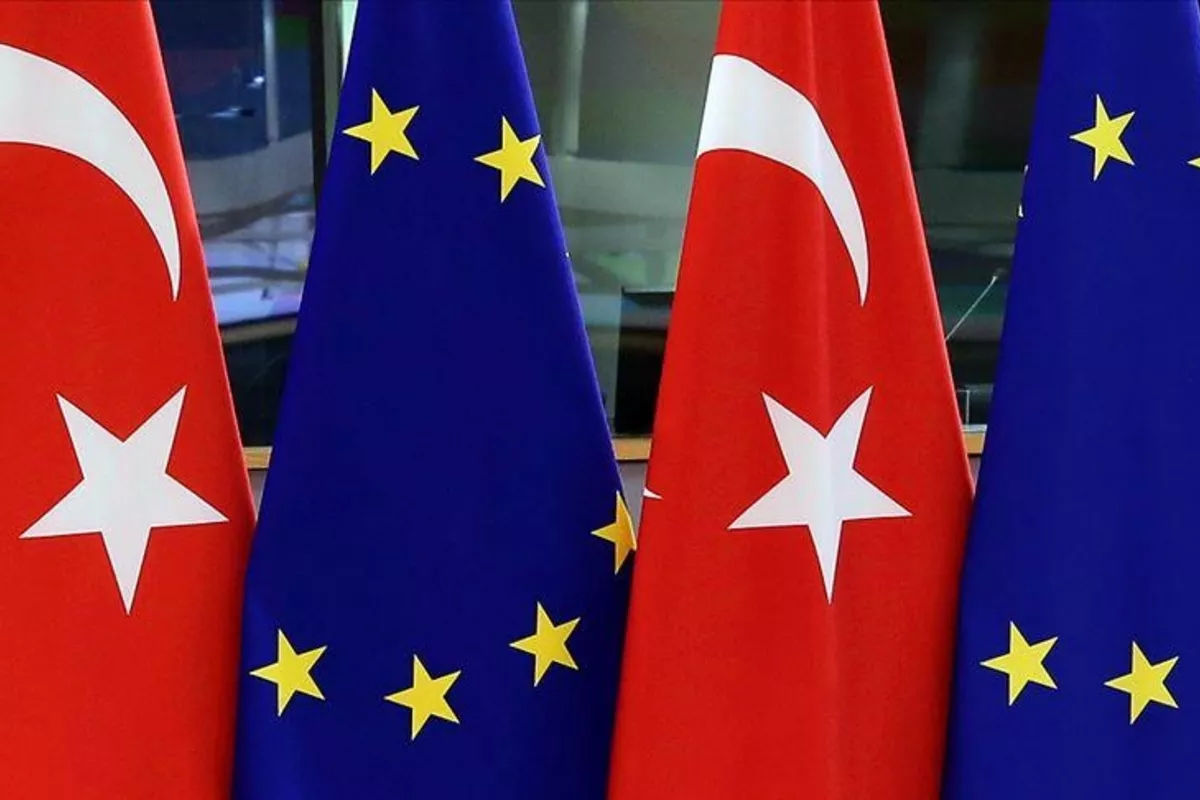
Relations between Türkiye and the European Union have reached a decisive moment. Over the past decades, both sides have benefited from distinctive economic frameworks that significantly deepened their ties-most prominently the 1995 Customs Union agreement, which created a foundation for expanded trade and integration. Yet despite the tangible gains produced by this arrangement, the partnership is widely regarded as having fallen short of its full strategic and economic potential.
In a recent article for the EU Reporter portal, Huseyn Sultanli, Advisor at the Baku-based Center of Analysis of International Relations (AIR Center), examines the current state and future prospects of this evolving relationship, The Caspian Post reports.
This primarily impacts Türkiye, whose economic, political and even diplomatic contribution to European security has not always been sufficiently rewarded by the now rather outdated structure of the relationship. Moreover, the tendency of some European actors to approach Türkiye through the cultural barrier fostered biased attitudes towards the country within ‘Europe’. Politicians like Valery Giscard d’Estaing, former President of France, have suggested that the country does not belong to European systems and values, opposing closer integration. Alongside the unjust implementation of the accession criteria, with countries like Romania and Bulgaria rewarded with membership despite poor economic performance, this contributed to the creation of a sense of bias from the EU towards Türkiye.
It is widely believed that this is actually reflected in the framework of the current relationship. For this reason, with increased emphasis in recent weeks, calls have been made to reassess the relationship and its suitability for an international environment that is radically different from when the Customs Union was first established.
Economic Ties - the Foundation
Economic ties between Türkiye and the European Union have served as the pillar of the broader relationship. The ties first originated in the 1950s, at a time when the European Economic Community was taking shape. In 1963, the sides signed an Association Agreement (referred to as the Ankara Agreement), which initiated economic integration and trade liberalisation. This was shortly followed by the 1970 Additional Protocol, which included industrial products in the trade liberalization process and initiated plans for an EU-Türkiye Customs Union. The sides continued to negotiate throughout the latter part of the twentieth century, resulting in the 1995 Customs Union agreement which generated considerable economic integration.
Moreover, the sides signed a Free Trade Agreement on Coal, Iron and Steel in 1996 and the Agriculture and Fisheries Trade Regime in 1998. As a result, Türkiye now consistently ranks in the top five of the EU’s largest trading partners, representing 4.2% of the EU’s total trade in goods. For Türkiye, the EU represents an even bigger market share, consistently positioned as the country’s largest ‘goods import and export’ partner. In 2024, total bilateral trade in goods was valued at 210 billion euros, which represents the highest figure ever recorded between the sides. This demonstrates the impact of the foundations implemented over the past thirty years, with the economic relationship between the sides already at an advanced stage.
However, despite this economic proximity, there are key structural limitations which have limited the relationship’s development. Most notably, it is the ‘incompleteness’ of the EU-Türkiye Customs Union that is becoming increasingly apparent. Agreements reached towards the latter part of the previous century, despite positioning the countries at the heart of each other’s trading activity, lack certain key features which all standard customs unions possess. For example, the Customs Union in its current format does not grant Türkiye any kind of role or influence in the formulation of the EU’s trading agreements. In fact, under the existing Customs Union, free trade agreements concluded by the EU with third parties directly affect Türkiye, as they grant those countries’ industries preferential access to the Turkish market. This creates additional competition for local manufacturers, which over the years has prompted Türkiye to respond by introducing protectionist measures on goods from specific countries.
Moreover, Türkiye is legally obliged to apply the EU’s common external tariff to goods covered by the Customs Union agreement when trading with any country. In return, however, Türkiye has little influence over the type of agreements the EU concludes. Most recently, the free trade agreement with India, along with the long-awaited EU-Mercosur agreement, threaten to undermine Turkish economic interests, given the automatic market access these countries would obtain under the EU-Türkiye Customs Union. In turn, the benefits of the EU’s free trade agreements do not automatically extend to Türkiye, with Ankara having to negotiate its own trading arrangements with the EU’s free trade partners. This can prove challenging and time-consuming, especially as countries which reach an agreement with the EU, the world’s largest free trade bloc, then demonstrate less enthusiasm in negotiating a fresh new deal with Ankara.
These limitations have led Ankara to intensify calls for a deeper framework which more accurately resembles its contribution to the EU’s trading network and allows for closer integration. Additional points of concern remain the negative impact of restrictive visa policies on Turkish nationals and businesses, which make it difficult for individuals and companies from Türkiye to establish direct contacts with counterparts from the EU. Moreover, administrative hurdles such as border checks for goods heading from Türkiye directly to Greece and Bulgaria, both EU member states, minimize the advantages of an economic arrangement designed, in theory, to loosen trade restrictions between the two sides. In addition, this Customs Union arrangement is distinguished from other similar formats by its limited scope as it covers only industrial and processed agricultural goods and does not include the services sector. Moreover, it requires Türkiye to take on the legal responsibility of aligning its regulatory standards with those of the EU for the sectors covered in the arrangement. Hence, these points highlight the lack of reciprocity within the existing framework, urging the need for reform to more accurately reflect Türkiye’s status as both a reliable partner of the EU and a major regional actor.
Insufficient Reciprocity
The shortcomings of the EU-Türkiye Customs Union arrangement have been widely recognized and form part of a broader debate on whether the EU-Türkiye institutional relationship reciprocally rewards both sides. For several years, Türkiye has held ‘EU candidate’ status. However, talks on accession have been complicated by opposition from within the EU, with states like Greece, Cyprus, Austria and even Germany expressing disapproval. Despite this, Türkiye has been a consistent and reliable ally of the European security architecture. Its military is widely considered to be a model within NATO, regularly ranking among the most powerful and technologically advanced.
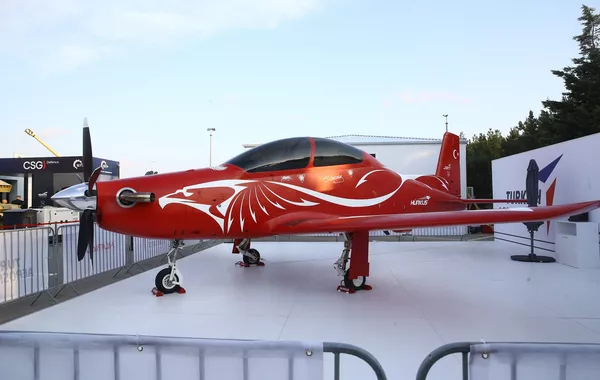
In fact, EU member states have widely benefitted from cooperation with the Turkish defence sector. Several member states, such as Romania and Poland, acquire Turkish military technology, with Ankara pursuing a similar policy in return. For example, the acquisition of Piaggio Aerospace, an Italian aerospace manufacturing company, by Türkiye’s Baykar Industries is one such instance. Moreover, Türkiye has expressed consistent interest in purchasing Eurofighter Typhoon jets, with the United Kingdom among the first purchasers and countries like Germany and France increasingly showing openness after previous public resistance. This reinforces that engagement between the sides is multi-faceted, with Türkiye’s military expertise acting as an additional pillar of cooperation alongside trade.
Nevertheless, the sides, primarily Türkiye, have recently expressed public dissatisfaction with the current state of the relationship, signalling that considerably more needs to be done to modernize its key facets. In particular, Ankara is discouraged by a relationship that it considers fundamental, has invested significantly in but ultimately views as insufficiently reciprocal. Despite the EU’s insistence on wanting to launch renewal talks, this process tends to meet obstacles which impede tangible progress. Whether by virtue of member state opposition or insufficient urgency from politicians in Brussels, a broad list of proposals and recommendations remains at the discussion stage. In addition to creating institutional friction, this impasse threatens to damage Türkiye’s role as one of the EU’s closest economic partners.
Mustafa Gultepe, the head of the Turkish Exporters Assembly, noted that the comparative advantage which Türkiye initially obtained through groundbreaking arrangements in the 1990s is weakening due to the emergence of new trading partnerships between the EU and other actors. He highlighted the EU’s free trade deal with India as a particular cause for concern, suggesting that India’s high-tech exports to the EU such as chemicals, electronics and automobiles may be negatively impacting Turkish manufacturers given India’s growing strength in these sectors. Moreover, this is occurring in parallel with a slowing rate of trade growth in comparison to other actors. Vietnam, for example, signed a free trade agreement with the EU in 2020 and in five years has seen a trade increase of 35%. Hence, as the EU rapidly broadens the scope of its free trade agreements, a push for a Deep and Comprehensive Free Trade Agreement with Türkiye to replace the Customs Union is swiftly becoming a strategic necessity.
The EU’s Attempt at Reassurance
In response to Türkiye’s recent concerns, the European Union has sought to reassure Ankara of its strategic importance. Visits by Kaja Kallas, the EU’s High Representative for Foreign Affairs and Security Policy in January 2026, and Marta Kos, the EU’s Commissioner for Enlargement, have highlighted Brussels’ willingness to overcome existing challenges. Marta Kos’ visit was followed by an announcement of an agreement for the European Investment Bank to resume its operations in Türkiye, with the sides announcing an agreement on loans worth €200 million to be directed at renewable and sustainable projects across the country. However, even though both EU officials openly recognized Türkiye’s concerns, whether this will result in practical steps remains unclear. Currently, engagements within the framework of the relationship are high in symbolism, praise and promise. However, major proposals remain unimplemented, starting with a modernized Customs Union or an alternative arrangement such as a Deep and Comprehensive Free Trade Agreement (DCFTA), which would deepen Türkiye’s integration into the EU’s trading system and eliminate the structural deficiencies which disproportionately affect Türkiye.
The Turkish business community has joined the collective push for an enhanced relationship, with several officials arguing that the limitation of the customs union to specific goods creates asymmetries in other sectors. Moreover, the burden of administrative checks must be loosened through the “harmonization” of all technical processes. On the government level, Türkiye has voiced its openness to new cooperation frameworks which would establish an alternative “centre of gravity”. In a recent interview, Foreign Minister Hakan Fidan hinted that a much closer alliance between Türkiye, the European Union and other middle powers like the United Kingdom could result in mutual geopolitical benefit through closer economic and military integration. Reforming and advancing the EU-Türkiye relationship would be an indispensable first step in this direction.
Can Existing Hurdles be Overcome?
As of today, there is considerable pressure on the EU, from both the public and private sectors, to take bold and decisive steps to re-energize its partnership with Türkiye. Opportunities for this are widespread, as in addition to bilateral EU-Türkiye talks the sides can and should engage in evolving geopolitical formats. With the EU’s recently announced Cross-Regional Connectivity Agenda, which seeks to synchronize its approaches to the Black Sea, South Caucasus and Central Asian regions, there is certainly sufficient scope to make this happen. In fact, Marta Kos labelled Türkiye as “at the heart” of the EU’s Connectivity Strategy, with Ankara’s geographic location and advanced transport portfolio making it an irreplaceable player. Moreover, she went as far as proposing a quadrilateral co-operation format between the European Union, Türkiye, Azerbaijan and Armenia in light of the ongoing normalization process between Baku and Yerevan and the development of the South Caucasus as a critical space for interregional connectivity. More generally, the EU is showing willingness to look ‘eastward’, which explains the need for greater political and strategic sensitivity in its relations with Ankara.
President Erdoğan’s recent call for Türkiye to be included in EU defence mechanisms underlines the urgency of this much-needed change. Although the current format has brought the parties closer, it is no longer sufficiently advanced to meet contemporary demands. After all, as the EU seeks to finally achieve strategic autonomy amidst a growing transatlantic rift, it has to pursue new partnerships and strengthen existing ones. Given its military and economic pedigree, as well as diplomatic weight, this feat will be unachievable without due consideration for Ankara and its strategic interests. As in many other cases, the EU once again faces the challenge of aligning its positive rhetoric with tangible steps.