UK–Türkiye Strategic Partnership: A Response to an Uncertain Alliance System
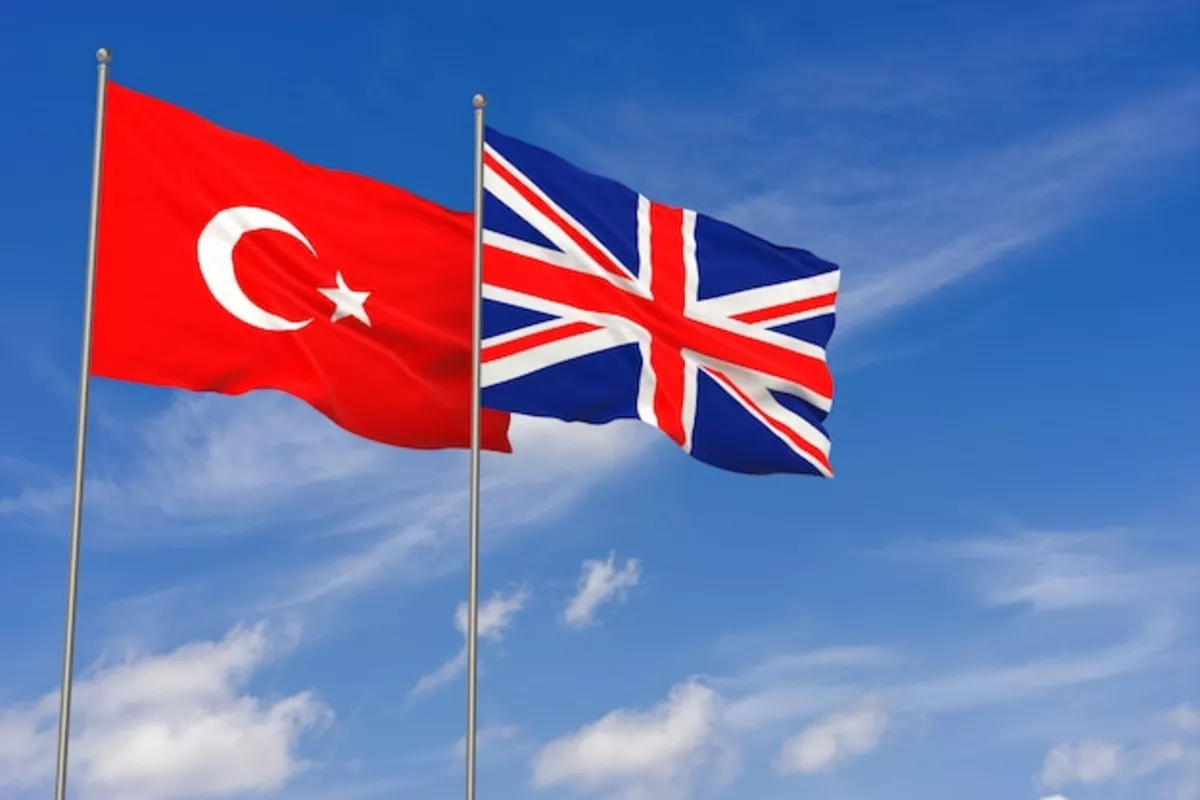
The signing of the UK-Türkiye Strategic Partnership Framework on 23 April 2026 represents more than a routine enhancement of bilateral relations. It consolidates a trajectory that has unfolded over the past decade, during which time relations between the two countries have deepened considerably. The framework signals a new high point, opening a more structured, long-term phase of cooperation.
This development can be best understood through the intersection of the two countries' evolving strategic needs. Both the United Kingdom and Türkiye have, in different ways, been recalibrating their positions within an evolving Western alliance system.
A Changing Alliance Landscape
For the UK, this process of recalibration began with Brexit. By decoupling its strategic trajectory from the EU's institutional framework, London has sought to reassert its national capacity and pursue a more flexible foreign policy. The country's focus has shifted towards bilateral and mini-lateral agreements, closer coordination with Washington, and renewed engagement with the Commonwealth. The AUKUS partnership is a clear expression of this approach.
While Türkiye's trajectory has been shaped by different pressures, the outcome is similarly pragmatic. Over the past decade, Ankara has faced a series of crises in its relationship with the US. These have included CAATSA sanctions, Washington's continued support for the YPG/SDF in north-eastern Syria, and the presence of FETO figures in the US following the 2016 coup attempt. The cumulative effect was not just episodic tension, but structural disruption.
Crucially, Türkiye has been unable to meet its key defense and security needs within the framework of its alliance with the US. Its exclusion from the F-35 program, delays in procuring F-16s, and sanctions targeting its defense industry have created tangible capability gaps. At the same time, Ankara's core threat perceptions - the PKK and FETO - were, in its view, directly exacerbated by US policies.
Taken together, these developments point to a broader pattern. The relationship between the United States and its traditional allies has become more volatile and unpredictable. Yet periodic improvements in political rapport have not altered this underlying trend. Washington's security commitments, particularly in the transatlantic sphere, are not as reliable as they once were.
This does not mean that the alliance system has collapsed. The current phase is transitional. The US has not withdrawn from its commitments, and its allies have not abandoned the relationship. However, uncertainty over the extent and consistency of these commitments has created new incentives for capable allies to diversify their partnerships.
A Bilateral Response to Strategic Uncertainty
It is in this context that the UK-Türkiye partnership takes on strategic significance. Both countries are seeking to mitigate the risks associated with an increasingly unstable alliance environment by strengthening their bilateral relationship. This is not a departure from NATO, but an adaptation within it.
The logic is also reinforced by complementarity: Türkiye and the UK bring different yet complementary capabilities to the table. For Ankara, cooperation with London offers access to advanced defense technologies without encountering the same level of political and legislative friction as with the US. For the UK, Türkiye is a strategically located partner with operational experience across multiple regions.
The relative flexibility and autonomy of decision-making are equally important. Unlike the EU framework, which often involves lengthy and complex processes, both countries are able to act more swiftly when their interests align. The 2020 Free Trade Agreement, concluded shortly after Brexit, demonstrated this. Its implementation contrasts with the long-stalled efforts to update Türkiye's customs union with the EU.
The Strategic Partnership Framework builds on this foundation and extends it. It prioritizes defense and security cooperation, explicitly anchoring the relationship within NATO and expanding coordination across a broader set of domains. These include energy security, climate policy, science, and technological innovation. In doing so, the framework shifts towards a more integrated model, moving beyond sectoral cooperation.
At the same time, it serves a political function. Although it is not a trade agreement, it provides a basis for future economic arrangements, including an upgraded free trade agreement (FTA). Crucially, it brings the two countries' foreign policy outlooks into alignment on key regional and global issues, particularly in the Middle East.
The result is a functional, long-term partnership. It reflects a deliberate effort to institutionalize cooperation across multiple areas, including defense, diplomacy, and economic coordination. In this context, the UK-Türkiye Strategic Partnership Framework forms part of a wider adjustment within the Western alliance system. As uncertainty increases and traditional structures become less predictable, capable actors are seeking to establish more flexible and resilient networks of cooperation.
The emerging UK-Türkiye axis is one such example. It does not replace existing alliances, but it does reshape how they operate.
See the original article here