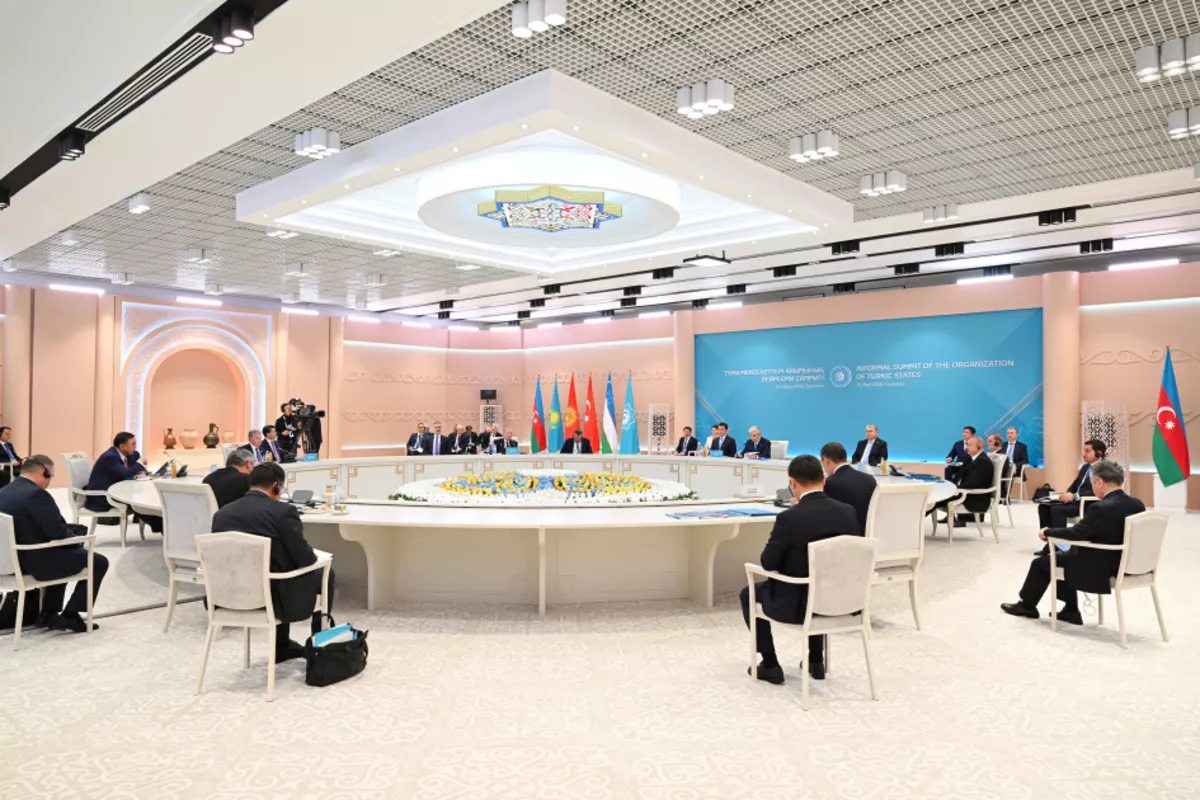
The Council of Heads of State of the Organization of Turkic States (OTS) held an informal summit on May 15, 2026, in the ancient city of Turkistan, Kazakhstan. Under the theme of “Artificial Intelligence and Digital Development,” the summit brought together leaders of the Turkic world.
Held in this region, which has nurtured civilizations along the Silk Road for centuries, the summit is a concrete manifestation of the resolve to reunite the spirit of unity that has flowed from the depths of history within the Turkic world with the digital paradigm of the 21st century.
When the joint declaration and leaders’ statements issued at the summit are considered together, the following reality becomes clear: the OTS is now taking decisive steps towards becoming a strategic actor with the capacity to shape global geopolitical transformation, far beyond merely being a platform for goodwill.
Unity in Digital Realm
It is no coincidence that the city of Turkistan hosted this summit. The choice of this ancient city, regarded as the spiritual capital of the Turkic world, is a clear indication that the organization is an economic, diplomatic and civilizational project. This venue, witnessed by history, carries a symbolic significance that blends today’s digital transformation agenda with the deep-rooted unity of the past.
The summit’s main theme, “Artificial Intelligence and Digital Development,” captures the spirit of the times with remarkable accuracy. After all, the areas where global competition is currently most intense are data centers, algorithms and digital infrastructure. The combined population of OTS members stands at approximately 179 million, while their combined gross domestic product (GDP) is nearly $1.9 trillion. A bloc of this scale could become a truly decisive force in global technology competition if it is able to act in a coordinated manner during the digital transformation process.
The joint statement issued following the summit announced that the leaders of member states supported the development of the Turkish Large Language Model and the Digital Silk Road Project. These two initiatives, in fact, symbolize complementary strategic priorities. The Turkish Large Language Model signifies that the hundreds of millions of Turkish speakers will gain access to systems that think in their own language, are productive and are sovereign in the age of artificial intelligence (AI).
Given that states developing large language models in the field of AI are thought to have gained an enormous asymmetric advantage over others, this step is of the utmost critical importance from both a cultural and a geopolitical perspective. A common Turkish language model offers the opportunity to make rapid progress in this field by pooling resources, rather than member states bearing the costs individually.
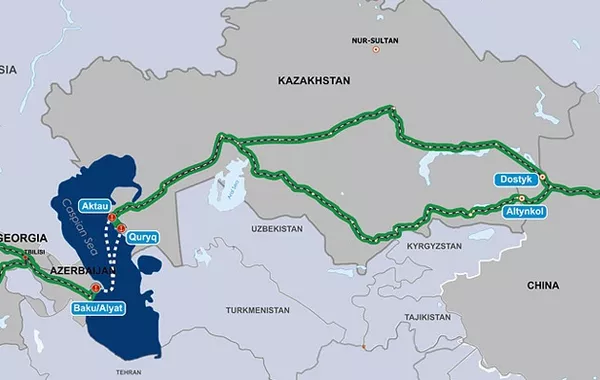
The Digital Silk Road Project is no less important when considered in the context of infrastructure. As highlighted by Azerbaijani President Aliyev at the summit, a Digital Silk Road project linking Europe and Asia is being implemented, with plans to commission the Trans-Caspian Fibre-Optic Cable line between Azerbaijan and Kazakhstan in the near future.
This infrastructure will not only connect OTS members, but it will also transform the Turkish corridor into a critical hub for intercontinental data traffic. Much like the strategic importance of the Middle Corridor in the realm of physical logistics, the Digital Silk Road will assume a parallel role in terms of data sovereignty and digital geopolitics.
Another significant step highlighted in the declaration is the instruction to develop the initiatives proposed by Kazakh President Kassym-Jomart Tokayev at the Gabala Summit: the “OTS Digital Innovation Center” and the “Cyber Security Council.” Cybersecurity is an integral part of defense policy in today’s world. The fact that five countries with differing regulatory frameworks and technical standards have demonstrated the will to establish a joint council in this field should be interpreted as a concrete demonstration of the organisation’s commitment to institutional deepening.
President Recep Tayyip Erdoğan’s call at the summit, meanwhile, defines the Turkish dimension of this picture. Erdoğan emphasized the need to add the phrase “unity in digital vision” to Ismail Gaspıralı’s motto of “unity in language, thought and action” 115 years later, while also recalling that Türkiye will host the 13th OTS summit. This statement reaffirms Türkiye’s leadership role within the organization. The call to implement the OTS Plus format, meanwhile, indicates a desire to move beyond the organization’s current membership base and establish a broader network of cooperation.
Action is Essential
The picture emerging from the Turkistan summit is exciting; however, it must be noted that the greatest test facing the OTS is the process of moving from words to action. Since its establishment, the organization has produced numerous visionary documents: the Nakhchivan Agreement, the Turkic World 2040 Vision and the Astana Charter. Leaders have reaffirmed their commitment within the framework of these documents. However, the gap between the capacity to produce documents and the capacity for institutional implementation remains to be bridged.
Several critical factors will determine the sustainability of concrete initiatives in the field of digital cooperation. First and foremost, the issues of funding and technical capacity must be viewed realistically. The development of the Turkic Large Language Model requires massive datasets, robust computing infrastructure and highly qualified human resources. The asymmetry between member states in these areas must not be overlooked.
The progress demonstrated by Kazakhstan and Azerbaijan in the field of digital transformation is commendable; however, the issue of burden-sharing arising from capacity disparities could become a source of friction in the future if it is not addressed fairly and transparently from the very outset of the project.
The second critical area is data governance and sovereignty. Given that member states have different legal frameworks, different data protection standards and different approaches to digital regulation, designing the framework for the OTS Digital Innovation Centre requires striking an extremely delicate balance. Otherwise, an institution that exists on paper may remain ineffective in practice.
A similar caution applies to the Cyber Security Council: the sharing of cyber threat intelligence and the establishment of joint response protocols necessitate the building of trust. Building this trust, however, is a process that takes time and requires technical and institutional effort, rather than merely formal declarations of commitment.
Thirdly, the agenda produced at this summit must be embraced at both the technical and bureaucratic levels. Summit declarations are doomed to remain in the archives if they do not go beyond mere statements of political will. The most significant test of the OTS’s institutionalisation process lies in establishing concrete implementation timetables, responsible institutions and monitoring mechanisms for the decisions taken at this summit.
Despite all these caveats, it must be clearly stated that the Turkistan summit has brought one of the most concrete and strategic agendas in OTS history to the table. A broad action plan was adopted at the summit, ranging from support for the development of an AI language model specific to the Turkic world to the strengthening of the institutional framework of the Digital Silk Road and from the establishment of a Cyber Security Council to the creation of joint technology parks.
The efforts of member states to bring their own national digital transformation agendas (such as Kyrgyzstan and Kazakhstan’s digital codes, Azerbaijan and Uzbekistan’s AI strategies, and Türkiye’s cybersecurity initiatives) together under a common umbrella reflect the determination to transform the concept of the “Digital Turkic World” from a mere slogan into a strategic framework.
Aliyev’s statement that “the Turkic world must become one of the influential geopolitical power centers of the 21st century” is the most concise and incisive expression of the collective self-confidence resonating at this summit. This digital voice rising from Turkistan is a clear declaration that this region seeks to have a say in an era when the global technology order is being reshaped.
The Turkistan summit has confirmed that the Turkic world has grasped the requirements of the digital age and is seeking to produce a collective response to these demands. What needs to be done now is to ensure that this resolution is not confined to paper, and transform it into institutional infrastructure, technical capacity and measurable results.
See the originap article here