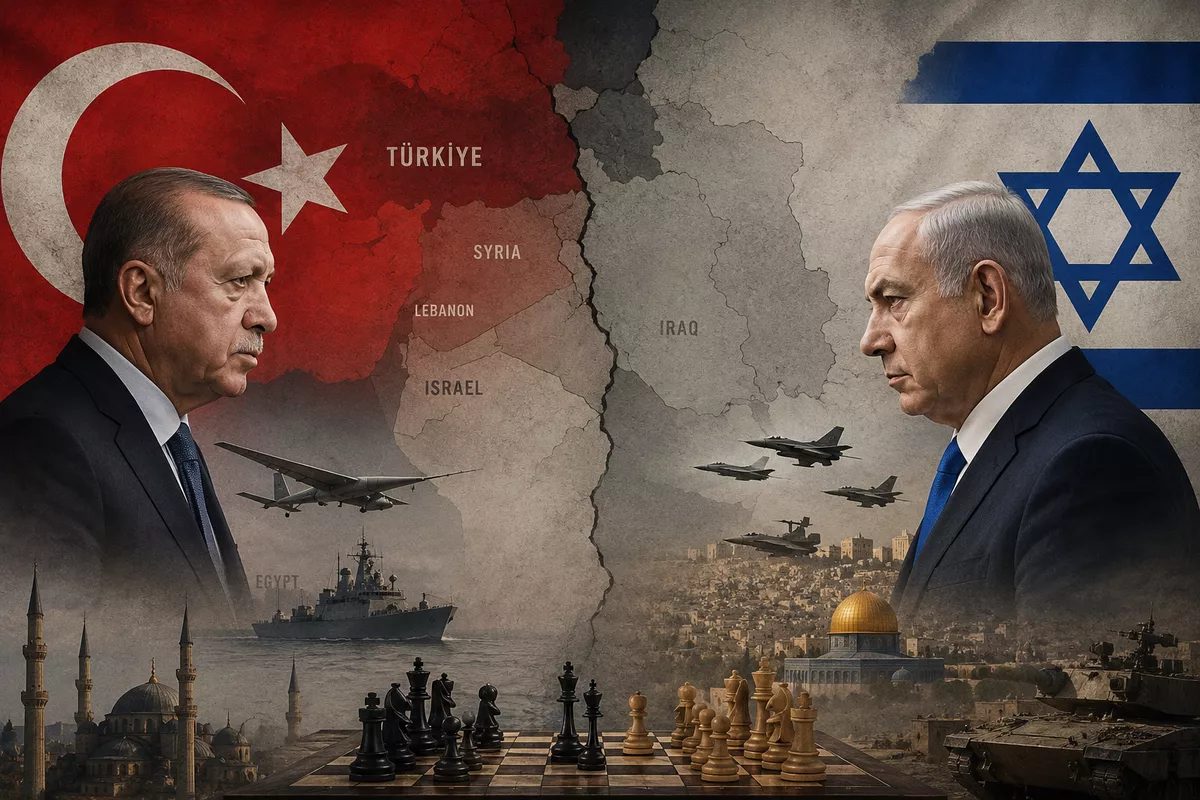
Relations between Türkiye and Israel have entered what is arguably one of the most difficult periods in the history of their bilateral ties. Just a few decades ago, Ankara and Tel Aviv were regarded as natural partners, united by security cooperation, military contacts, and shared strategic interests. Today, however, their relationship increasingly displays the hallmarks not merely of a political crisis, but of a long-term geopolitical rivalry.
This trend became particularly evident following the events in the Gaza Strip and the profound shifts in the regional balance of power. The weakening of traditional centers of influence, the transformation of Iran’s role, instability in Syria, and the gradual emergence of a new security architecture in the Middle East have increasingly placed Türkiye and Israel on opposing sides of regional developments.
Formally, the Palestinian issue remains the principal source of disagreement. However, it would be a mistake to reduce the current confrontation solely to the events in Gaza. The Palestinian question has become the most visible manifestation of a much deeper competition - a struggle over who will have the right to shape the political future of the Middle East.
One of the key drivers of tension is Türkiye’s increasingly active foreign policy. President Recep Tayyip Erdoğan and the Turkish leadership have consistently positioned the country as one of the principal defenders of the Palestinian people on the international stage. From Ankara’s perspective, support for the Palestinians is not merely one dimension of foreign policy, but also a moral obligation rooted in Türkiye’s historical responsibility toward the peoples of the region.
The Turkish leadership believes that the international community’s failure to take decisive action has compelled Ankara to adopt a more active position. This policy has brought Türkiye clear political dividends. Amid widespread disappointment across Arab and Muslim societies with the conduct of Western countries, Ankara has succeeded in cultivating the image of a state prepared to speak openly and consistently in defense of the Palestinians.
This has strengthened Türkiye’s position not only in the Middle East, but across the broader Islamic world. Ankara seeks to become a state capable of speaking on behalf of countries and societies that regard the existing regional and international order as unjust.
In Israel, these developments are being viewed with growing concern. Israeli political and expert circles fear that the expansion of Turkish influence could lead to the emergence of an alternative center of power capable of exerting pressure on Tel Aviv not only through diplomatic means, but also through economic and political instruments, including international organizations, Muslim-majority states, and public opinion.
For Israeli strategists, therefore, the issue is no longer primarily about Palestine, but about a long-term struggle for regional leadership.
The transformation of the Middle East’s entire security architecture is another source of concern for Israel. For many years, Iran and the regional forces aligned with it were regarded as Israel’s principal strategic adversaries. However, amid the continuing confrontation, Tehran and its allies have come under considerable pressure.
This raises a critical question: who will fill the emerging political and strategic vacuum?
One of the most unfavorable scenarios for Israel would be the emergence of an informal regional bloc led by Türkiye. Saudi Arabia, Egypt, and Pakistan could potentially become part of such a framework.
Of course, it would be premature to speak of the creation of a fully fledged military-political alliance among these countries. Significant differences remain between them in terms of interests, approaches, and regional priorities. Nevertheless, even partial coordination among states of such scale could substantially alter the balance of power in the Middle East.
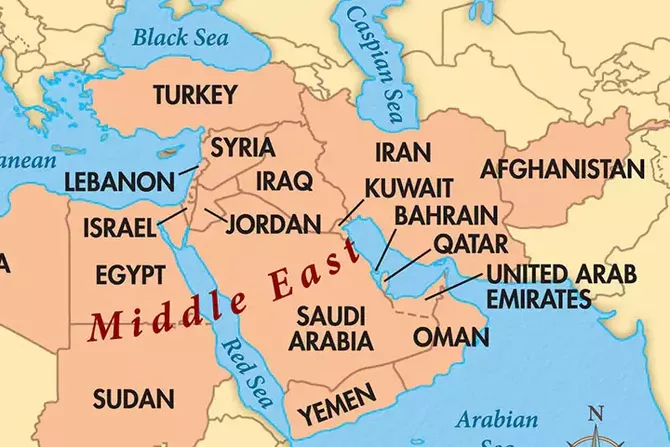
photo: commisceo global
At the same time, Israel should not automatically interpret such a development as the formation of a hostile camp. Türkiye has no plans for military expansion against the State of Israel. Ankara makes no secret of its desire to expand its influence, but it intends to do so primarily through diplomacy, economic relations, humanitarian instruments, and mediation initiatives.
The Turkish leadership advocates a multipolar Middle East in which no single state enjoys a monopoly over decision-making. For Israel, however, the mere possibility of an alternative center of power emerging has already become a source of strategic uncertainty.
Relations between the two countries have also been accompanied by unprecedentedly harsh rhetoric that, at times, resembles an open political challenge.
Israeli officials accuse Türkiye of supporting radical groups, employing anti-Israel rhetoric, and violating the rights of the Kurdish population. The Turkish side, in turn, accuses Israel of committing crimes against humanity in the Gaza Strip, undermining regional stability, and argues in favor of the international prosecution of certain Israeli officials.
It is important to understand, however, that Türkiye’s position on Palestine is not exclusively a policy of the ruling Justice and Development Party. Support for the Palestinians has long become a matter of broad national consensus in Türkiye. The country’s principal opposition forces also criticize Israel’s actions, even though they may disagree with Erdoğan on other domestic and foreign policy issues.
Criticism of Israel is therefore part of Türkiye’s nationwide political agenda rather than merely the ideological position of the current government. This significantly narrows Israel’s ability to influence Turkish public opinion or to expect a fundamental change in Ankara’s course following a possible political transition.
A similar situation can be observed within Israel itself. Despite sharp disagreements among the country’s various political forces, questions of national security and resistance to potential threats remain a unifying factor. This, in turn, limits the ability of external actors to influence Israeli society from within.
Although the rhetoric coming from Ankara and Tel Aviv is becoming increasingly alarming, the likelihood of a direct, full-scale war between Türkiye and Israel remains extremely low.
The two countries do not share a land border. Moreover, Türkiye is a member of NATO, and the launch of an open military campaign against Israel could provoke an exceptionally serious crisis in Ankara’s relations with the North Atlantic Alliance and its Western partners.
This does not, however, rule out the possibility of a limited confrontation on the territory of a third country. Syria remains the most dangerous arena in this regard, as the interests of Türkiye, Israel, Iran, Russia, Arab states, and numerous domestic armed groups all intersect there.
Türkiye views northern Syria primarily through the prism of its own national security. Ankara’s chief priority is to prevent threats from armed Kurdish groups and to stop the establishment of an autonomous political or military entity along the Turkish border with links to the Kurdistan Workers’ Party, or PKK.
Israel, for its part, seeks to prevent the emergence of military infrastructure in Syria that could pose a threat to its territory. However, Tel Aviv may perceive the expansion of Türkiye’s presence in Syria as an attempt by Ankara to establish itself in close proximity to Israel’s security zone.
Source: iStock
It is precisely here that the risk of an accidental or limited confrontation becomes most realistic. Such an incident may occur not because the two states consciously decide to go to war, but as a result of a strike against a particular target, a misreading of the other side’s actions, or a clash between forces supported by Ankara and Tel Aviv.
The Kurdish factor could play a particularly important role in this confrontation. Türkiye fears that Israel may use its contacts with Kurdish groups as an instrument of pressure on Ankara. The Kurdish question remains one of the most sensitive issues for the Turkish state, and any external involvement is therefore perceived as a direct threat to national security.
The Israeli side generally rejects such accusations, arguing that its contacts with Kurdish forces are connected to the need to preserve the regional balance. Ankara, however, understands that an expansion of Israel’s cooperation with Kurdish groups in Syria and Iraq could objectively weaken Türkiye’s position.
In any event, one point is becoming increasingly clear: the current confrontation between Ankara and Tel Aviv is no longer merely a dispute over Palestine. It is a competition for the dominant role in an emerging regional system.
Both countries seek either to preserve or acquire the status of a key center of power in the Middle East. Türkiye additionally aspires to become one of the leading powers of the Islamic world, a prospect that causes particular concern in Israel.
Both Ankara and Tel Aviv possess substantial military, economic, technological, and diplomatic capabilities. Both countries have extensive international ties and their own networks of alliances and partnerships. Their confrontation therefore inevitably affects the interests of other states.
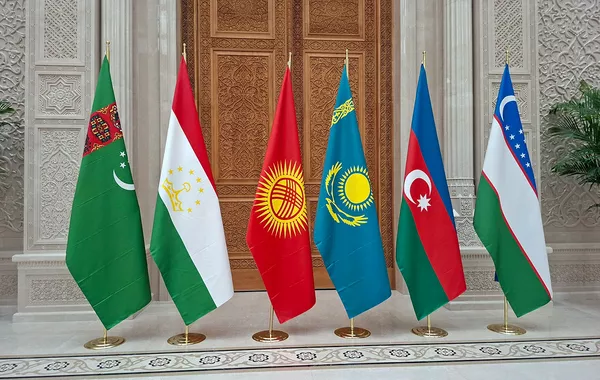
In this context, it is also worth recalling the Shusha Declaration, signed by Azerbaijan and Türkiye on June 15, 2021. The document formalized the allied nature of relations between Baku and Ankara, providing for consultations and the necessary assistance in the event of a threat to the independence, sovereignty, territorial integrity, or security of either party.
At the same time, Azerbaijan maintains mutually beneficial strategic relations with Israel. Baku is interested in preserving cooperation with both Ankara and Tel Aviv and cannot be interested in seeing tensions between two of its important partners escalate into an open conflict.
This is only one example of how complex the system of regional interconnections is becoming. Alliance commitments, economic interests, security concerns, and new geopolitical trends are increasingly coming into conflict with one another.
Under the current circumstances, neither Türkiye nor Israel needs a major regional explosion. Both sides understand the cost of a direct confrontation, which could destroy existing economic ties, draw allies into the conflict, and turn the Middle East into the arena of an even wider struggle.
The absence of an interest in a major war, however, does not mean that there is no risk. The principal danger lies in the possibility that harsh rhetoric, competition for influence, and clashing interests in Syria could set off a chain of events that would subsequently prove difficult to stop.
The future of Turkish-Israeli relations will therefore depend not only on developments in Gaza, but also on whether Ankara and Tel Aviv can reach an understanding over the informal boundaries of their respective spheres of influence. Until such an understanding is achieved, their rivalry is likely to intensify.
Türkiye and Israel are unlikely to become direct military adversaries. Yet the era of their former strategic partnership is already a thing of the past. It is being replaced by a new model of relations - a cold rivalry in which diplomacy, regional alliances, economic leverage, information influence, and actions on the territory of third countries will play a role no less significant than military power.
By Anar Muradov