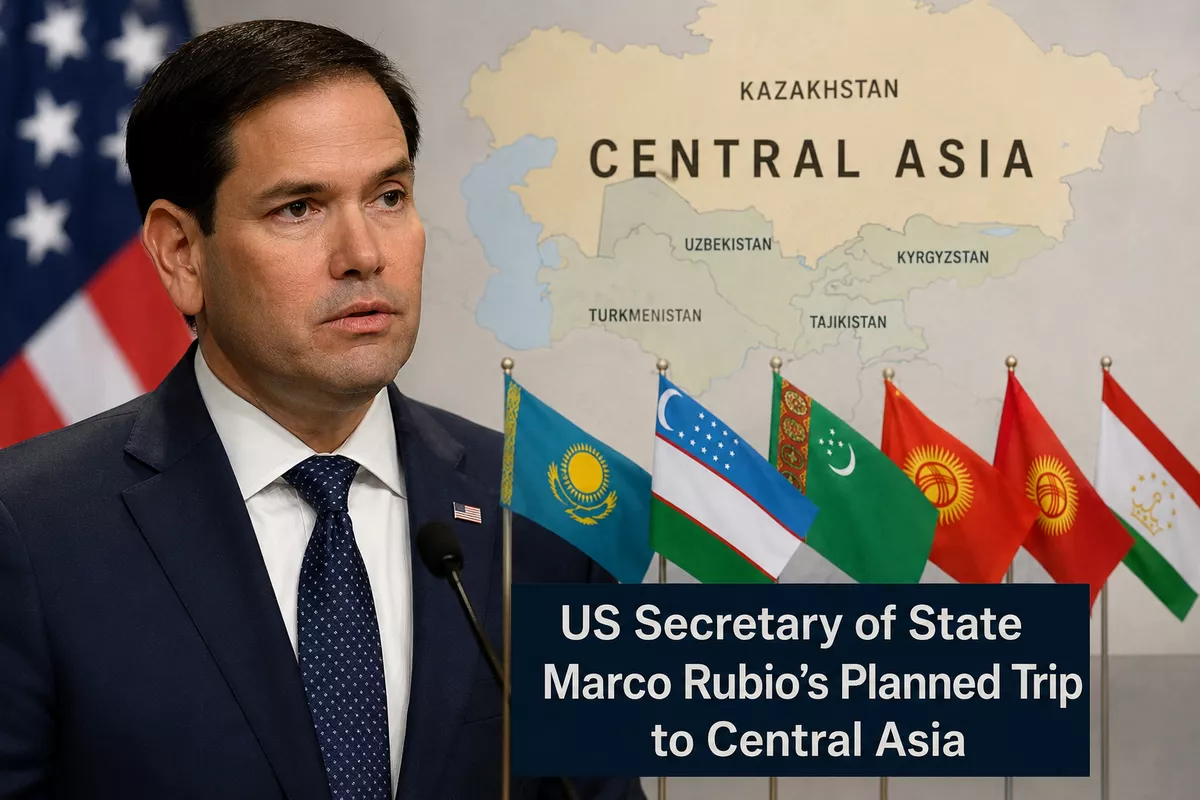
US Secretary of State Marco Rubio’s planned trip to Central Asia could become one of the most significant diplomatic events of 2026 for the region. Rubio has previously stated that he intends to visit all five Central Asian states - Kazakhstan, Kyrgyzstan, Tajikistan, Turkmenistan, and Uzbekistan.
The exact dates and itinerary have yet to be officially announced. Nevertheless, the scale of the proposed tour already suggests that Washington is seeking to significantly intensify its engagement with Central Asia. Unlike many previous visits by senior US officials, which were often limited to one or two capitals, Rubio is expected to cover the entire region.
The United States will likely present the trip as evidence of Central Asia’s growing importance in American foreign policy. Critical minerals, trade, transport corridors, energy, and the expansion of the US economic presence are expected to dominate the agenda.
At the same time, Rubio’s planned tour should not be interpreted solely as a sign of Washington’s genuine interest in the region’s long-term development. US engagement has intensified precisely as global competition for uranium, copper, antimony, lithium, rare earth elements, and alternative supply routes has sharply increased.
This creates the impression that Central Asian countries are being viewed by the US administration primarily as sources of strategic resources and as part of a broader geopolitical effort to balance the influence of China and Russia. Under such an approach, the interests of the regional states themselves risk becoming secondary.
Rubio announced his intention to visit Central Asia in November 2025 during a meeting with the foreign ministers of the five regional states under the C5+1 format. He indicated that visiting all five countries could take approximately one week. At the time, he also spoke about the convergence of US and Central Asian interests in the responsible development of natural resources and the diversification of national economies.
Critical minerals are likely to be among the main issues discussed during the upcoming talks. Central Asia possesses substantial reserves of uranium, copper, lithium, rare earth elements, antimony, and other resources required for the production of batteries, semiconductors, electric vehicles, military equipment, and energy technologies.
For the administration of US President Donald Trump, access to these resources is not only an economic objective but also a strategic one. The United States is seeking to reduce its dependence on supply chains and processing facilities dominated by China. In this context, Central Asia could emerge as an important new source of raw materials for American industry.
However, Washington is interested not only in the deposits themselves. Turning the region’s natural resource potential into part of Western supply chains will require major investment in geological exploration, extraction, processing, energy, and transport infrastructure.
It is at this stage that American diplomacy will have to demonstrate the seriousness of its intentions. Central Asian states do not want to remain merely suppliers of unprocessed raw materials. They are seeking to establish domestic processing facilities, attract advanced technologies, train skilled specialists, and increase the share of high-value-added products in their economies.
If Washington offers only contracts for the extraction and export of minerals, without supporting the development of local industry, the American strategy will differ little from the resource-based model that the United States itself frequently criticises when applied by other major powers.
Kazakhstan already occupies an important position in the global uranium market and possesses a substantial mineral base. Uzbekistan is actively developing its mining industry and attracting foreign capital. Tajikistan has promising reserves of antimony and other metals. Turkmenistan remains one of the world’s major holders of natural gas reserves, while Kyrgyzstan is also seeking to expand cooperation in the mining sector.

photo: discovery alert
Rubio’s visit is expected to show whether Washington is prepared to support its interest with financing mechanisms, investment insurance, technology transfer, and long-term contracts. Without such measures, American companies will find it difficult to compete with Chinese businesses, which are already deeply integrated into the regional economy and are often able to make investment decisions more quickly.
The development of the C5+1 dialogue on critical minerals may be viewed as a preparatory stage for Rubio’s tour. The agenda includes investment conditions, taxation, transport, logistics, and the transition from discussions about resource potential to the implementation of specific commercial projects.
Another major issue will be Central Asia’s transport connectivity with the South Caucasus, Türkiye, and Europe. For the United States, it is important that the region has export routes that do not depend exclusively on Russia or China.
In this context, the importance of the Trans-Caspian International Transport Route, also known as the Middle Corridor, continues to grow. It connects China and Central Asia with Azerbaijan across the Caspian Sea, after which cargo can move through Georgia and Türkiye towards Europe.
The development of this route serves the interests of nearly all participants. Central Asian countries gain additional access to global markets. Azerbaijan strengthens its role as a key transit hub between Asia and Europe. Türkiye increases the strategic importance of its transport infrastructure, while the United States and the European Union gain an alternative route for the movement of raw materials and goods.
Reliable logistics are particularly important for the export of critical minerals. Even large deposits have limited strategic value for Western partners if the extracted material cannot be transported to processing facilities at a competitive cost. For this reason, minerals and transport are likely to be treated as interconnected elements of a broader American strategy during Rubio’s trip.
Further opportunities could emerge from the development of transport links between Azerbaijan and Armenia. The US-backed TRIPP initiative - the Trump Route for International Peace and Prosperity - envisages the creation of a route through southern Armenia connecting mainland Azerbaijan with the Nakhchivan Autonomous Republic and onward to Türkiye.
If implemented, the project could become one of the missing links in a wider transport network connecting Central Asia, the South Caucasus, and European markets. Its practical significance, however, will depend on the durability of the Azerbaijan-Armenia peace process, the conditions governing the route, and the availability of investment in infrastructure.
Trade will be another central topic of discussion. Despite Washington’s growing political interest, US economic ties with Central Asia remain far more limited than the regional presence of China, Russia, and the European Union.
One obstacle is the legacy of the Jackson-Vanik amendment, a Cold War-era measure that continues to affect trade relations with some countries in the region. Rubio supports the removal of these outdated restrictions. Their repeal would require action by the US Congress, but the administration’s position suggests that Washington understands the need to modernise the legal framework governing relations with Central Asia.
Removing the restrictions could facilitate an expansion in trade, lending, and investment. Yet legislative changes alone will not be sufficient. American businesses will also require clear operating conditions, investment protection, transparent regulations, access to infrastructure, and reliable routes to international markets.
There is also reason for scepticism regarding the gap between Rubio’s ambitious rhetoric and the practical actions of the US administration. After taking charge of the State Department, he supported a review and reduction of a substantial number of foreign assistance programmes.
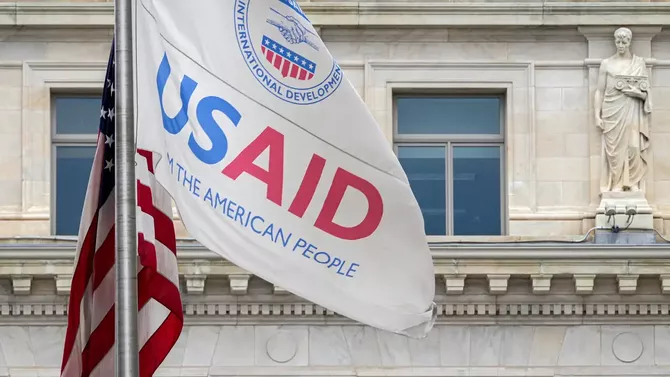
photo: The Fulcrum
Many USAID projects that had for years funded education, healthcare, independent media, civil society, and small-business development in Central Asia were frozen or placed under threat of closure. As a result, Washington first weakened one of its principal instruments of soft power and is now attempting to compensate for that loss with promises of large-scale economic initiatives.
This approach indicates that current US policy is becoming increasingly pragmatic and selective. When dealing with Washington’s adversaries, Rubio frequently uses the language of democracy, human rights, and political freedoms. Yet in relations with states that possess valuable resources or occupy strategically important locations, these issues may quickly move into the background.
For Central Asia, this means that US policy is likely to be shaped less by the promotion of values and more by the pursuit of access to minerals, the effort to balance China’s growing influence, and the development of transport routes that reduce dependence on Russia.
It is also unclear how durable Rubio’s regional strategy will be. As secretary of state, he is implementing Trump’s “America First” doctrine, under which international initiatives are assessed primarily according to their direct value to the United States.
As a result, promises of strategic partnership could run into budget cuts, changing political priorities, or demands for rapid commercial returns. The region has already seen previous US administrations declare Central Asia strategically important, only to redirect their attention towards other international crises.
Rubio’s trip will inevitably be viewed through the prism of US competition with Russia and China. Moscow continues to maintain close political, economic, military, and humanitarian ties with the region. China is the largest trade and investment partner for several Central Asian countries and plays a major role in infrastructure development.
However, Central Asian governments are unlikely to be interested in replacing one dominant partner with another. Their foreign policies are based on diversification and simultaneous engagement with Russia, China, the United States, the European Union, Türkiye, the Gulf states, and other centres of power.
Any attempt by Washington to turn the region solely into a platform for confrontation with Moscow and Beijing could therefore generate concern. Central Asian countries are not seeking participation in a new Cold War. They are seeking additional investment, technology, markets, and transport opportunities.
The success of Rubio’s trip will depend on whether he can offer the region a practical and genuinely equal agenda. Central Asian leaders have repeatedly heard declarations about the strategic importance of their countries. What they now expect are concrete projects - from mineral development and the construction of processing plants to the modernisation of railways, ports, energy grids, and customs infrastructure.
Visiting all five countries would also allow Rubio to take into account the significant differences among them. Kazakhstan and Uzbekistan are the region’s largest economies and the main destinations for potential American investment. Turkmenistan has particular importance in the energy sector. Tajikistan and Kyrgyzstan are interested in infrastructure, hydropower, mining, and new trade routes.
Rubio’s forthcoming tour will therefore serve as a test of how serious the United States is about returning to Central Asia. If the trip ends only with broad declarations, the region will continue to view Washington as an important but geographically distant and inconsistent partner.
If, however, the meetings produce concrete financing commitments, investments in mineral processing, support for the Middle Corridor, and expanded trade, the visit could mark the beginning of a new stage in relations.
At the same time, Central Asia must ensure that it is not treated merely as a source of resources or as a battleground for competition among major powers. The region is not seeking a new dependency. It is seeking an equal partnership that contributes to the development of its own industry, infrastructure, and human capital.
Washington is trying to take advantage of Central Asia’s growing importance in the global competition for resources and transport routes. Yet the final outcome will be determined not by the number of Rubio’s meetings or the strength of American rhetoric, but by the real economic opportunities the United States is prepared to offer the five countries of the region.
by Rovshan Samedov