Why Central Asia is Shifting from Russian to Turkic Security
For much of its existence, the Organization of Turkic States (OTS) was treated as a cultural curiosity rather than a geopolitical actor. In Western capitals, it was seen as a loose club of linguistically related nations - useful for soft power but irrelevant to hard security. That view is now badly outdated.
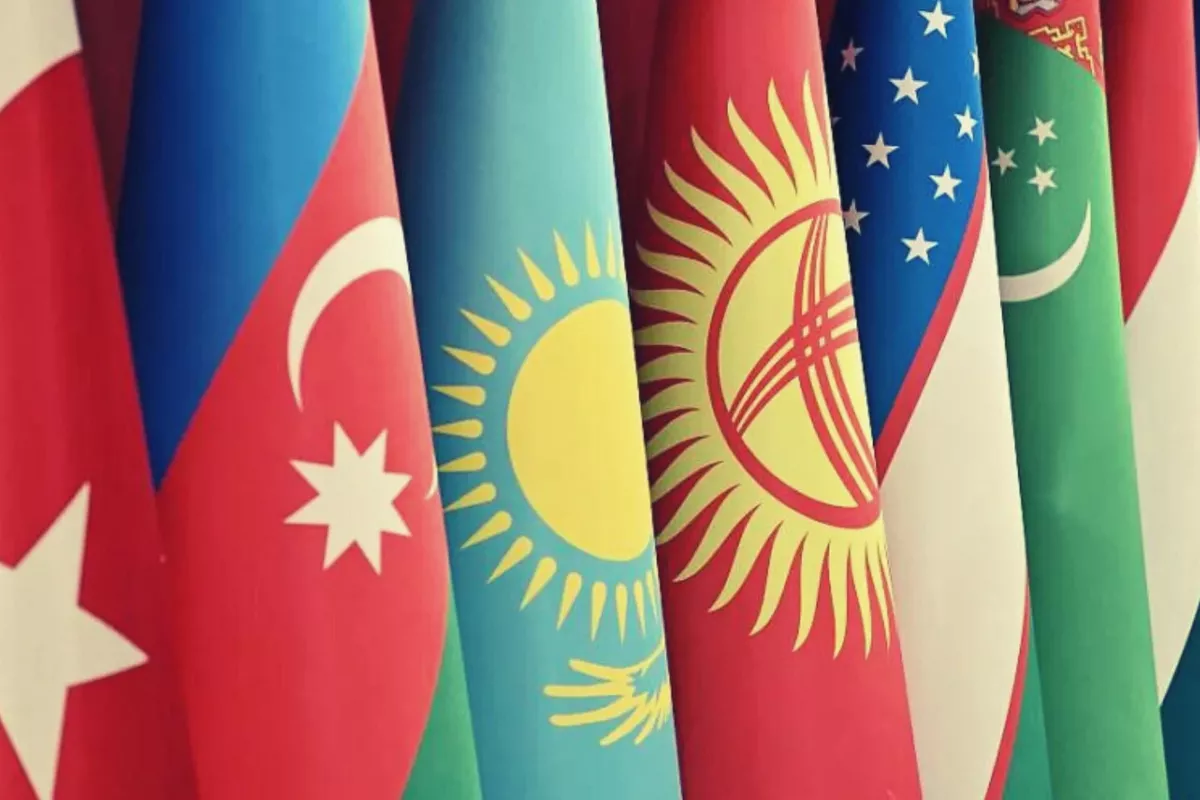
The October 2025 summit in Gabala, Azerbaijan, made one thing unmistakably clear: the Turkic world is no longer content to be a peripheral player in Eurasian geopolitics. It is beginning to construct its own security architecture, and the implications reach far beyond Baku, Ankara, or Astana.
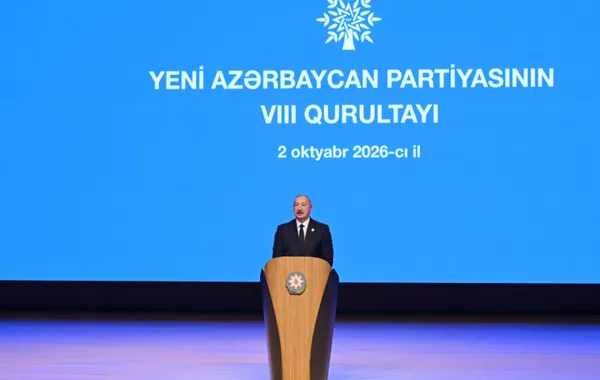
When Azerbaijani President Ilham Aliyev described the OTS as “a key geopolitical center,” he was not engaging in rhetorical excess. He was stating a strategic fact. His Kazakh counterpart Kassym-Jomart Tokayev went even further, calling the organization “an authoritative body uniting Turkic populations.” For Washington and Brussels, such language would once have sounded aspirational. Today, it is increasingly grounded in reality.
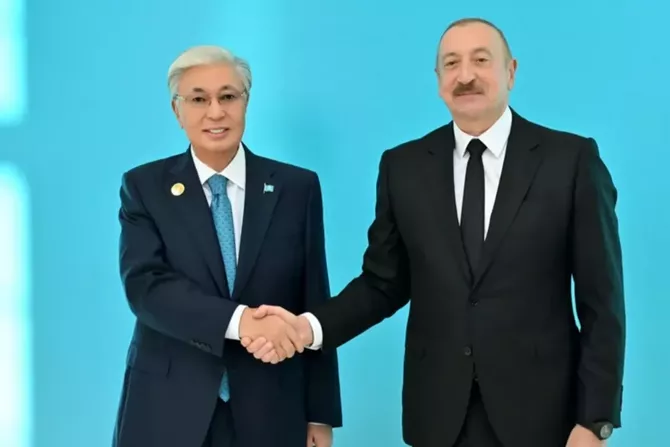
Photo credit: Kazinform
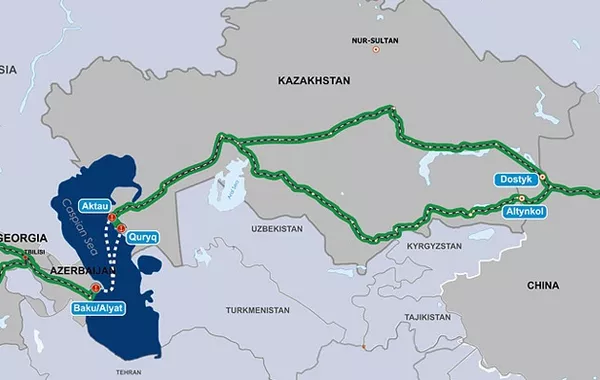
What has changed is not ideology but power. For three decades after the Soviet collapse, Central Asia and the South Caucasus lived in a security vacuum. Russia attempted to fill it through the Collective Security Treaty Organization (CSTO). The West flirted with engagement but never built durable security structures. China focused on economics. The result was a geopolitical gray zone - rich in resources and corridors, but poor in strategic ownership.
That vacuum is now being filled by the region’s own middle powers: Azerbaijan, Kazakhstan, and Uzbekistan. As Svante Cornell has argued, the OTS has become the vehicle through which these states are asserting themselves as security providers rather than security consumers. This is a profound shift. It means that Eurasia is no longer waiting for great powers to determine its fate. It is beginning to do so itself.
The transformation did not happen overnight. It began quietly at the Samarkand summit in 2022, when discussions of cultural cooperation gave way to talks on military ties and defense industries. It gained momentum in Astana in 2023, when Aliyev bluntly stated that “defense potential becomes the main guarantor of security.” And it became irreversible in Gabala in 2025, when “regional peace and security” were elevated to the organization’s central theme.
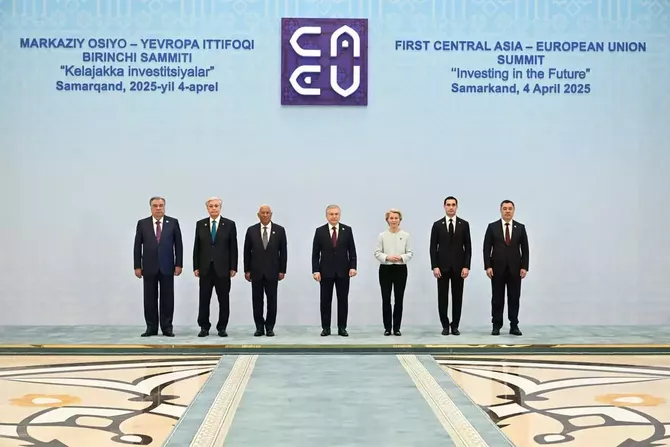
Photo credit: Photo: Uzbekistan President's press service
Türkiye’s role in this process is undeniable. It is the most capable military power in the Turkic world and the only one with a global defense industry footprint. The Shusha Declaration of 2021 turned Ankara and Baku into de facto military allies. Turkish drones reshaped the Second Karabakh War and later flowed into Central Asia. Defense agreements with Kazakhstan and Uzbekistan followed.
But it would be a mistake to view the OTS as a Turkish project. The real engine of its militarization lies in the strategic anxieties of Central Asia and Azerbaijan. These states are no longer comfortable outsourcing their survival to Moscow. Russia’s war in Ukraine has exposed both its declining military capacity and the hollowness of the CSTO. When Armenia discovered that its Russian security guarantees were largely symbolic, the message was not lost on others.
Kazakhstan and Uzbekistan have responded by weaving a dense web of bilateral defense agreements with Azerbaijan and with each other. Intelligence sharing, joint exercises, and arms cooperation have accelerated, often without Turkish mediation. What is emerging is not an alliance in the NATO sense, but something more organic: a networked security community bound by shared vulnerabilities and shared interests.
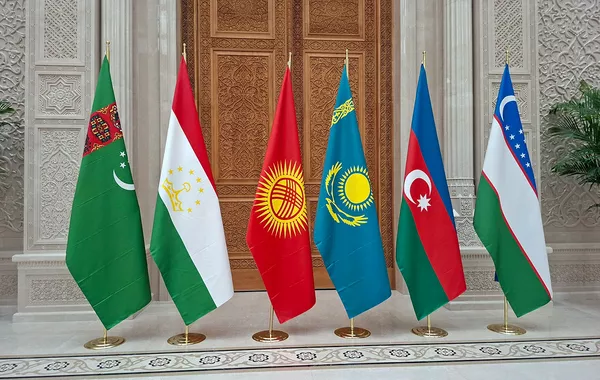
The Gabala summit formalized this trend. The proposed Treaty on Strategic Partnership, Eternal Friendship, and Brotherhood is not just diplomatic poetry. It signals that the Turkic states are laying the legal and political foundations for deeper alignment. Azerbaijan’s offer to host the first OTS military exercise may seem symbolic, but symbolism matters when institutions are being born.
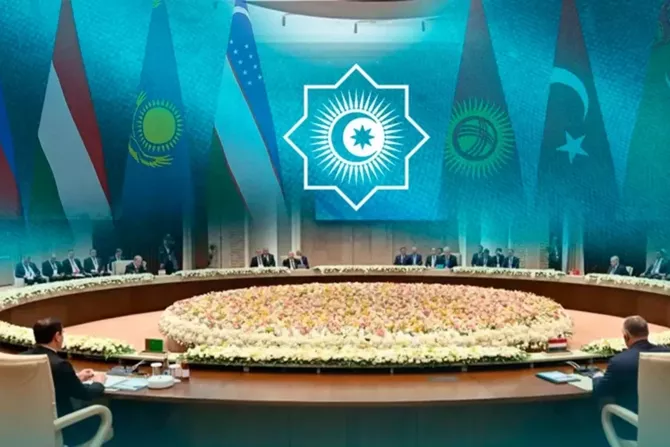
Photo credit: Kazinform
The defense industry dimension is equally important. The July 2025 Istanbul meeting of defense manufacturers under OTS auspices showed that these states are thinking beyond procurement and toward joint production and standardization. That is how military blocs become self-sustaining. Azerbaijan’s plan to host the next round in 2026 underlines its ambition to become not only an energy hub but also a defense hub for the Turkic world.
Critics will note that the OTS charter lacks a mutual defense clause. That is true. But the European Union once looked very similar. Before the Lisbon Treaty, solidarity was expressed in cautious language rather than binding commitments. Institutions do not leap from poetry to pact in a single step. They evolve.
For the West, this evolution presents both an opportunity and a warning. The OTS is not anti-Western. On the contrary, it fills the very gaps that Washington and Brussels have left in Eurasian security. A more confident, better-coordinated Turkic space reduces the risk of Russian coercion, Iranian pressure, and Chinese monopoly.
But it also means that the era of Eurasia as a passive chessboard is ending. The Turkic states are no longer waiting to be “balanced” by outsiders. They are beginning to balance for themselves.
That may be the most important geopolitical shift in the region since 1991.
By Emil Samedov