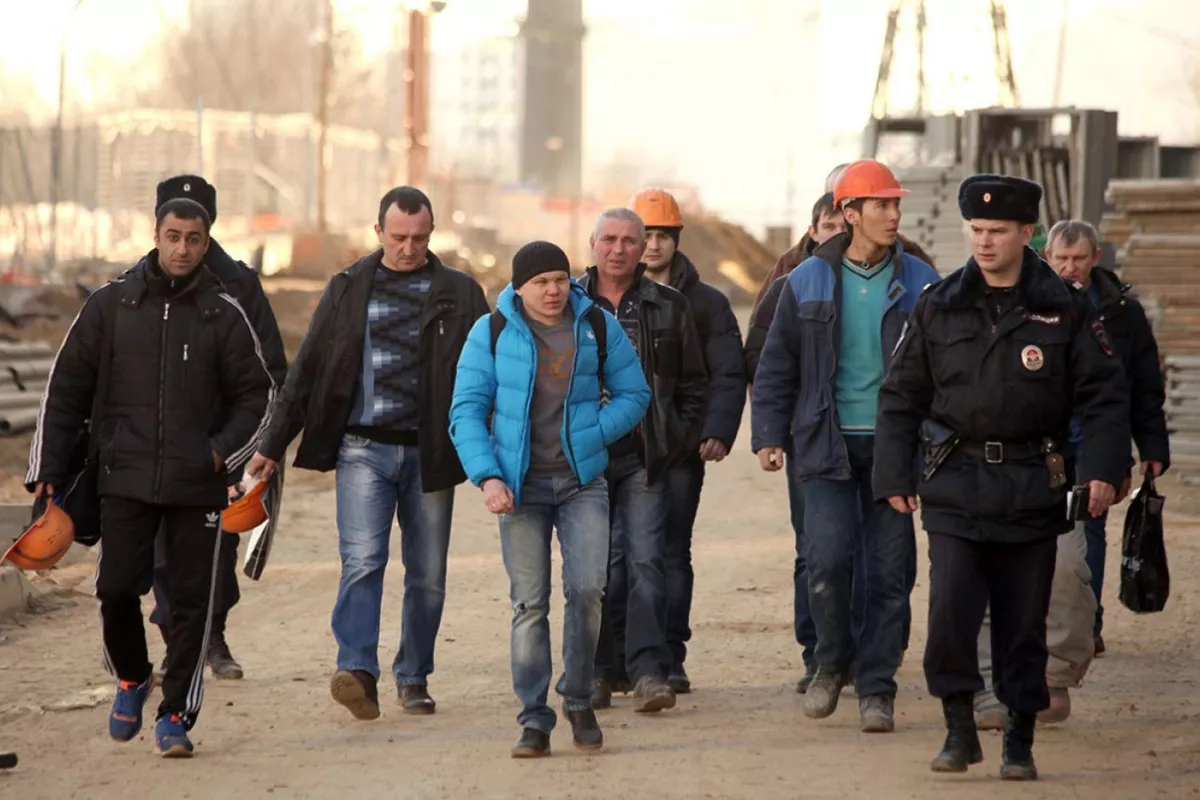
Kyrgyzstan’s decision to challenge Russia at the Eurasian Economic Union (EAEU) Court over access to compulsory medical insurance for migrants’ family members may appear, at first glance, to be a narrow administrative disagreement. In reality, it cuts to the core of what the EAEU claims to represent. The case is a stress test of whether labor mobility inside the bloc comes with enforceable social protections, or whether integration effectively ends at the workplace.
The dispute centers on Russia’s refusal to issue compulsory medical insurance (CHI) coverage to the non-working family members of Kyrgyz citizens who are legally employed in Russia. Bishkek argues that this practice violates EAEU treaty commitments on equal social protection for workers and their families in the “state of employment.” Moscow, by contrast, maintains that its domestic insurance rules do not automatically extend CHI to dependents who are not themselves employed or do not meet specific residency criteria.
What elevates this from a technical disagreement into a systemic issue is the choice of forum. By taking the matter to the EAEU Court, Kyrgyzstan is framing the dispute not as a bilateral grievance but as a question of treaty compliance. The implication is clear: if EAEU rules on social guarantees cannot be enforced against the bloc’s largest and most influential member, then the union’s promise of equal conditions for labor migrants is largely symbolic.
For an organization that promotes itself as more than a customs union, this case goes to credibility. The EAEU’s value proposition rests on the idea that free movement of labor is paired with predictable rights and protections. If those protections evaporate when families are involved, the model begins to resemble a one-way system in which labor flows to the center while social responsibility remains optional.
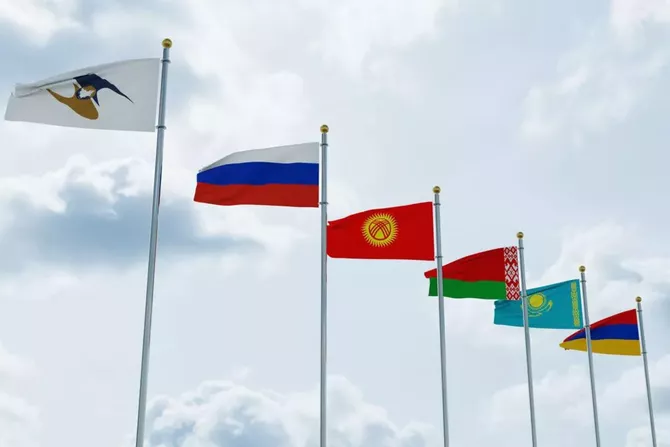
Photo: RBC
Why Bishkek Chose Escalation Over Quiet Diplomacy
Kyrgyzstan’s move to litigation reflects a calculation that informal channels have reached their limits. For years, Russia has been the primary destination for Kyrgyz labor migrants, and remittances from abroad have been a critical pillar of the Kyrgyz economy. External assessments have consistently placed remittance inflows in the high-teens as a share of GDP, underscoring how exposed Bishkek is to changes in Russian migration policy.
In that context, access to medical insurance for migrants’ families is not a marginal issue. Excluding dependents from CHI raises the cost of living in Russia, increases out-of-pocket health spending, and discourages family reunification. Many migrants are left with an uncomfortable choice: keep families in Kyrgyzstan and live transnationally, or bring them to Russia without reliable access to healthcare. Either option reinforces a cycle of insecurity and temporary status.
Kyrgyz officials have indicated that the issue has been raised repeatedly with Russian counterparts. Yet the gap between treaty commitments and administrative practice has persisted. Turning to the EAEU Court serves several purposes at once. It creates a formal record of non-compliance, sets a deadline for interpretation, and shifts the narrative from one of petitioning to one of asserting rights under agreed rules.
There is also a strategic dimension. Smaller EAEU members have limited leverage in bilateral talks with Russia, particularly on migration issues that are politically sensitive in Moscow. A court ruling, even if imperfectly enforced, alters the bargaining environment. It allows Bishkek to anchor future negotiations in a legal interpretation rather than in goodwill or discretionary exceptions.
Finally, litigation internationalizes the issue within the union. If the court affirms Kyrgyzstan’s interpretation, the ruling would apply across the EAEU, potentially benefiting the families of workers from other member states as well. That prospect explains both Bishkek’s willingness to escalate and Moscow’s caution in how it responds.
Competing Readings of the Treaty and the Limits of Social Integration
At the heart of the case is a familiar clash between supranational commitments and national welfare systems. Kyrgyzstan’s argument rests on EAEU treaty provisions governing labor migration and social protection, which state that workers from member states and their family members should receive social security-excluding pensions-“on the same conditions and in the same manner” as nationals of the host country. The treaty framework also references access to medical care as part of these guarantees.
From Bishkek’s perspective, the logic is straightforward. If a worker is legally employed and covered by CHI, and if the treaty recognizes their family as part of the protected category, then excluding dependents from insurance coverage amounts to unequal treatment. In practical terms, equal access cannot stop with the wage earner if the family is legally residing in the host state.
Russia’s position, as reflected in public reporting, leans on the structure of its domestic CHI system. Insurance status is closely tied to employment and specific residency categories, and non-working family members of foreign workers are not automatically included unless they meet additional criteria. From this standpoint, extending full CHI coverage to dependents is framed as a domestic policy choice rather than a treaty obligation.
Both interpretations resonate with their respective domestic audiences. In Russia, migration and social spending are politically charged topics, and expanding welfare access to non-citizens can be portrayed as fiscally irresponsible or unpopular. In Kyrgyzstan, the denial of coverage to families undermines the practical meaning of EAEU membership and reinforces perceptions of unequal treatment within the bloc.
This tension exposes a broader limitation of the EAEU’s integration model. Economic integration has advanced faster than social integration, leaving gaps that are managed through national discretion rather than uniform standards. As long as those gaps persist, disputes like this one are likely to recur.
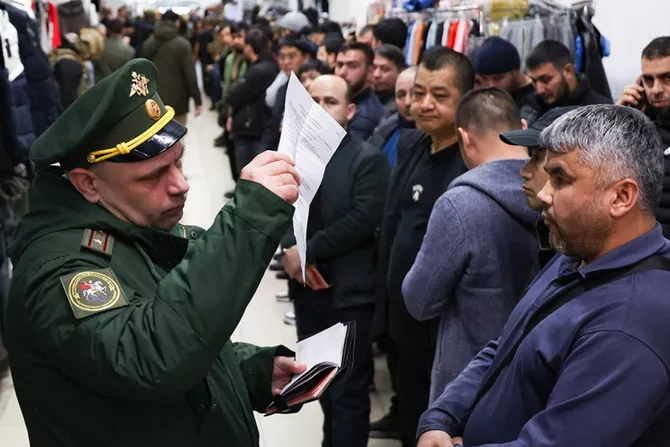
Photo: Adobe Stock
What the Ruling Could Mean for the EAEU’s Future
The EAEU Court is not an enforcement agency, and its decisions do not automatically translate into seamless policy change. Still, its interpretation matters. A ruling that clearly supports Kyrgyzstan’s position would raise the legal and reputational cost of continued non-compliance. Even if implementation is gradual or partial, the existence of a formal finding would strengthen the hand of smaller member states in future disputes.
Such a decision would also set a precedent. Coverage for the dependents of Kyrgyz workers would logically extend to families of Armenian, Kazakh, and Belarusian workers as well, transforming what appears to be a bilateral issue into a union-wide standard. That, in turn, would test whether the EAEU can function as a rules-based organization rather than a hierarchy dominated by its largest member.
The opposite outcome would be equally revealing. If the court adopts a narrow reading of the treaty or defers heavily to domestic law, it would signal that the EAEU’s social guarantees are largely aspirational. Labor mobility would remain real, but social protection would be contingent, reinforcing the perception that integration delivers asymmetrical benefits.
A third, and perhaps most likely, scenario lies between these extremes. Russia could seek to avoid a clear legal defeat by offering administrative or partial solutions-such as special insurance schemes, limited coverage packages, or incremental regulatory adjustments-while maintaining its core interpretation of CHI eligibility. This would allow both sides to claim progress without fully resolving the underlying tension.
Beyond the legal outcome, the case highlights a deeper structural issue: labor mobility without family security is inherently unstable. When workers are welcomed as economic inputs but their families are treated as externalities, informality increases, integration stalls, and long-term human capital benefits are lost. For a bloc that aspires to long-term cohesion, this is a strategic weakness.
Even from Russia’s perspective, the stakes extend beyond this single dispute. The EAEU’s credibility as a predictable framework for labor mobility is an asset. If that credibility erodes, migration will not stop, but it will become more politicized, more ad hoc, and more costly to manage. Employers, regional governments, and migrants themselves will bear those costs.
Ultimately, Kyrgyzstan’s lawsuit is about more than medical insurance cards. It forces the EAEU to confront a basic question: does free movement of labor imply a commitment to protect migrant families, or only to facilitate the flow of workers? The answer will shape not only this case, but the future meaning of integration across the union.