Central Asia’s transition to electric mobility is unfolding faster-and more decisively-than many analysts predicted just a few years ago. What once appeared to be a gradual, policy-driven experiment has instead become a rapid market transformation, with electric vehicles moving from the margins to the center of passenger-car imports in key states. Yet this transition has not been shaped primarily by Western automakers, premium branding, or aspirational climate narratives. Instead, it is increasingly defined by China’s industrial capacity, pricing power, and strategic positioning across Eurasia.
From car dealerships in Tashkent to expanding EV fleets in Almaty, the most common electric vehicles on offer are no longer niche imports from Europe or high-cost models from the United States. They are Chinese-made cars designed for affordability, durability, and adaptability to diverse road and climate conditions. While the surface narrative might suggest a simple case of cheaper imports crowding out more expensive competitors, the deeper reality is far more complex. This is a story about industrial policy, logistics corridors, currency constraints, post-2022 trade realignments, and the quiet emergence of local manufacturing capacity that could reshape the region’s economic geography.
By the end of 2025, the data left little room for ambiguity. Central Asia’s EV market-especially in Uzbekistan-had tilted decisively toward Chinese suppliers. Early indicators from 2026 suggest continuity rather than reversal, even as governments shift from rapid adoption to consolidation and infrastructure planning. Understanding why this happened, and what it means going forward, requires looking beyond showroom floors to the structural forces underpinning the region’s electrification.
A Market That Crossed a Threshold: EV Adoption in 2025-2026
Central Asia is not a single automotive market but a collection of national systems shaped by distinct fiscal regimes, currencies, industrial bases, and policy priorities. Yet despite these differences, a common pattern has emerged across the region: where electric vehicles are encouraged through tax relief or simplified import procedures, adoption accelerates rapidly-and Chinese manufacturers capture the overwhelming share of that growth.
Uzbekistan as the Region’s Primary Growth Engine
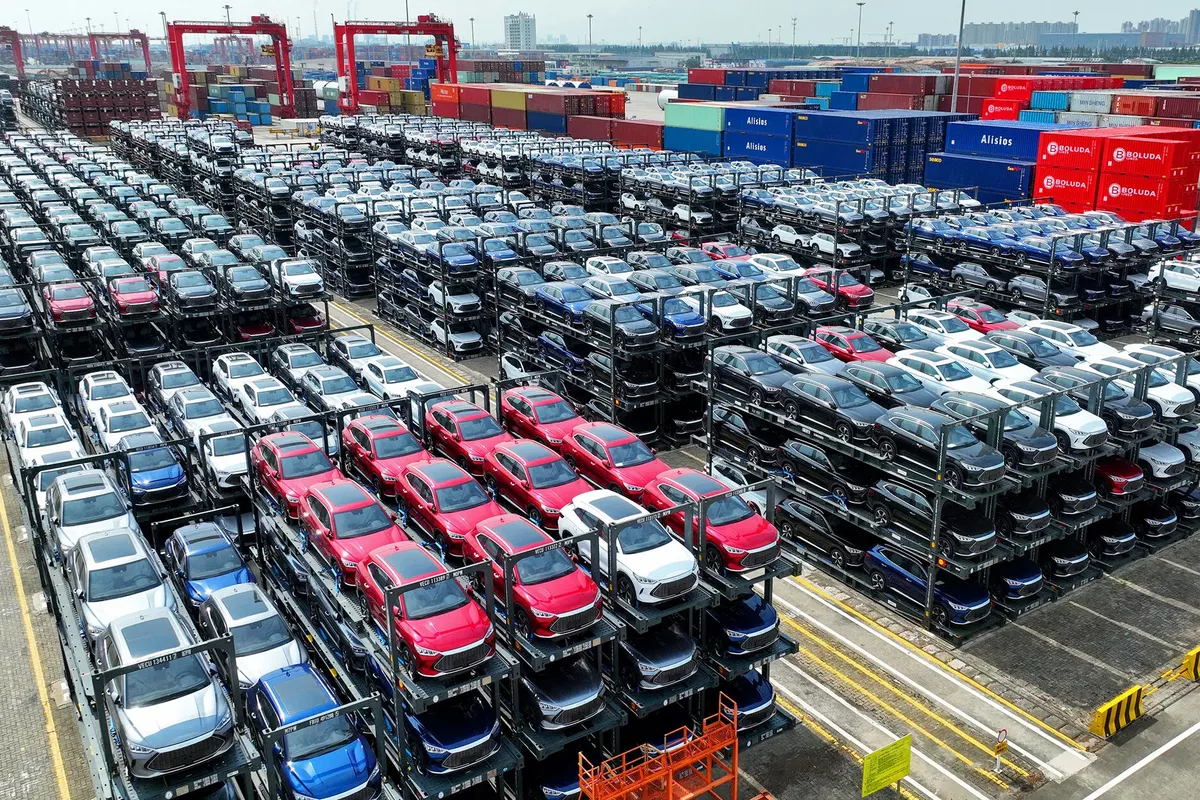
Uzbekistan stands at the center of this transformation. Over the course of 2025, electric vehicles moved from being a fast-growing niche to forming the backbone of the country’s passenger-car imports. Official figures illustrate the scale of this shift. Between January and September 2025, Uzbekistan imported more than 40,000 electric vehicles with a declared value approaching half a billion dollars. By the end of the year, total EV imports had reached nearly 57,000 units, accounting for more than 70 percent of all imported passenger cars by volume.
This was not merely an increase in sales; it was a structural change in trade composition. Electric vehicles became the dominant import category in a country that had long relied on internal combustion engine vehicles and domestic production partnerships. Crucially, the overwhelming majority of these imported EVs originated in China. Multiple analyses pointed to Chinese-made vehicles accounting for virtually the entire EV import stream, underscoring the extent to which Uzbekistan’s electrification became intertwined with Chinese supply chains.
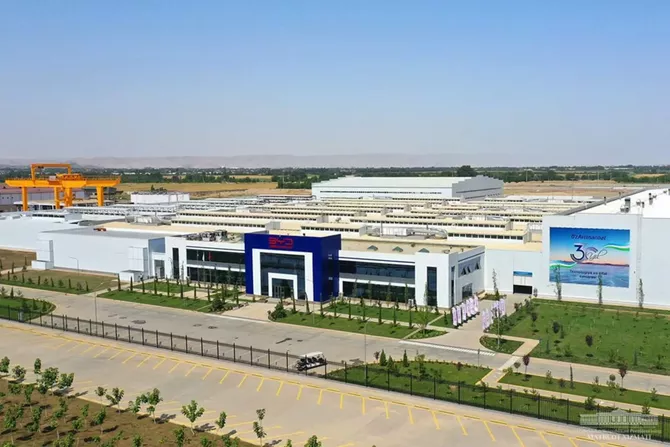
Photo: Uzbekistan President's press service
Kazakhstan’s Expanding Fleet and Policy Sensitivity
Kazakhstan’s EV market is smaller in absolute terms, but it has also grown rapidly. By mid-2025, registered electric vehicles in the country had climbed to around 19,000 units, representing a sharp year-on-year increase. Unlike Uzbekistan, where imports dominate, Kazakhstan’s EV trajectory highlights the sensitivity of adoption to policy design. Temporary duty exemptions and tax incentives have played a decisive role in stimulating demand, often creating bursts of imports followed by pauses as regulatory thresholds are reached.
This environment tends to favor manufacturers and distributors capable of delivering vehicles quickly and in volume-conditions that again advantage Chinese automakers. Their ability to respond swiftly to policy windows has allowed them to capture demand during peak periods, reinforcing their market position even as incentives evolve.
Smaller Markets with Strategic Importance
Beyond the two largest markets, smaller Central Asian states also shape the regional EV ecosystem in less visible but still important ways. Kyrgyzstan plays a role as a logistics and re-export node, while Tajikistan has pursued some of the most ambitious EV-supportive policies in the region, linking electrification to air quality and urban modernization. Turkmenistan, though more closed, is also part of the broader learning process around infrastructure, standards, and service networks.
By early 2026, comprehensive region-wide statistics for the year were not yet fully consolidated. Nevertheless, the trajectory set in 2025 had clearly established a new baseline. EVs were no longer experimental; they were embedded in national transport strategies, with Chinese vehicles as the default option.
Why Chinese EVs Dominate: Economics, Logistics, and Product Design
The ascendancy of Chinese electric vehicles in Central Asia is best understood not as a triumph of branding but as a convergence of operational advantages. Three interlocking factors-pricing, supply-chain capacity, and policy alignment-explain most of the outcome.
Price and Features: A Compelling Value Proposition
Chinese EV manufacturers operate in one of the most competitive automotive markets in the world. Intense domestic competition has driven rapid innovation and aggressive cost control, producing vehicles that combine advanced features with relatively low price points. For Central Asian consumers, this translates into electric cars equipped with modern infotainment systems, driver-assistance technologies, and competitive battery ranges at prices that significantly undercut Western alternatives.
Importantly, many Chinese models are well suited to regional conditions. Higher ground clearance, robust suspension systems, and battery management optimized for temperature extremes make these vehicles practical for Central Asia’s varied terrain and climate. Over time, average import prices for EVs in markets like Uzbekistan have declined sharply, broadening access beyond early adopters and making mass-market electrification feasible.
Scale and Supply-Chain Resilience
Central Asian markets are particularly sensitive to disruptions in shipping, currency volatility, and supply availability. Chinese automakers benefit from deep and flexible supply chains encompassing batteries, power electronics, software, and vehicle components. This allows them to maintain consistent export volumes even as conditions change.
In 2025, China exported millions of vehicles globally, with new-energy vehicles forming a growing share of that total. This scale matters. When demand surges in a market like Uzbekistan, the manufacturers that succeed are those capable of delivering vehicles quickly, supporting dealers with parts and marketing, and refreshing product lines on short cycles. Chinese firms have demonstrated precisely this capacity.
Incentives That Reward Affordability
EV incentive schemes across Central Asia tend to prioritize affordability over premium positioning. Duty exemptions, tax relief, and simplified import procedures reduce upfront costs rather than favoring specific technologies or brands. Such frameworks naturally align with the strengths of Chinese manufacturers, whose portfolios emphasize accessible, modern vehicles across a wide range of price points.
The result is a reinforcing cycle: incentives stimulate demand, Chinese suppliers meet it efficiently, and their market share expands further.
From Imports to Industry: The Strategic Significance of BYD’s Uzbekistan Plant
While import statistics tell one part of the story, the most consequential development in Central Asia’s EV landscape is the emergence of local production capacity. The decision by a leading Chinese EV manufacturer to establish a factory in Uzbekistan marks a shift from pure trade dependence toward industrial integration.
What the Uzbekistan Plant Represents
The BYD facility in Uzbekistan’s Jizzakh region began production in mid-2024, with an initial investment reported at around $160 million and a first-stage capacity of 50,000 vehicles per year. Even at this initial scale, the plant is large relative to regional demand. Uzbekistan’s total EV imports in 2025 numbered just under 57,000 units, meaning domestic production at full capacity could substitute for a significant share of imports.
Beyond volume, the plant signals a strategic commitment to the region. Local assembly changes how vehicles are taxed, serviced, and perceived by policymakers. It also creates the foundation for deeper localization over time.
Why Local Production Changes the Equation
A manufacturing foothold offers advantages that imports alone cannot. Local assembly can enhance resilience to policy changes, support the development of dealer and service networks, and generate spillover benefits for suppliers and workers. Over time, governments often seek to increase localization ratios, encouraging the production of components such as wiring harnesses, interior elements, and glass.
Uzbekistan’s geographic position further enhances the plant’s significance. As a regional transport hub, the country is well placed to serve neighboring markets if trade conditions allow. Shorter lead times and reduced logistics costs could make locally assembled vehicles more competitive across Central Asia.
The Next Frontier: Batteries and the EV Ecosystem
Assembly is only the first step in building a comprehensive EV industry. The next challenge lies in batteries, which represent the most complex and value-intensive component of electric vehicles. While full battery localization requires significant scale, expertise, and access to materials, discussions around developing a broader EV ecosystem indicate that governments increasingly view electrification as industrial policy rather than solely environmental policy.
Structural Forces Shaping Demand Beyond the Showroom
Chinese EV dominance also reflects broader economic and infrastructural dynamics within Central Asia. Charging infrastructure, fleet adoption, and post-2022 trade realignments all play a role.
Infrastructure Growth and Its Limits
Charging networks are expanding fastest in major cities, where incomes are higher and public investment is concentrated. Outside urban centers, infrastructure gaps remain a constraint. Manufacturers have responded by offering plug-in hybrids and vehicles with advanced thermal management, reducing reliance on dense charging networks and addressing cold-weather concerns, particularly in Kazakhstan.
Fleet Electrification as a Catalyst
Taxi fleets and public transport operators often lead EV adoption, especially where governments encourage cleaner urban mobility. Fleet purchases create concentrated demand, normalize EV use, and accelerate the development of service and charging infrastructure. In this context, affordability and reliability matter more than brand prestige-again favoring Chinese models.
New Supply Chains in a Sanctions-Era Environment
Since 2022, trade patterns across Eurasia have become more complex. Some Western supply channels have grown more expensive or less accessible, while Chinese exports have expanded. This has reinforced China’s role as a default supplier, offering not only vehicles but also financing options, spare parts, and long-term partnerships.
Ecosystem Effects and Path Dependency
Electric vehicles are deeply integrated systems combining hardware and software. As Central Asian markets standardize around Chinese platforms, they also adopt associated charging standards, diagnostic tools, and after-sales practices. Over time, this creates path dependency: the more Chinese EVs on the road, the easier and cheaper it becomes to buy, service, and operate the next one.
Looking Ahead: Scenarios for 2026-2030
China’s current dominance does not guarantee a static future, but it sets a high bar for competitors. Three dynamics will shape the next phase of Central Asia’s EV transition.
First, policy evolution will matter. If import duties tighten or localization requirements increase, local assembly gains importance. If incentives remain generous, imports will continue to flow-again favoring suppliers with scale.
Second, infrastructure expansion will determine how quickly EVs move from early adopters to mainstream consumers. Broader charging coverage will reduce range anxiety and expand demand beyond major cities.
Third, the depth of localization will shape long-term outcomes. Manufacturers willing to invest in local capacity, training, and technology transfer will be best positioned to sustain their presence.
Conclusion: Beyond Dominance to Development
Chinese electric vehicles dominate Central Asia today because of clear economic logic: competitive pricing, resilient supply chains, and alignment with regional policy priorities. The surge in imports during 2025-especially in Uzbekistan-combined with rising EV registrations in Kazakhstan, shows that the region has crossed a threshold in its mobility transition.
The more profound question now is whether Central Asia can leverage this influx to build lasting industrial capacity, improve urban air quality, and create a competitive regional EV ecosystem. The emergence of local production in Uzbekistan suggests that the answer may depend less on who supplies the vehicles and more on how governments and industries shape the next stage of electrification.