The decision of Azerbaijan’s Milli Majlis on May 1 to terminate all forms of cooperation with the European Parliament was not an emotional or symbolic gesture. It was a political signal that reflected a deeper crisis in relations between Baku and one of the EU’s most vocal institutions.
By voting to end cooperation with the European Parliament, initiating the process of withdrawing from the Euronest Parliamentary Assembly, and suspending participation in the EU-Azerbaijan Parliamentary Cooperation Committee, Azerbaijan made it clear that relations can no longer continue under conditions of constant pressure, politicized resolutions and one-sided criticism.
At first, the reaction in the European Parliament was predictable. Some MEPs responded with mockery and dismissive statements, presenting Azerbaijan’s decision as something insignificant. The tone suggested that Baku’s move would harm Azerbaijan more than Europe. But the latest debate in the European Parliament showed that the situation is more complex. For the first time in a long while, a number of MEPs openly questioned whether the European Parliament itself had contributed to this crisis.
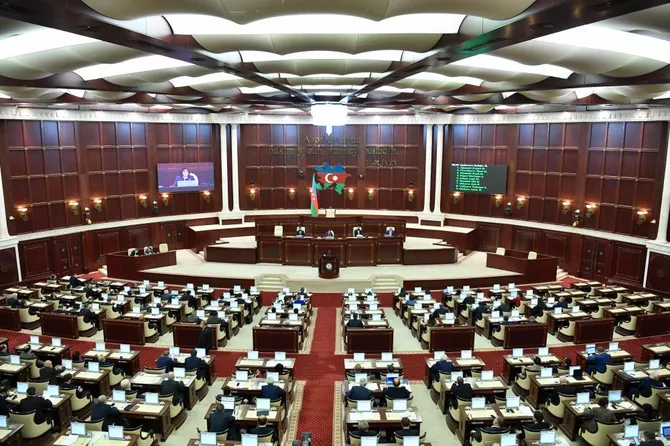
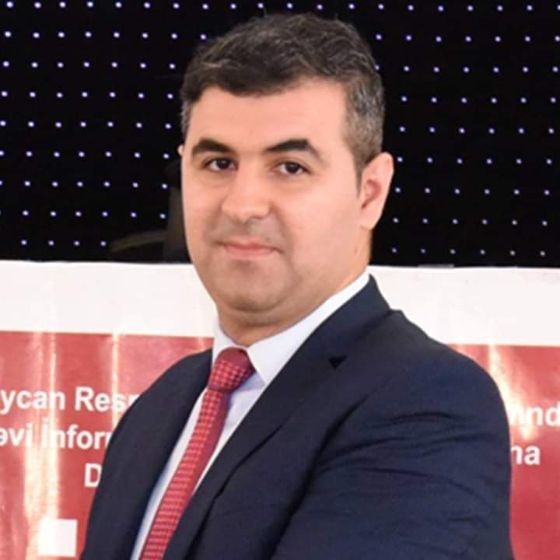
Source: meclis.gov.az
This is important because, in recent years, the European Parliament has often approached Azerbaijan through the language of moral pressure rather than strategic dialogue. Resolutions against Baku were adopted at sensitive moments, often without taking into account the broader geopolitical context, the peace process with Armenia, Europe’s own energy needs, or Azerbaijan’s role as a transport and connectivity hub between Europe and Asia.
The debate demonstrated that there is now a growing understanding inside the European Parliament that pressure has limits. More importantly, it showed that some European politicians understand that diplomacy cannot be built on permanent lectures.
The main problem for the European Parliament is not Azerbaijan’s reaction, but the reason behind it. Baku did not suspend cooperation because of one statement or one resolution. The decision was the result of a long accumulation of mistrust. For years, Azerbaijan has viewed many actions of the European Parliament as biased, selective and disconnected from political reality in the South Caucasus.
Western media, however, largely focused on criticism of Azerbaijan’s decision. Many publications argued that Baku was harming its own strategic interests, that dialogue should continue even amid disagreements, and that leaving parliamentary formats weakens Azerbaijan’s position. But this approach ignores the central question: what is the value of dialogue if one side uses it mainly as a platform for pressure?
The more significant part of the debate was not the criticism of Baku, but the speeches of those MEPs who pointed to the European Parliament’s own responsibility. They argued that Europe is losing influence not because countries are turning away from it for no reason, but because EU institutions often replace diplomacy with ideological pressure and symbolic resolutions.
This is precisely where the current crisis becomes a broader geopolitical issue.
Azerbaijan today is not the same country it was 10 or 15 years ago. After restoring its territorial integrity and strengthening its regional position, Baku has entered the category of middle powers. It is no longer a state that can be pressured through declarations or symbolic political gestures. Azerbaijan has resources, transit potential, military and diplomatic experience, and an expanding network of strategic partnerships.
For Europe, this reality should matter.
Azerbaijan is a key partner for the EU’s energy security. Azerbaijani gas has become an important alternative source for European markets, especially after the war in Ukraine changed the structure of Europe’s energy policy. Azerbaijan is also central to connectivity projects linking Europe with the Caspian region, Central Asia and beyond. In this context, damaging relations with Baku is not merely a bilateral problem. It is a strategic miscalculation.
This point was clearly reflected in several speeches during the European Parliament debate.
Angéline Furet, representing the Patriots for Europe Group, described Azerbaijan’s withdrawal from relations with the European Parliament as a strategic punishment for the EU. Her statement was sharp, but it addressed a real contradiction in Europe’s approach: the EU seeks energy security and regional influence, yet some of its institutions continue to adopt resolutions that alienate important partners.
Furet argued that while the European Parliament was adopting resolutions, other global actors were shaping realities on the ground. The United States has been advancing the TRIPP initiative and transport connectivity projects, while a new regional architecture in Central Asia is emerging largely without the European Parliament’s meaningful participation. Her message was clear: Europe risks becoming a commentator on events rather than an actor shaping them.
Cristian Terheș of the European Conservatives and Reformists also framed Azerbaijan’s decision as a serious warning to the European Parliament. He described the April resolution against Azerbaijan as unnecessary, unwise and unproductive, especially at a time when Azerbaijan and Armenia are moving toward reconciliation and a peace agreement.
His argument goes to the core of the matter. If Azerbaijan and Armenia are negotiating peace, and if even Yerevan is no longer insisting on some of the demands repeated by certain European politicians, then why is the European Parliament escalating rhetoric? Why does it continue to adopt positions that complicate rather than support normalization?
Terheș called the European Parliament’s approach “political immaturity” and “geopolitical suicide.” This may sound harsh, but it reflects the fear that Europe is losing relevance in regions that are becoming increasingly important.
The South Caucasus is no longer a peripheral region. It is a corridor between Europe and Asia, a platform for energy routes, logistics, security arrangements and geopolitical competition. Central Asia is also gaining strategic value, and Azerbaijan is one of the key bridges between these spaces. If Europe pushes away Azerbaijan, it weakens its own access to the wider region.
Tomasz Froelich expressed a similar concern from another angle. Although he did not avoid criticism of Azerbaijan, he recognized the irrationality of damaging relations with Baku at a moment when the peace process between Azerbaijan and Armenia is moving forward. His warning was practical: Europe’s industry depends on reliable energy supplies, and Azerbaijani pipeline gas is part of that equation.
This is where moral rhetoric collides with economic reality. The European Parliament may continue to issue resolutions, but European industries need energy, supply chains and stable partnerships. Moralizing cannot replace strategy.
Thierry Mariani, meanwhile, focused on the peace process itself. He stressed that Azerbaijan and Armenia are now negotiating not simply a formal document, but reconciliation. For decades, many believed this would never happen. Yet today it is happening in the South Caucasus. In such circumstances, the European Parliament should help, or at least not harm, the process.
Instead, as Mariani argued, the European Parliament has often added fuel to the fire. This is one of the most serious accusations against the institution: while declaring support for peace, it adopts positions that risk undermining the fragile foundations of peace.
The contradiction is obvious. The European Parliament says it supports normalization between Azerbaijan and Armenia, but at the same time it makes statements and demands that even official Yerevan no longer puts forward in the same form. Such behavior does not strengthen Europe’s role as a mediator or partner. It reduces trust.
German politician Lukas Sieper also pointed to a broader European inconsistency. Europe cannot call Azerbaijan an indispensable strategic partner while simultaneously treating it as if it were outside the circle of acceptable states. This double language damages the credibility of European diplomacy.
This is perhaps the deepest problem. The EU often tries to conduct two policies at once: one pragmatic, driven by energy, trade and connectivity; and another ideological, driven by pressure, resolutions and public criticism. When these two lines collide, partners begin to question which Europe they are dealing with.
For Azerbaijan, this ambiguity is no longer acceptable.
Baku wants relations based on mutual respect, not on the assumption that European institutions have the right to interfere in Azerbaijan’s domestic affairs or dictate the terms of its relations with neighbors. Azerbaijan is open to cooperation, but it does not see cooperation as submission.
The current crisis also has a historical precedent. In September 2015, after the European Parliament adopted a harsh resolution against Azerbaijan, the Milli Majlis also moved to suspend participation in the Euronest Parliamentary Assembly and the EU-Azerbaijan Parliamentary Cooperation Committee. A year later, in September 2016, the European Parliament sent a Euronest delegation to Azerbaijan to resume dialogue. At the time, the delegation expressed regret over the lack of dialogue and recognized the need to prevent similar situations in the future.
The lesson was clear then, but it appears not to have been fully learned.
Today, however, the situation is even more serious. Europe needs Azerbaijan more than it did in 2015. The geopolitical environment has changed dramatically. Energy security, transport corridors, the Middle Corridor, access to Central Asia and the South Caucasus peace process all make Azerbaijan far more important for European interests.
This does not mean that Azerbaijan is using energy as blackmail. It means that Azerbaijan, like any sovereign state, uses its resources and strategic position to defend its interests. International relations are built on interests, not on abstract lectures. Every country seeks to strengthen its position through the tools available to it. Azerbaijan’s tools are energy, geography, diplomacy and regional influence.
The difference is that Azerbaijan uses these tools within the framework of partnership. It supplies energy, supports connectivity, invests in regional stability and participates in dialogue. In return, it expects respect for its sovereignty and its national interests.
The European Parliament now faces a choice. It can continue along the same path of pressure and moral superiority, or it can recognize that this approach has already produced the opposite result. Instead of increasing Europe’s influence over Azerbaijan, it has pushed Baku further away from the European Parliament.
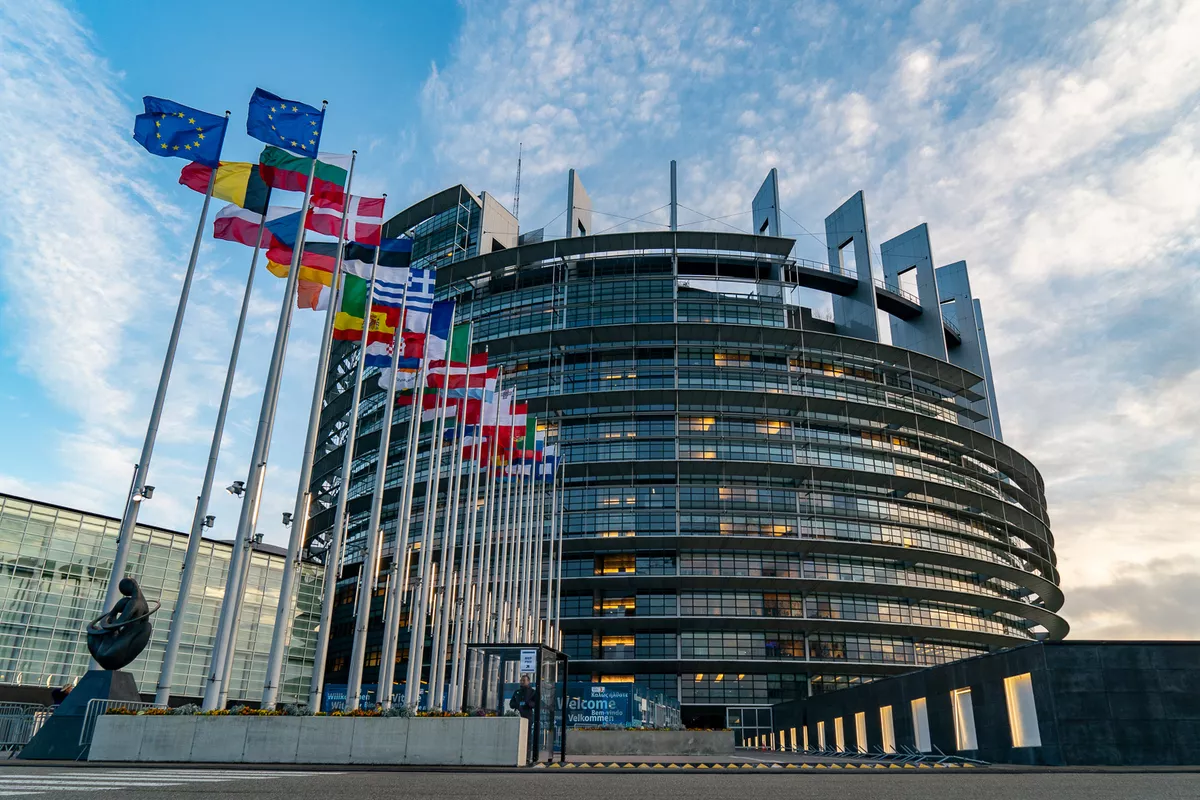
The debate in Strasbourg suggests that at least some MEPs understand this. Their speeches do not mean that the European Parliament has fully changed its position. But they do show that the old anti-Azerbaijani consensus is no longer uncontested. Voices calling for realism, diplomacy and strategic thinking are becoming more visible.
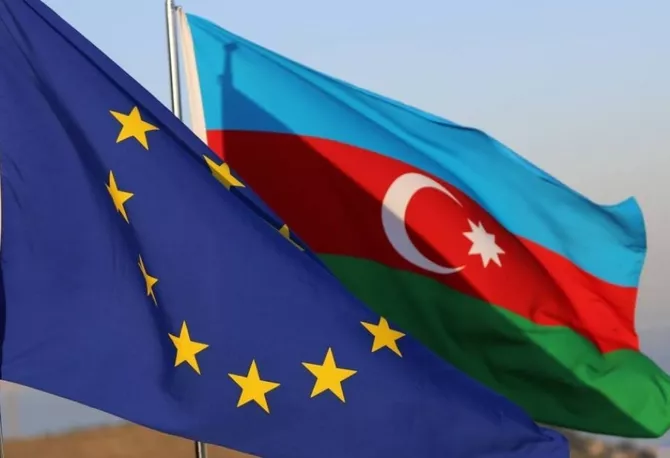
Source: iStock
For Azerbaijan, this is not about closing the door to Europe. It is about refusing relations based on inequality and pressure. Baku has repeatedly shown that it is ready for constructive cooperation with European institutions. But such cooperation must be built on mutual respect, not on unilateral accusations.
The South Caucasus is entering a historic period. Azerbaijan and Armenia have a real chance to move toward peace. The region is becoming a strategic bridge between Europe and Asia. At such a moment, the European Parliament should not act as a source of tension. It should support dialogue, regional stability and practical cooperation.
If the European Parliament truly wants to remain relevant in the South Caucasus, it must understand one simple reality: Azerbaijan cannot be pressured into partnership. It can only be engaged through respect, realism and diplomacy.