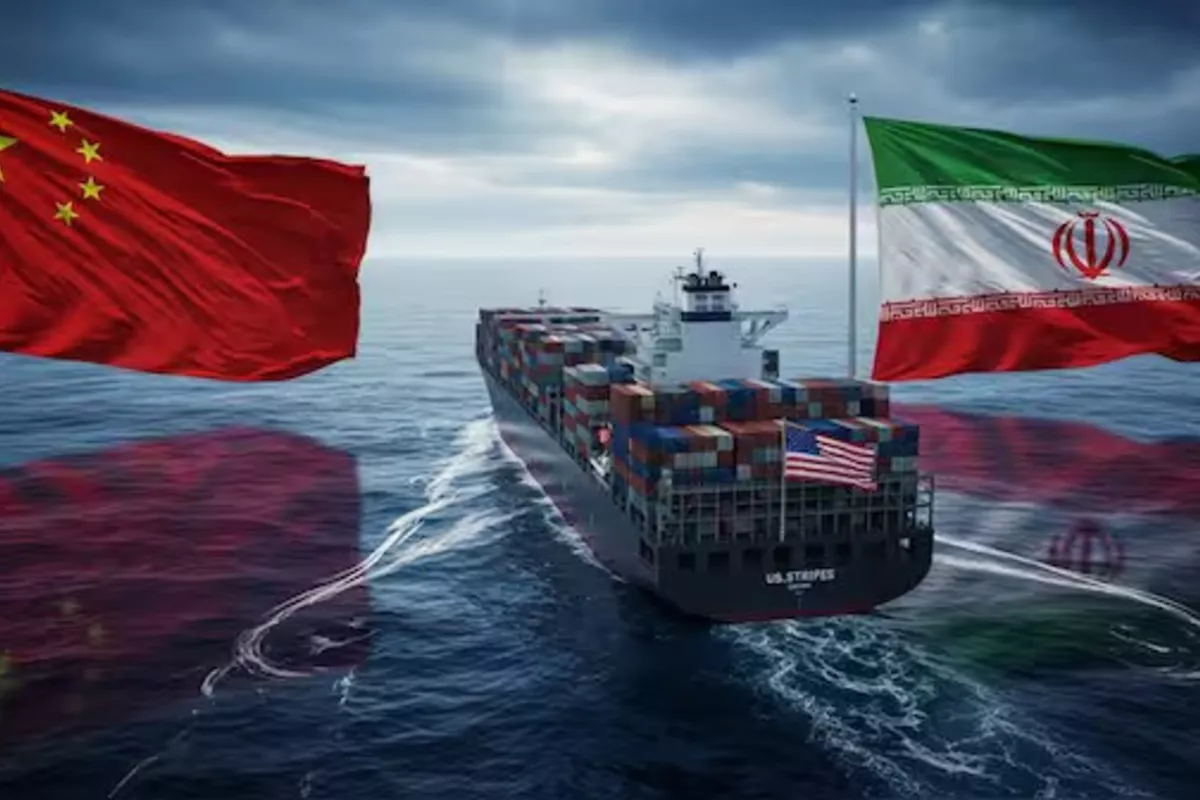
In its confrontation with the United States, Iran’s leadership, for reasons that remain unclear, had placed considerable hopes on assistance and support from Russia and China. Apparently, Tehran had greatly exaggerated the depth of the confrontation between these powers. The Islamic Republic believed that China’s economy was critically dependent on supplies of cheap Iranian oil. However, as it turned out, this was not entirely the case.
To improve trade with the United States and remove customs barriers, Beijing considered it beneficial to buy more expensive American oil. This happened despite the fact that, according to Donald Trump, “the Chinese receive a significant share of their oil - around 40% - from this very region,” referring to the Gulf countries. “And here is what happened: I think we can make a deal. They agreed to buy oil from the United States. They will send their ships to Texas, Louisiana and Alaska. This is a major event.”
Economic analysts in Tehran should have examined more closely the scale of trade and the degree of dependence between China and the United States on established supply chains for raw materials and finished equipment, which are measured in hundreds of billions of dollars. It was precisely these factors, rather than ideology, that played the leading role in shaping the common position of the two superpowers on Iran’s nuclear programme and freedom of navigation in the Strait of Hormuz.
Source: NDTV
Moreover, the financial capabilities of the Islamic Republic of Iran are slowly but steadily shrinking. Another mistake by Iran was that it clearly overestimated the readiness of Russia and China to assist it with their naval forces. It is worth recalling that, on the eve of the US-Israeli attack, the “Security Belt” naval exercises were taking place in the Strait of Hormuz. This is an annual event involving Iran, Russia and China. In 2026, Beijing was also supposed to take part, but at the last moment it withdrew and did not attend. This is an indicator of China’s line of conduct.
That is why China agreed that the Iranian regime must open the Strait of Hormuz and must never gain access to nuclear weapons, while also promising not to supply weapons to the Islamic Republic.
This position demonstrated the degree of alignment between the two leaders, shown against the backdrop of Xi Jinping’s offer to assist the United States in the region.
“President Xi would like the deal to happen, he would very much like it to happen. And he really offered. He said: ‘If I can help in any way, I would like to help,’” Trump told Sean Hannity on Fox News. President Trump then told Sean Hannity that Chinese President Xi Jinping had promised to stop supplying military equipment to Iran.
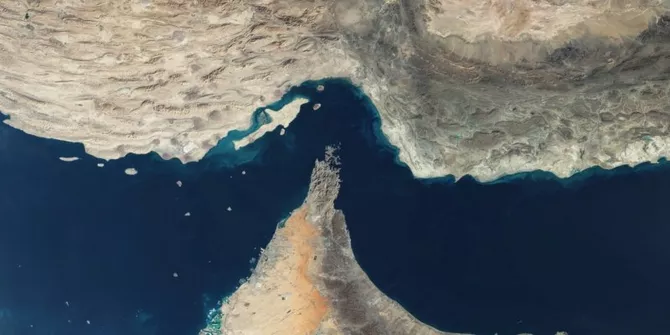
It should be noted that one-fifth of the world’s seaborne oil shipments pass through the Strait of Hormuz every year, and historically China has imported the lion’s share of the oil transported through this waterway, which was effectively closed because of the war. According to estimates, between 45% and 50% of China’s crude oil imports pass through the Strait of Hormuz. By comparison, according to the US Energy Information Administration, only around 2% of US oil passes through the same strait.
In other words, China has a vital interest in ending the war and reopening all maritime communications.
“Our two countries should be partners, not rivals,” Xi Jinping said at a state dinner with Trump. Without naming China directly, US Secretary of State Marco Rubio said that “countries around the world” that “pay a much higher price for oil” than the United States “must step in” and pressure Iran to open the strait.
Ahead of Trump’s visit to Beijing, the US president expressed concern that China might be helping Iran replenish its weapons stockpiles, referring to the interception by US forces of a vessel headed for Iran that had “something on board that was not very pleasant - possibly a gift from China, I don’t know.” A Chinese government representative denied these accusations. Concerns were also voiced that China and Russia were passing important intelligence information to Iran that could help Tehran strike American forces in the Middle East.
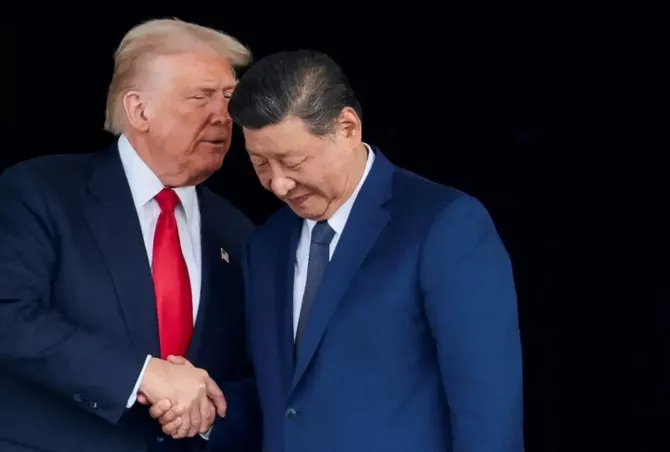
However, according to the US president, during a bilateral meeting that lasted more than two hours, Xi Jinping promised Trump that he would not provide Iran with any military support. It is clear that, in this particular case, the Chinese leadership is acting based on its own strategic interests, and the Taiwan issue plays a significant role here.
Source: NDTV
Although Washington officially severed diplomatic relations with Taipei in 1979, agreeing to the so-called “One China” policy, the United States continues to provide Taiwan with “defensive weapons.” At the moment, the United States is preparing to sell Taiwan weapons worth $14 billion, but Trump postponed approval of the deal ahead of his meeting with Xi.
In an interview on 14 May, Rubio said that arms sales to Taipei “were not the main topic of conversation between the two leaders,” although the issue had been discussed earlier. On his way home, the occupant of the White House told journalists on the plane that he had not yet made a decision on the matter.
Given that Trump invited Xi to visit Washington in September, it is becoming increasingly likely that the arms agreement will remain on the president’s desk until then. “Perhaps the administration wants to avoid escalating the situation before that point, and any further arms deliveries may be postponed,” predicts John Dotson, director of the Washington-based Global Taiwan Institute.
Derek Scissors, a senior fellow at the American Enterprise Institute, agrees that a possible visit by the Chinese leader could interfere with arms supplies to Taipei. “The obvious trade-off is Taiwan for Iran. And I do not mean that the United States gets Iran and China gets Taiwan. But Washington will cooperate more with Beijing on Taiwan if Beijing cooperates more on Iran,” Scissors told DW.
Although Xi Jinping did not mention the Middle East at the press conference, China’s Foreign Ministry said in a statement that the conflict “has no reason to continue” and that “maritime routes must be opened as soon as possible.”
“China has so far helped Iran by supplying technical information, dual-use goods and other things that facilitate intelligence activities,” Joseph Bosco claims. In his assessment, China’s call to end the war in the Middle East is “a step in the right direction,” but “not a final solution.”
These developments once again underline the well-known formula that there are no friends in politics, only interests. Whoever forgets this risks being left alone with problems that cannot be solved.