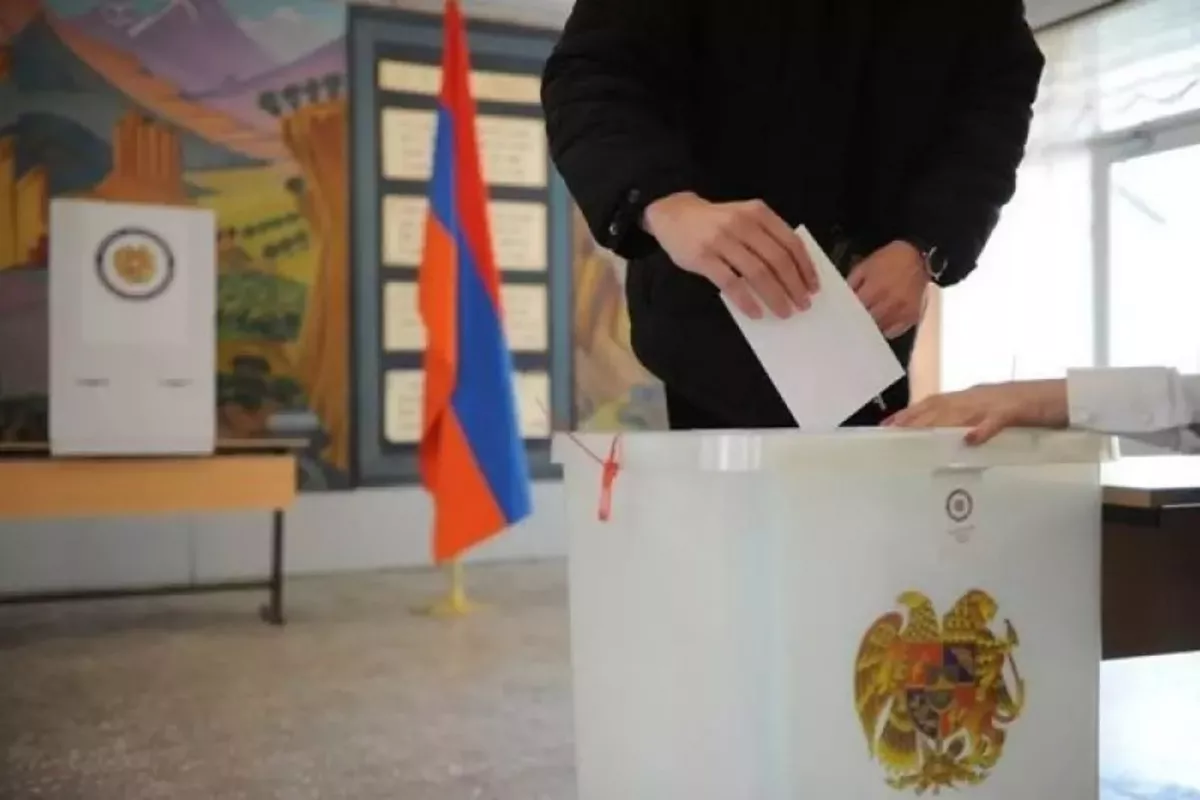
As Armenia approaches its 2026 parliamentary elections, the country’s intense political struggle is entering a decisive phase. The confrontation between the government and the opposition is unfolding in a highly contentious environment, with political parties and various public groups actively engaged in campaigning to secure voter support.
This campaign is largely structured around the main ideological divide between Prime Minister Nikol Pashinyan’s concept of a “Real Armenia” and the revanchist vision of a “Greater Armenia”. The ruling authorities present their reforms, institutional transformation, anti-corruption efforts, and the diversification of Armenia’s foreign relations as the central pillars of their platform.
Pashinyan’s team argues that Armenia must accept new regional realities, take steps towards normalising relations with its neighbours, and pursue a more balanced foreign policy.
The opposition, in turn, has made the government’s security policy its primary target, accusing the leadership of pursuing policies that run counter to Armenia’s national interests. Opposition forces argue that Armenia’s security position has weakened in recent years, that strategic mistakes have been made in foreign policy, and that the country has lost much of its previous regional influence. Their campaign focuses heavily on national security, military development, future relations with Russia, and the government’s regional strategy.
Source: SpecialEurasia
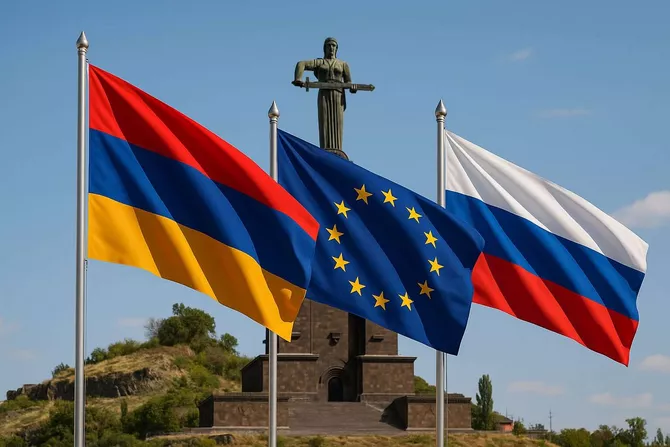
For this reason, in my view, the outcome of the current electoral contest will not merely determine who holds power. Armenian society is effectively being asked to choose a model for the country’s future development. The results will shape not only the domestic political balance but also Armenia’s future relations with Russia, the European Union, the United States, and neighbouring states. This is precisely why the elections have moved beyond Armenia’s internal political agenda and acquired broader geopolitical significance.
It is also important to note that the election process has become a new stage in the competition for influence over Armenia between Russia and the West. As is well known, Yerevan’s efforts in recent years to expand relations with the European Union and the United States, as well as to deepen cooperation with Western partners in security and political spheres, have been viewed with concern in Moscow. This concern has recently been reflected more openly in statements by Russian officials.
On the other hand, Western countries view Armenia as an important partner for expanding their influence in the South Caucasus and have openly expressed support for closer integration with the West. It is increasingly evident that the West is seeking to support Armenia’s current leadership and its political course, with recent developments providing grounds for this assessment.
In particular, against the backdrop of Russia imposing restrictions on imports of certain Armenian products, the European Union’s plans to allocate a €50 million subsidy package to Armenia, along with visits by senior US and EU officials and their statements on expanding cooperation with Yerevan, indicate that the West is seeking to strengthen its political position in the country ahead of the elections.
From this perspective, the elections can be viewed not only as a domestic political contest but also as a competition among external centres of power for influence over Armenia. This process is of significant importance for the future of the broader region.
Overall, most parties participating in the current electoral contest, with the exception of three major political forces, are positioning themselves against the ruling party. Their primary campaign strategy is centred on criticism of the current government, indicating that the election is largely unfolding within an anti-government framework.
At the same time, some smaller pro-government or independent pro-Western parties are believed to have entered the race not so much to gain significant political influence as to affect vote distribution. It is not impossible that one or two of these parties could cross the electoral threshold, enter parliament, and subsequently join a coalition with the ruling party.
Public opinion polls naturally play an important role in assessing the likely outcome. However, in my view, polls conducted in Armenia ahead of elections should be treated with caution, as recent surveys have produced contradictory results.
Some polls suggest that the ruling party remains in the lead, while others indicate that combined support for the three main opposition forces exceeds that of the government.
One common finding is that around 35-40 percent of Armenian society remains either undecided or disengaged from the electoral process. This suggests that many voters may make their final decision only shortly before election day, or even on the day itself.
For this reason, the opposition has focused heavily on increasing voter turnout. According to opposition calculations, turnout of 60 percent or higher could significantly reduce the ruling party’s chances of victory and make the contest more competitive.
At the same time, factors such as poll sponsorship, methodology, and the geographic and social composition of respondents can influence results. Therefore, current polling data is more useful for identifying general trends than for predicting the final outcome.
Ultimately, the election outcome will be determined by developments in the final phase of the campaign, the choices of undecided voters, and the mobilisation capacity of competing political forces.
Under the current configuration, the ruling party is generally considered the favourite. One reason is that the opposition has yet to present a fundamentally new and distinct political vision for Armenia’s future, which leads some voters to continue supporting the government.

Source: SovaNews
The authorities also retain extensive administrative resources, reflected both in organisational capacity and their ability to manage political processes. Nevertheless, higher voter turnout could significantly alter the dynamics and make the election more competitive.
In such a scenario, at least three major opposition forces could realistically enter parliament. This could limit the ruling party’s ability to secure a constitutional majority, potentially complicating decision-making and increasing pressure on political stability.
It should also be noted that such a political balance could affect Armenia’s foreign policy direction and ongoing peace processes in the region. A more fragmented parliament could make policy coordination more difficult and introduce additional political risks for advancing the peace agenda.
Therefore, the election outcome should be viewed not only as a determinant of domestic power distribution but also as an important factor shaping Armenia’s room for manoeuvre in regional affairs.