Trump administration officials are in talks with Azerbaijan to fine-tune deals with officials from a Western-friendly Caspian state that offers potential land-based Asia-to-Europe connections that would bypass Russia, Iran and the still-closed Strait of Hormuz.
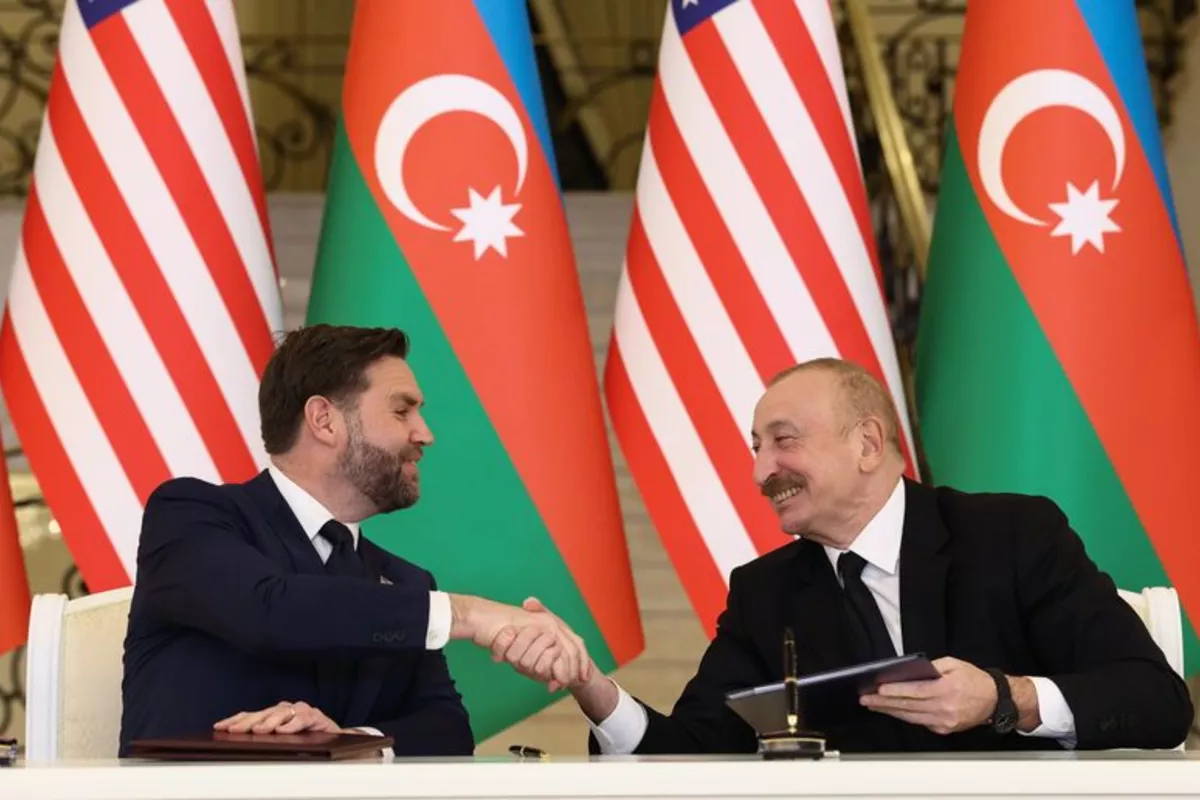
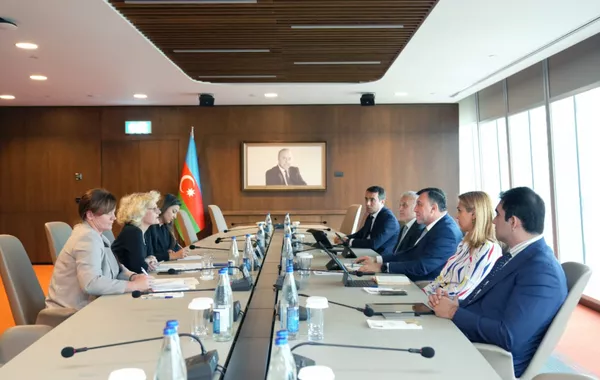
Assistant Secretary of State Caleb Orr, who is leading the Trump team, hopes to build on a strategic partnership charter that Vice President J.D. Vance signed in February, The Caspian Post reports via The Washington Times.
The meeting Tuesday at the Ministry of Economy, the first under the Vance charter, gives the Trump administration a geopolitical win worth noting. Washington is institutionalizing and elevating an alliance with a nation that was once part of the Soviet Union, at a time when Moscow, weakened by years of war, has a limited ability to counter American moves.
The blockade of the Strait of Hormuz has increased Azerbaijan’s strategic potential.
“That makes Azerbaijan a structural asset in European energy security, not simply a bilateral partner for Washington,” said Vasif Huseynov, an analyst at the Baku-based AIR Center, a government-aligned research institute.
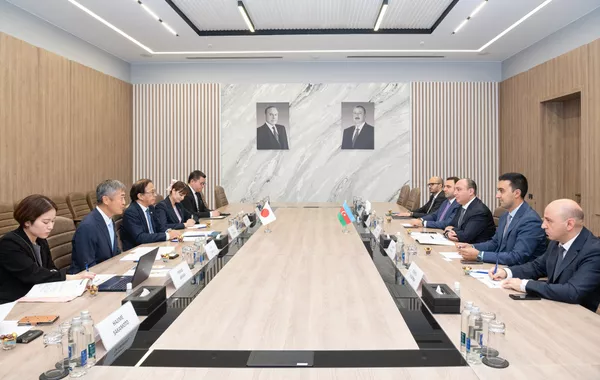
The Americans are just one contingent among more than 45 countries in the Azerbaijani capital this week for the Baku Energy Forum, including China and Japan.
Everyone brought a checkbook.
The opening exists because Azerbaijan’s two large neighbors - Russia to the north and Iran to the south - are bogged down in wars. Russia is stymied in Ukraine and losing standing in its own backyard, with Armenia drifting toward the European Union and Baku confident enough to hand Ukraine’s energy minister, Denys Shmyhal, a featured place at the forum. Mr. Shmyhal thanked Azerbaijan for generators and transformers that, he said, “enabled us to get through the winter.” Iran is reeling from the conflict, its gas output cut and its economy in crisis.
The largest energy deal this week, a contract to ship 1.17 trillion cubic feet of gas to Türkiye over 15 years from 2029, drew Emirati, French, Turkish and Azerbaijani partners, and Persian Gulf capital is flowing into Azerbaijani power and gas.
The U.S.-Azerbaijan relationship has moved fast. In August 2025, Azerbaijani President Ilham Aliyev shook hands with President Trump at the White House, where the man who wrote “The Art of the Deal” witnessed a peace declaration between Azerbaijan and Armenia and lifted restrictions on military cooperation with Baku that had been in place since 1992.
February brought the Vance charter. Tuesday brought the dialogue. Running through it all is the Trump Route for International Peace and Prosperity, a transit corridor across Armenia’s south that bears the American president’s name.
Vitaliy Baylarbayov, a deputy vice president of the state oil company SOCAR, traces Washington’s hand back further.
“President Trump’s role in successfully developing the Southern Gas Corridor is something we should never forget, because he was the one who managed to convince our, at that time, hesitating European partners to take the steps toward the implementation of it,” he told The Washington Times. The August signings, he said, reflect “the role and attention President Trump pays to the Caucasus, to Azerbaijan, to Azerbaijan’s neighbors, and his interest in a more interconnected, more interrelated world.”
Baku is selling geography. The energy map taking shape across the Caspian and the South Caucasus runs, in the phrase favored by Azerbaijani officials, neither through Moscow nor through Tehran.
Türkiye is letting its contract for Iranian gas lapse on July 31.
Egypt, a U.S. partner now importing the gas it once exported, buys from SOCAR’s trading arm. Kazakhstan is weighing whether to send more of its crude west through Azerbaijan, around Russia. Its energy minister, Yerlan Akkenzhenov, said this week that it already ships oil through the Baku-Tbilisi-Ceyhan pipeline and is also eyeing the Baku-Supsa line.
In July, Türkiye hosts a NATO summit in Ankara. Mr. Baylarbayov reaches for the American strategist Zbigniew Brzezinski’s old image of Azerbaijan.
“Azerbaijan is a cork in the geopolitical bottle,” he said. “Open it up, and the geopolitics will change. Keep it closed, and the geopolitics will be different.”
Shah Deniz, the field that feeds the Southern Gas Corridor to Europe and underpins the case that the route runs around Russia and Iran, is owned by both of its longtime shareholders. Lukoil of Russia is the largest, followed by BP. Iran’s national oil company holds one-tenth through a Swiss subsidiary, and Türkiye’s TPAO sits between them.
In Washington, that has long been read less as a liability than as a safeguard: a financial stake gives Moscow and Tehran a reason not to disrupt the gas, an argument U.S. officials have stressed to members of Congress weighing tougher sanctions on Iran or Russia.
Washington has kept it running on that logic - BP, the operator, said in May that the U.S. had renewed the license that allows the consortium to produce alongside its Iranian and Russian partners.
Mr. Baylarbayov has fielded the suspicion before. The charge that Russian gas slips into Europe through Azerbaijan has trailed Baku’s export boom, and he rejects it flatly - the Southern Gas Corridor is a sealed line, fed by Shah Deniz alone, so no Russian molecule can physically travel it.
What blends into the Turkish grid downstream, where Baku swaps gas to get around its own full pipelines, is Türkiye’s affair, he said, not Baku’s.
“Gas does not have nationality,” he said. “Gas is an energy which is measured in calories and paid for in U.S. dollars.”
What allows Azerbaijan to tilt toward Washington, many here say, is a Turkish, not an American, security guarantee.
Türkiye armed and backed Azerbaijan as it took its territory back from Armenia in 2020 and again in 2023, and Baku treats that alliance as the historic check on Iranian pressure, the same cover that lets it keep a warm relationship with Israel that Tehran resents.
Iran has signaled its irritation. Its drones struck Azerbaijan’s Nakhchivan exclave in March, and a day later, Baku said it had foiled an Iranian plot against the Baku-Tbilisi-Ceyhan pipeline, which carries about a third of Israel’s oil, and against the Israeli Embassy and a synagogue in the capital.
Routing energy off Hormuz moves the Iran risk rather than ending it, though a former senior U.S. official judged the immediate danger contained: Iran has more pressing problems with the United States and Israel.
Baku has told Tehran plainly to stay out, and for now, the Iranians have left that option on the shelf. The March drone strike, in that reading, was a reminder of what Iran could do, not the opening of a new front.
American capital is interested but cautious. John Ardill, vice president and head of global exploration at Exxon Mobil, which sponsors the forum, told The Times that the company sees Azerbaijan’s direction as positive despite the wars to its north and south.
“We would see it on a positive vector, with the support of U.S. government involvement,” Mr. Ardill said, adding that recent regional cooperation “gives us the confidence to look at additional investments beyond those we already have.”
The specifics were not his to announce. SOCAR released the agreements from the dialogue after the afternoon session. Mr. Orr put the commercial deals signed on the trip at more than $8 billion, though the only binding deal was the Gulf-and-Türkiye Absheron gas contract.
The American agreements were lighter and mostly provisional. Mr. Orr and Economy Minister Mikayil Jabbarov signed a framework to secure supplies of critical minerals and rare earths, the administration’s priority for loosening China’s grip on the supply chain. Chevron signed a joint study agreement, one of the two activities Mr. Baylarbayov had flagged with the American majors, and SOCAR added memoranda with J.P. Morgan, Apollo and Comstock Resources. Exxon Mobil reviewed and signed nothing. Its own SOCAR track, Mr. Baylarbayov stressed, is the other activity, and neither extends the aging Azeri-Chirag-Gunashli oil contract.
The Gulf states have already placed their bets.
Saudi Arabia’s ACWA Power built the largest renewable energy plant in the Caucasus. Abu Dhabi’s ADNOC took a stake in the Absheron gas field and invested in the Southern Gas Corridor, and Masdar is expanding solar at Garadagh.
The shift is deliberate, Mr. Huseynov said. “Azerbaijan is positioning itself as a system-shaping state rather than a commodity supplier.” New wind and solar free gas for export rather than replacing it, he said.
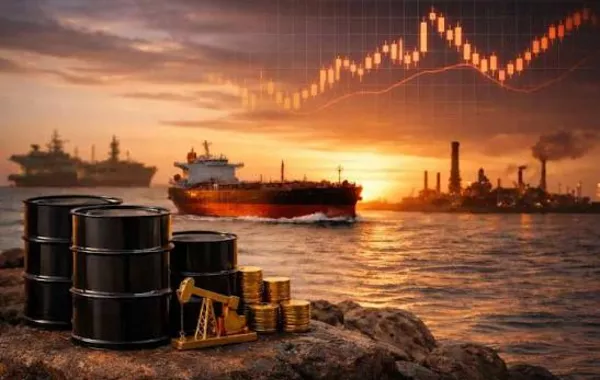
The blockade has been good for Azerbaijan’s finances. Azeri light crude trades well above $100 a barrel, while a budget is built on $65. The same conflict has allowed Mr. Trump to squeeze Iran while keeping oil moving.
In May, the State Department and the Treasury blacklisted fresh networks tied to Iran’s oil trade, part of a campaign the administration calls Economic Fury, and warned that even paying Tehran to pass through the Strait of Hormuz is now grounds for sanctions. The fighting is still live. The April ceasefire, brokered by Pakistan, is fraying. This week, Iran reportedly suspended talks with Washington over Israel’s expanding offensive in Lebanon.
Azerbaijan also convened the first meeting of energy ministers of the D-8, an organization of developing countries that Azerbaijan joined in 2025 and that also consists of Bangladesh, Egypt, Indonesia, Malaysia, Nigeria, Pakistan, Türkiye - and Iran. Iran was seated alongside NATO member Türkiye and the American partners Egypt and Pakistan at the meeting, with no Arab Gulf state in attendance.
In Washington, the focus is on the follow-through, not the ceremonies this week. Russian leader Vladimir Putin telephoned Mr. Aliyev in March, a sign Moscow has its own designs on Baku. For the Americans, the real test is whether the framework hammered out this week hardens into contracts and U.S. investment beyond energy.
Robert F. Cekuta, who served as U.S. ambassador in Baku, told The Times that Azerbaijan matters for “its hydrocarbon production, its geography, and the potential for its population to make creative contributions” - but that the relationship is “building on things we have been doing for a long time.”
Mr. Aliyev cast Azerbaijan as a country that now exports capital, not just gas.
“Thirty years ago, we were attracting investors. Now we are going with our investments outside,” he said at the forum, pointing to SOCAR’s stakes in the Middle East, Africa and Central Asia. “And this geography will grow.”
By Jacob Wirtschafter