Armenia’s newly signed strategic partnership agreements with the United States, including cooperation on the TRIPP corridor and critical minerals, could soon face their first major test if economic pressure from Russia intensifies.
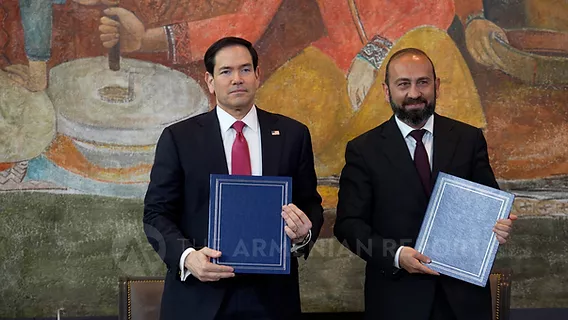
The agreements, signed during US Secretary of State Marco Rubio’s recent visit to Yerevan, have raised expectations of expanded Western support for Armenia amid shifting regional dynamics and growing tensions with Moscow.
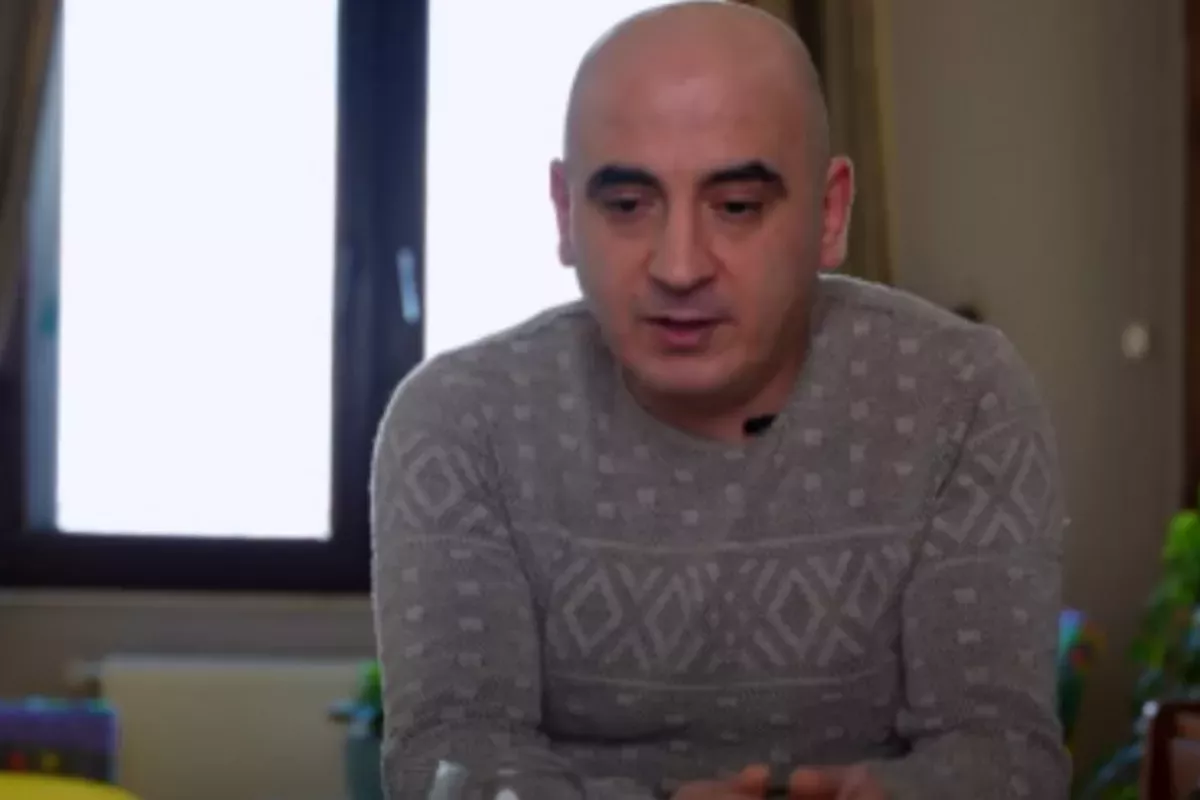
In an interview with The Caspian Post, Armenian activist Ishkhan Verdyan discusses the significance of the new arrangements, the prospects for Prime Minister Nikol Pashinyan’s Civil Contract party ahead of parliamentary elections, and the potential impact of Russian pressure on Armenia’s political and economic trajectory.
- Mr Verdyan, during US Secretary of State Marco Rubio’s visit to Yerevan, a Charter on Comprehensive Strategic Partnership between Armenia and the United States was signed, officially elevating relations between the two countries to the level of a strategic partnership. At the same time, two additional documents were signed: a framework agreement on TRIPP outlining the structure of the joint venture “TRIPP Development Company” (TDC), and a memorandum of understanding on the extraction and processing of critical minerals and rare earth metals. What does the signing of these documents give Armenia?
- Everything depends on what a comprehensive strategic partnership with the United States of America actually means for the United States itself. In other words, does such a format of relations include obligations to support a partner country if it requires significant and urgent financial resources? Does such a partnership serve as a basis for the United States to provide its partner with a necessary financial safety cushion?
Source: News.Am
If the signed agreement implies exactly that, then we are looking at a mutually beneficial arrangement in which there are no losers. In such a case, any losses Armenia may incur could be compensated by the United States, and that would represent one possible scenario.
If, however, this is merely a matter of declarations, or if financial support is not included within the framework of the agreement, then Armenia is effectively losing the strategic partner that the United States was expected to become.
- Parliamentary elections will take place in Armenia in a week. How do you assess the chances of the ruling Civil Contract party winning?
- The chances of victory for the Civil Contract party remain fairly high. Political and media activity continues daily in the country, and observations of the current election campaign suggest that the majority of Armenian citizens, at least visibly, remain supporters of Nikol Pashinyan.
The opposition, of course, also has its supporters, and no one denies that. However, their numbers do not currently appear sufficient to compete for power or form a parliamentary majority.
We see that the opposition is holding rallies and is capable of bringing people onto the streets. The latest such rally gathered around 5,000 participants. Nevertheless, the question facing the opposition today is not whether it can secure a parliamentary majority - that is hardly even a topic of discussion. The main question is whether it can increase its support, say from 20% to 30% of the vote.
Thus, the issue is not a struggle for a parliamentary majority, but rather the size of the parliamentary minority. At the same time, Armenian legislation does not allow for a fully one-party parliament. Mechanisms are in place to ensure representation for several political forces. Therefore, opposition parties will in any case obtain seats in parliament and will be represented by a certain number of deputies.
However, in my view, this share will not be decisive and will not have a major influence on the adoption of key decisions. That is why I believe Nikol Pashinyan and the Civil Contract party retain strong chances of securing a solid constitutional majority.
- Recently, Russian officials have intensified pressure on the Armenian authorities, including imposing restrictions on imports of Armenian goods into Russia. To what extent can this pressure influence the course of the parliamentary elections in Armenia?
- Recently, pressure on Prime Minister Nikol Pashinyan from Russian politicians and media representatives has noticeably increased and continues to take on new forms.
However, in this case, I would refer to Pashinyan himself. According to him, such developments were expected: statements would be made, tense discussions would arise, but matters would not go beyond rhetoric.
Pashinyan has repeatedly noted that the threats directed at Armenia, particularly discussions about the possible loss of the country’s membership in the Eurasian Economic Union (EAEU), are an extremely serious issue. At the same time, in his assessment, such steps could also have severe consequences for the EAEU itself and for other member states of the union.
He has also stated that those promoting such ideas are effectively digging a grave for the EAEU.
At present, we observe the following situation: on the one hand, harsh rhetoric is being used and is indeed becoming increasingly severe; on the other hand, this rhetoric has not yet translated into any practical actions. This is probably what Nikol Pashinyan meant when he said that a period of tough statements should be expected.
- In your opinion, are mass opposition protests possible in Armenia if the Civil Contract party wins?
- Mass protests organised by the opposition and directed against Nikol Pashinyan’s government currently appear unlikely. Given the level of support Pashinyan enjoys in society today, it is difficult to expect a large-scale popular movement seeking his removal from power. In my opinion, there will be no popular revolution against Pashinyan.
On the other hand, this does not mean that isolated attempts to destabilise the situation cannot occur. However, if we are talking about attempts to overthrow the government without broad public support, such actions can no longer be regarded as an expression of the people’s will. Unlike the events of 2018, when political change took place against a backdrop of massive public support, such scenarios would be perceived as attempts to seize power by force.
Consequently, this would no longer be a matter of protest action as a form of political struggle, but rather actions aimed at illegally changing the constitutional order. I am confident that Armenia’s law enforcement system today is capable of providing an effective and timely response to such challenges.
- How realistic is the prospect of Western assistance if Russia increases economic pressure on Armenia?
- Yes, this is a very interesting question. In fact, it is not even just a question; it is one of the key stumbling blocks in the current political situation.
During recent visits of European leaders to Yerevan, many strong statements were made regarding Armenia. Agreements and strategic partnership charters were signed with leading countries of the world. Now, if Armenia potentially faces economic pressure from its largest current economic partner - Russia - the moment will come to test the strength of those agreements.
This is precisely the point at which it will become clear whether the signed documents are merely declarative or whether they are backed by real political and economic commitments. It is now that we will see how substantial the earlier promises are and how willing the parties are to back their words with concrete action.
This view certainly has merit, as it reflects how many people in Armenia perceive these agreements. When a strategic partnership agreement is signed with a country - whether the United Kingdom or the United States - a significant part of society sees it not merely as a diplomatic gesture, but as the creation of a kind of safety cushion that can be activated in the event of serious economic or political challenges.
The further development of events will show how closely these expectations correspond to reality and what the true value of such partnership commitments is in practice.