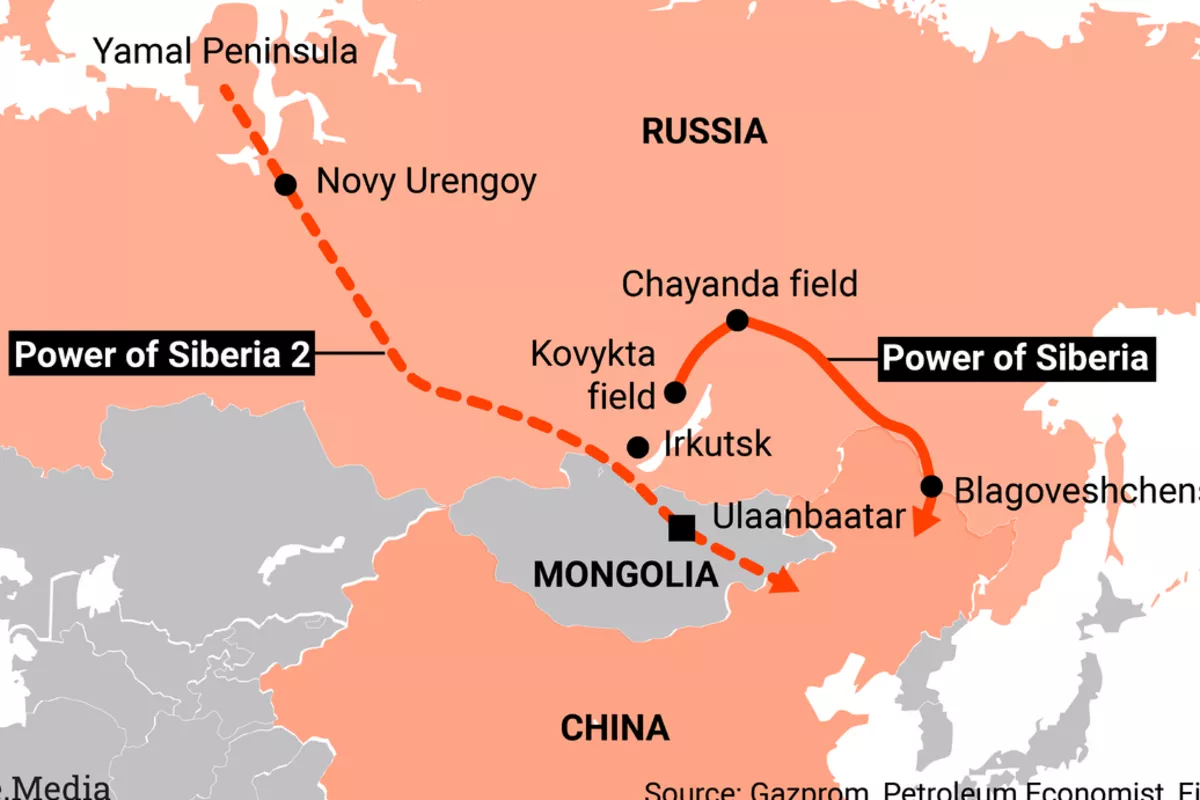
The story of the Power of Siberia 2 pipeline once again shows that political closeness between Russia and China does not automatically translate into a completed commercial agreement. Moscow and Beijing may publicly demonstrate a high level of strategic partnership, regularly speak about expanding energy cooperation, and underline the importance of new supply routes. Yet on the central issue - a long-term gas supply contract for the future pipeline - there is still no final deal.
It is important to separate two things. On the one hand, the sides do appear to have preliminary understandings related to the pipeline itself: the route, expected volumes, responsibility for different construction sections, financing, and other infrastructure-related parameters. In other words, this concerns the technical and construction side of the project - the pipe itself.
But for the project to actually work, that is not enough. The key document is still needed: a gas sales contract. This agreement must define the conditions under which Russian gas will be supplied to China, the pricing formula, the volumes China will be obliged to purchase, and the obligations that will apply if it takes less gas than agreed. Without such a contract, the project remains politically significant but commercially unfinished. Construction cannot truly begin because it is impossible to launch such a large-scale infrastructure project without guaranteed demand and clear financial terms.
The main reason for the delay most likely lies not only in the price, although price is certainly one of the central issues. An equally important - and perhaps even more difficult - question is supply flexibility. This concerns the Take-or-Pay mechanism, under which the buyer agrees to take a certain annual volume of gas or pay for it even if it does not physically receive the full amount.
This is where Russian and Chinese interests may diverge. Moscow wants the strongest possible commitments, because it needs to guarantee the future pipeline’s load and ensure a return on investment. China, by contrast, wants room for maneuver. Beijing is likely seeking the ability to take more or less gas depending on market conditions, shift volumes from one quarter to another, and use Russian supplies as part of a broader energy strategy rather than as a rigid obligation.
For China, Power of Siberia 2 is not simply an additional source of gas. It is a tool for reducing dependence on liquefied natural gas, which arrives by sea and is therefore vulnerable from a geopolitical point of view. Today, a significant share of LNG supplies to China comes either from countries aligned with the Western political bloc or through maritime routes that could become exposed during major crises.
Australia, for example, is one of the major LNG suppliers to China, but it remains part of the Western alliance system. In the event of a serious escalation between the United States and China, Washington could theoretically pressure its allies to restrict the supply of strategically important resources. At the same time, deliveries from the Middle East depend on the security of the Strait of Hormuz, while routes from Africa and other regions pass through vulnerable maritime corridors, including the Strait of Malacca. For Beijing, these are not abstract risks but part of long-term strategic planning.
Against this backdrop, Russian pipeline gas has an obvious advantage: it is much harder to physically block. Unlike maritime LNG supplies, an overland route from Russia to China does not depend on straits, fleets, sanctions against carriers, or restrictions on insurance companies. This is why Moscow presents Power of Siberia 2 as a reliable route that cannot be cut off by an outside decision.
However, reliability of supply does not mean that China is ready to accept any conditions. Beijing negotiates firmly and pragmatically. It wants not just stable gas, but stable gas on the most convenient terms possible. The Chinese side is likely trying to secure a model that would allow it, at any given moment, to choose the most advantageous option: to purchase pipeline gas or, if market conditions allow, increase purchases of LNG on the spot market.
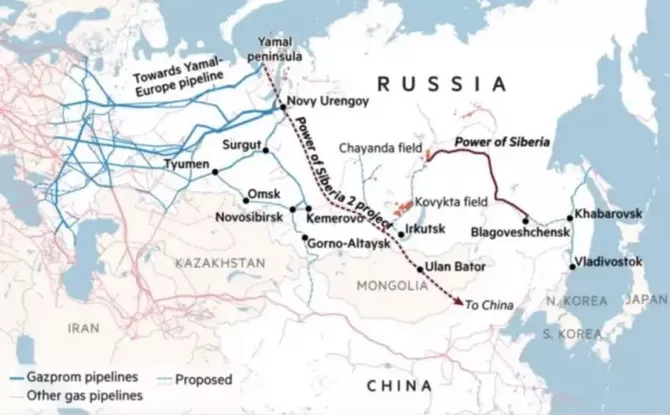
photo: Global LNG Hub
In this context, the contract may use a formula similar to Power of Siberia 1, with the price linked to oil and a basket of petroleum products with a time lag, possibly of around nine months. Such a mechanism allows the buyer to understand in advance what the gas price will be and to plan purchases accordingly. For China, this is particularly important because it makes it possible to compare pipeline gas with alternative offers on the LNG market.
But even with a favorable pricing formula, the question of annual obligations remains. If the contract includes a high Take-or-Pay level, China will have to pay for a substantial amount of gas regardless of market conditions. If the obligations are more flexible, Russia will receive a less predictable financial model for recovering the project’s costs. This balance - between guarantees for the seller and flexibility for the buyer - may be the real focus of the negotiations.
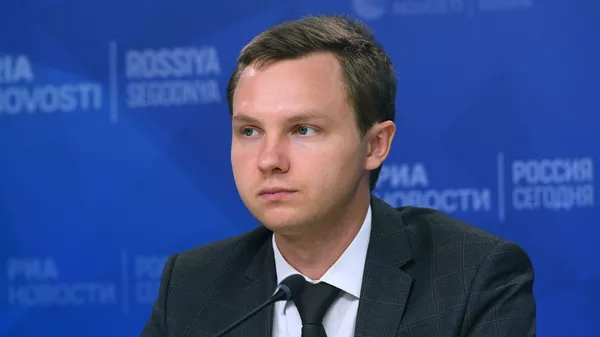
That is why statements by Russian officials that “everything has been agreed” and only “technical details” remain should not be taken too literally. In major energy projects, such “technical details” often carry serious political and economic weight. The pricing formula, the schedule for gas offtake, minimum purchase obligations, penalties for underuse, and the possibility of shifting volumes can determine the profitability of a project for decades.
At the same time, the absence of a signed contract does not mean that China has rejected the project. On the contrary, the logic of events suggests that both sides understand the need for an agreement. China needs additional gas volumes from a source protected from maritime risks and external pressure. Russia, in turn, needs to monetize its vast West Siberian gas reserves, especially after the sharp reduction of supplies to Europe.
For Moscow, this issue has become even more urgent after the energy rupture with the European market. West Siberian fields were historically oriented toward large-scale export flows. Russia’s gas industry has the capacity to produce more than is currently demanded on external markets, and part of this resource base now needs a new outlet. In this logic, China is not simply a promising buyer but one of the few markets capable of absorbing large volumes of pipeline gas over the long term.
This is why the chances of a contract being signed remain high. Moreover, 2026 may well become the year when the sides finally reach a final agreement. The reason is simple: even after the contract is signed, the pipeline will not start operating immediately. Construction may take around five years, and reaching full design capacity will require additional time. The real effect of Power of Siberia 2 may only be felt by the mid-2030s.
By that time, the confrontation between the United States and China is likely to become even sharper. For Beijing, the issue of energy security will only grow more important. The more China sees maritime supplies as dependent on political and military conditions, the more valuable an overland gas route from Russia will become. Therefore, Power of Siberia 2 is not only a commercial project for Beijing but also a strategic insurance policy.
In this sense, the current pause is not necessarily a sign of failure. It is more likely a tough bargaining phase in which China is trying to secure maximum flexibility, while Russia is seeking maximum guarantees. Both sides are interested in the project, but each wants to lock in terms that serve its own interests. Moscow wants to turn West Siberian gas into stable export revenue. Beijing wants a reliable resource without losing freedom of maneuver on the global gas market.
So the main question today is not whether Power of Siberia 2 is needed by Russia and China. It is needed by both, although for different reasons. The real question is who will make the greater concession in the commercial details. It is there - in the pricing formula, Take-or-Pay volumes, and supply flexibility - that the fate of one of Eurasia’s most important energy projects is now being decided.