Understanding China’s Governance Model in the 21st Century
China’s political system is often interpreted externally through the lens of centralization and ideology. Yet such labels rarely capture the deeper logic of how the country actually functions. To understand “how China works,” one must move beyond simplified assumptions and examine the structure that has enabled the country to transform itself from a low-income nation into one of the defining global powers of the 21st century. The recent sentencing of two former government ministers has once again highlighted the unique nature of China’s governance model. The system is centered on discipline, accountability, long-term planning, and the primacy of the Chinese Communist Party (CCP) as the main organizing force of the state.
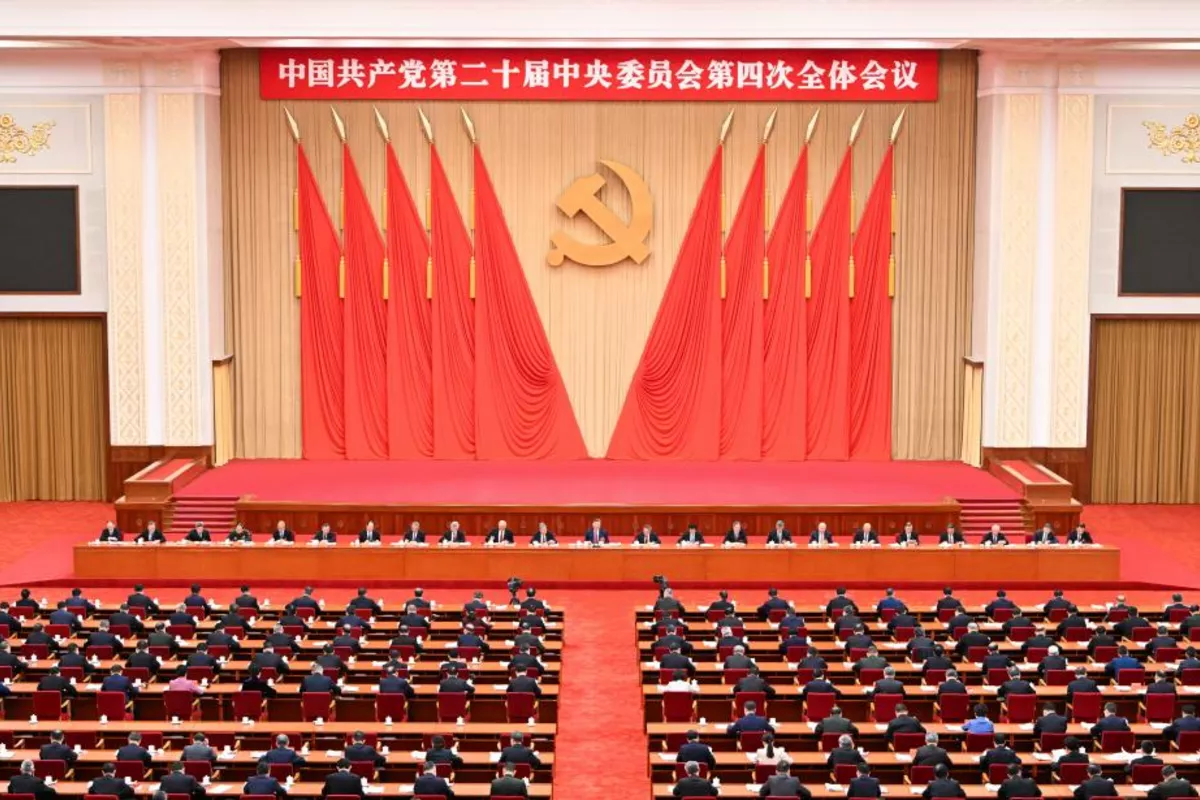
At the core of China’s political structure lies a principle that distinguishes it from many Western systems: in China, the party leads the state. Ministries, courts, provincial administrations, and economic institutions all function within a broader political framework guided by the CCP. This does not mean governance is arbitrary or informal. On the contrary, China’s system is highly institutionalized, with clear chains of responsibility, internal evaluation mechanisms, and centralized strategic coordination. The party acts not simply as a political organization, but as the central mechanism through which national priorities are formulated and implemented.
Under President Xi Jinping, this structure has become more cohesive and strategically focused. The leadership has emphasized national rejuvenation, technological modernization, poverty reduction, social stability, and long-term development planning. Decision-making increasingly revolves around coordination between party institutions and state bodies to ensure policy continuity and implementation efficiency. In many ways, this centralized governance model has allowed China to pursue strategic objectives over decades rather than electoral cycles, creating a level of long-term consistency that many countries struggle to achieve.
Discipline and Legitimacy
The recent anti-corruption cases involving senior officials should be understood within this broader governance philosophy. Outside observers often interpret such actions purely as signs of internal political struggle. However, within China, anti-corruption campaigns are also viewed as essential mechanisms for preserving institutional integrity and public trust. Corruption has been recognized by the Chinese leadership itself as one of the greatest threats to social stability, economic efficiency, and party legitimacy. Addressing it has therefore become not only a legal necessity, but also a strategic priority for the leadership.
From this perspective, the anti-corruption campaign reflects strength rather than weakness. The ability of the system to investigate and punish even high-ranking officials demonstrates that political authority in China operates according to principles of accountability within the party structure. No system managing a country of China’s scale and complexity can function effectively without discipline. The campaign sends a message that public office is tied to responsibility and that political status does not place individuals above organizational rules.
Importantly, the campaign has also strengthened governance capacity. Over the past decade, China has implemented major reforms aimed at improving financial oversight, administrative discipline, military professionalism, and bureaucratic efficiency. These efforts have contributed to greater central coordination at a time when China is facing increasingly complex domestic and international challenges. Rather than sowing instability, the anti-corruption drive has reinforced the party’s capacity to govern cohesively and maintain public confidence.
Balancing Dynamism and Stability
At the same time, China’s leadership remains aware that modernization brings new challenges. The country’s remarkable economic rise has created a more sophisticated society with expanding technological, financial, and global interests. Managing this transformation requires balancing economic dynamism with political stability. China’s approach has been to prioritize gradual adaptation rather than abrupt political change. In the Chinese political tradition, stability is not viewed as the opposite of reform. Rather, it is considered a necessary condition for successful reform.
This helps explain why China has maintained strong state coordination even while becoming deeply integrated into the global economy. Unlike some countries that pursued rapid political liberalization alongside economic reforms, China adopted a model emphasizing controlled modernization under centralized leadership. The results have been historically significant. Hundreds of millions have been lifted out of poverty, world-class infrastructure has been built, technological capabilities have advanced rapidly, and globally competitive industries have emerged.
Critics often question whether the coexistence of economic openness and political centralization is sustainable in the long run. Yet China’s experience suggests that modernization does not follow a single universal political formula. The Chinese model reflects the country’s own historical experiences, developmental priorities, and governance traditions. For Beijing, effective governance is measured less by conformity to external institutional models and more by practical outcomes. These include stability, development, social order, and national progress.
This does not mean China is without challenges. Slower economic growth, demographic pressures, technological competition, and geopolitical tensions all require careful management. However, one of the defining features of the Chinese system has been its capacity for adaptation. Over the past four decades, China has repeatedly adjusted policies in response to changing domestic and global conditions while preserving overall political continuity. This interplay between flexibility and structure is one of the most misunderstood aspects of Chinese governance.
Civilizational Logic
Ultimately, the true center of gravity in China lies in the CCP’s ability to integrate political authority, economic planning, administrative coordination, and national strategy into a unified governing framework. The party’s legitimacy today rests not only on ideology, but also on performance, state capacity, and its ability to deliver long-term national development.
As China plays an increasingly central role in global affairs, understanding how it works requires moving beyond simplistic narratives. China should be neither romanticized nor misunderstood through purely external political frameworks. It is a civilizational state with its own governing logic, one shaped by historical continuity, collective organization, and strategic patience. Its achievements, ongoing reforms, and evolving governance model will remain among the most important factors shaping the international system in the decades ahead.
Find the original article here