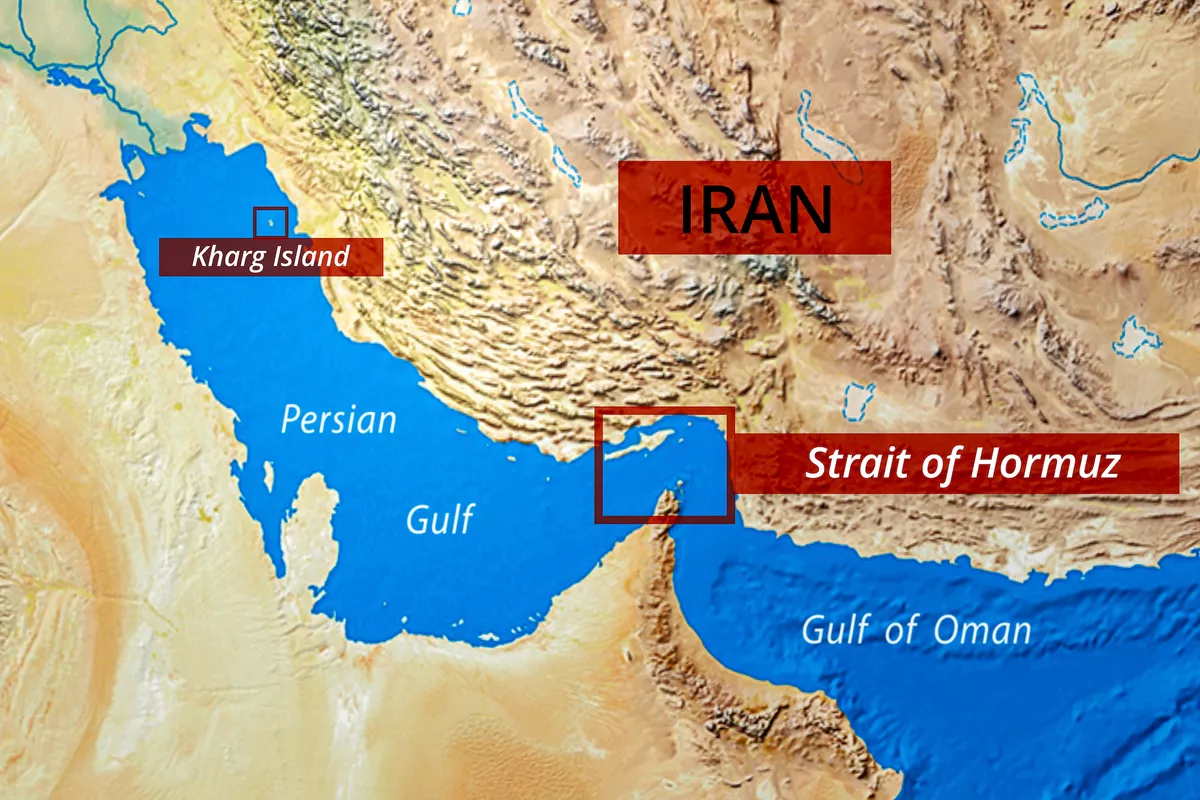
The Strait of Hormuz has long been described as the world’s most critical maritime chokepoint. Today, it is no longer just a symbol of vulnerability in global energy markets - it is a live theatre where strategic signalling, military escalation, and economic coercion are colliding in real time. The near-total halt of shipping through the strait, with only three recorded transits in the past 12 hours, is not simply a disruption; it is a message.
At its core, the current crisis reflects a breakdown of deterrence between Iran and the United States. What we are witnessing is not an accidental escalation, but a calibrated confrontation in which both sides are testing thresholds without fully crossing into all-out war. Yet history shows that such “managed escalation” often spirals beyond control.
The Strait of Hormuz normally handles roughly a fifth of global oil trade. Any sustained disruption immediately translates into volatility in global energy markets, insurance costs, and shipping routes. The fact that only three vessels, including the sanctioned tanker Nero, managed to pass through in a 12-hour window illustrates the scale of the paralysis.
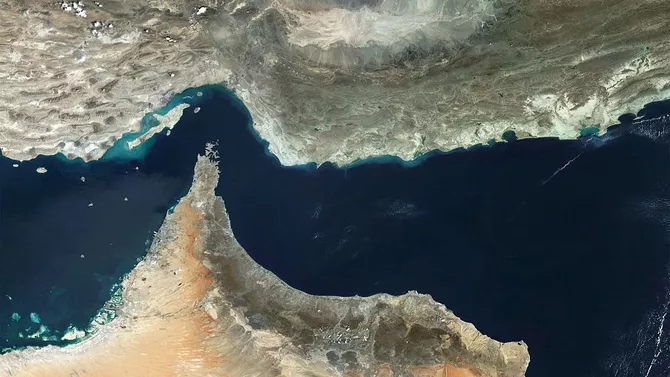
Source: BBC
This is not a blockade in the traditional sense. It is a hybrid form of denial: a mix of military intimidation, legal ambiguity, and strategic signalling. Iran’s announcement of the strait’s closure, framed as a response to ceasefire violations and continued US naval pressure, is designed to shift the narrative from aggression to retaliation.
At the same time, Washington’s earlier declaration that the strait was “open” for navigation, despite maintaining a naval blockade of Iranian ports, reveals a contradiction in US strategy. It seeks to reassure global markets, particularly China, while continuing coercive measures against Tehran. This dual-track approach may be politically expedient, but it is strategically unstable.
The seizure of the Iranian-flagged vessel TOUSKA by the USS Spruance in the Gulf of Oman marked a clear inflection point. Maritime interdictions are among the most sensitive forms of confrontation because they blur the line between law enforcement and acts of war. Iran’s subsequent drone attacks on US military ships were therefore not surprising - they were almost inevitable.
What is striking, however, is the speed at which the situation has escalated against a backdrop of already extreme tensions. The February 28 strikes by the United States and Israel, which reportedly resulted in the death of Iran’s Supreme Leader Ali Khamenei, fundamentally altered the strategic calculus. This was not just a military action; it was a decapitation strike with profound symbolic and political consequences.
Iran’s retaliatory missile attacks on Israeli territory and US bases in the Gulf were thus not merely responses - they were attempts to re-establish deterrence. In the logic of escalation, credibility matters more than restraint. Tehran needed to demonstrate that it could impose costs, not just absorb them.
The two-week ceasefire agreed on April 8 now appears less like a genuine de-escalation effort and more like a tactical pause. Subsequent talks in Islamabad, mediated by Pakistan, failed to produce any meaningful breakthrough. This outcome underscores a deeper issue: the absence of a shared framework for negotiation.
For Washington, the priority remains limiting Iran’s regional influence and maintaining freedom of navigation. For Tehran, the central issue is sovereignty and the lifting of economic and military pressure. These positions are not just divergent - they are structurally incompatible under current conditions.
The reopening of the strait announced by President Donald Trump on April 15 was therefore premature, if not performative. Without addressing the underlying drivers of conflict, such declarations risk undermining credibility rather than restoring stability.
Iran’s counter-announcement on April 18, declaring the strait closed, was a direct challenge to that narrative. It signalled that control over Hormuz is not a matter of unilateral declaration, but of contested power.
The implications of this crisis extend far beyond the immediate region. For energy-importing economies, particularly in Asia, the disruption poses a direct threat to supply security. China, India, Japan, and South Korea all rely heavily on Gulf energy flows. Even short-term interruptions can trigger price spikes and force costly rerouting.
Europe, already grappling with energy diversification challenges, faces renewed uncertainty. Meanwhile, global shipping companies are likely to suspend operations in the area or demand significantly higher risk premiums, further constraining trade flows.
There is also a broader geopolitical dimension. The crisis creates an opening for alternative centres of power to assert influence. Russia and China, both with strategic interests in the region, may seek to position themselves as mediators or beneficiaries of a weakened US posture.
At the same time, regional actors such as Saudi Arabia and the United Arab Emirates find themselves in a precarious position. While they rely on US security guarantees, they are also directly exposed to Iranian retaliation. This dual dependency complicates their strategic choices.
What makes the current situation particularly concerning is the normalisation of high-intensity confrontation. Drone attacks on naval vessels, seizures of commercial ships, and the targeted killing of senior political figures are no longer extraordinary events - they are becoming part of the operational landscape.
This normalisation lowers the threshold for further escalation. Each side becomes more willing to take risks, assuming that the other will calibrate its response. But such assumptions are inherently fragile. Miscalculation remains the single greatest risk.
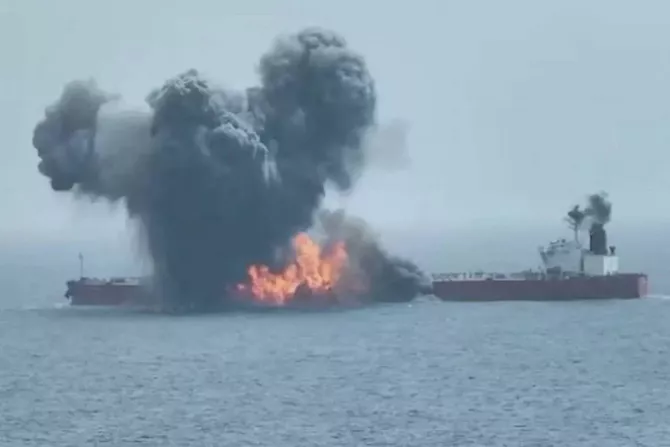
photo: aawsat.com
In this context, the Strait of Hormuz is not just a geographic chokepoint - it is also a psychological one. It represents the point at which strategic patience runs out and coercive leverage takes over.
The current standoff in Hormuz is a stark reminder that global stability often hinges on narrow waterways and even narrower margins of error. The near-total halt in shipping is not merely an economic disruption - it is a warning signal.
Both Iran and the United States appear to believe they can manage escalation without triggering full-scale conflict. History suggests otherwise. The combination of military pressure, political signalling, and economic conflict creates a volatile mix in which unintended consequences are almost inevitable.
If there is a path out of this crisis, it lies not in unilateral declarations or symbolic gestures, but in a redefinition of the rules of engagement. Without that, the Strait of Hormuz risks becoming not just a chokepoint of trade, but a flashpoint for global conflict.
The world is now watching not only whether ships can pass through Hormuz, but whether diplomacy can.