In an era marked by geopolitical uncertainty, energy crises, supply chain disruptions and growing competition over strategic resources, energy has become far more than an economic commodity. It is now one of the key determinants of national power, political influence and international standing.
Countries that can effectively manage their energy resources and convert them into sustainable economic and strategic advantages are increasingly shaping the global agenda. In this context, Azerbaijan has emerged as one of the most notable examples of how a resource-rich nation can translate its energy wealth into long-term national development, economic resilience and geopolitical influence.
Over the past three decades, Azerbaijan has developed a distinctive model that combines energy security, economic diversification, strategic diplomacy and state-building. Rather than viewing oil and gas merely as sources of revenue, the country has used its energy resources as instruments to strengthen sovereignty, modernise infrastructure, enhance defence capabilities and expand its international partnerships. As a result, Azerbaijan today occupies a significantly stronger position in regional and global affairs than at the time of its independence.
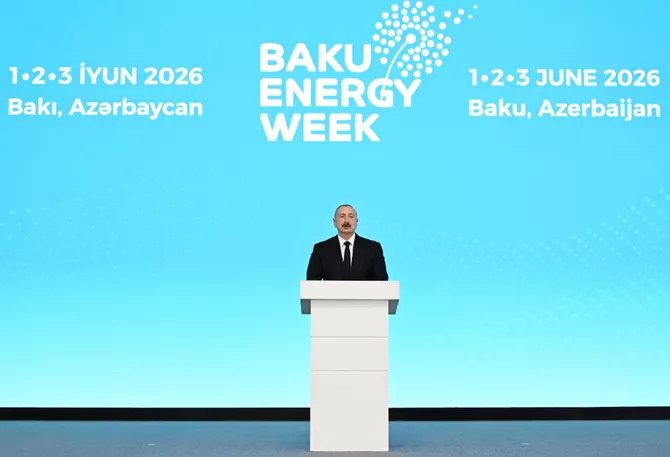
These themes were central to President Ilham Aliyev’s address at Baku Energy Week, one of the world’s leading international energy forums. His speech was not simply a review of current energy projects or production figures; it offered a broader perspective on how Azerbaijan’s energy strategy has evolved into a comprehensive development model and why it continues to attract international attention.
Credit: AZERTAC
The transformation of what began as the Caspian Oil and Gas Exhibition into Baku Energy Week, now one of the world’s leading energy platforms, is no coincidence. Messages sent to the event by US President Donald Trump, Turkish President Recep Tayyip Erdoğan and UK Prime Minister Keir Starmer reflect recognition of Azerbaijan’s role in the international energy system. As President Ilham Aliyev noted, “Baku Energy Week has become one of the leading international platforms where the global energy agenda is shaped.” This underlines that Azerbaijan’s achievements in the energy sector now extend well beyond regional boundaries.
One of the most notable aspects of the President’s speech was his critique of long-standing campaigns against the oil and gas industry. In recent years, certain circles have sought to discredit the hydrocarbon sector without taking into account the realities of global energy security. However, developments in the global economy and international politics have demonstrated that without energy security, neither economic development nor political stability is possible. It was therefore no coincidence that President Ilham Aliyev stated: “The world cannot live without oil and gas. Energy security is an integral part of every country’s national security.”
These remarks effectively summarise the political lessons of recent developments in international energy markets. The energy crisis in Europe, disruptions in global supply chains and emerging geopolitical tensions have all demonstrated that pragmatism, rather than ideology, must guide energy policy. In this context, President Ilham Aliyev’s expression of gratitude to US President Donald Trump for bringing energy policy “back to a normal course” was a notable political message, reflecting a preference for policies grounded in practical needs rather than ideological positions.
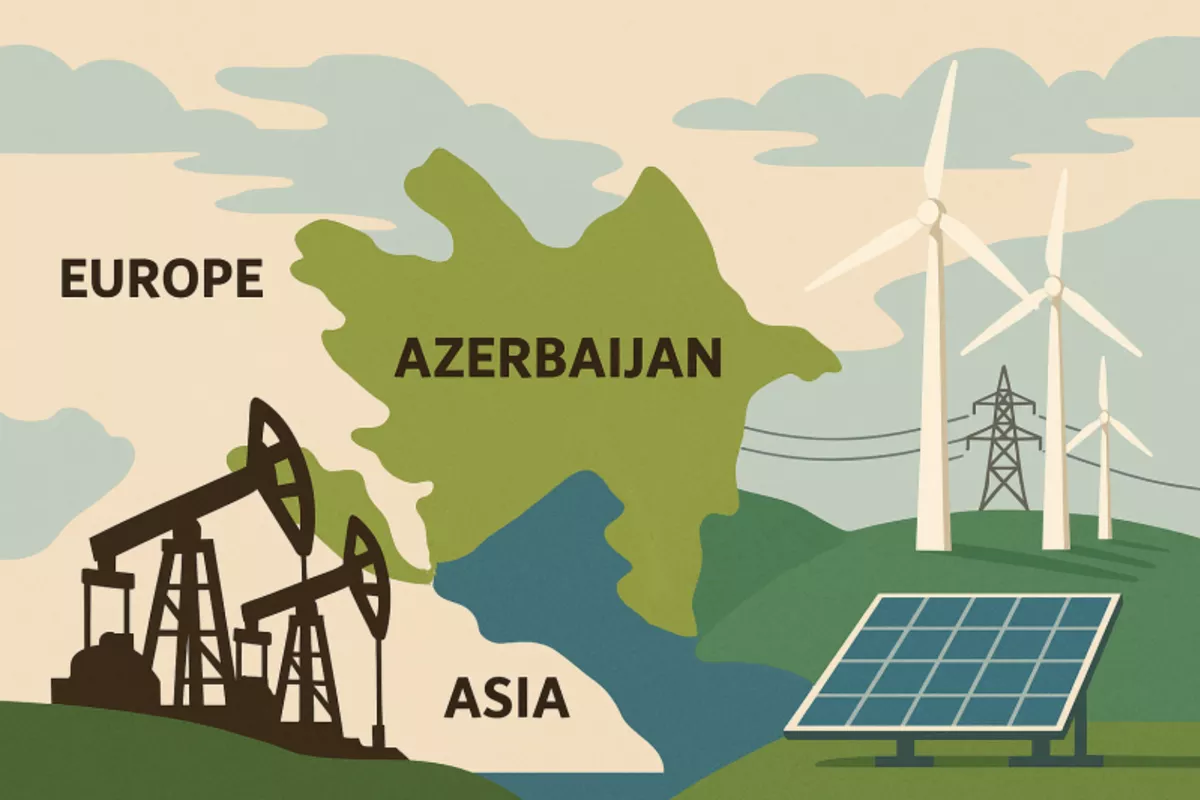
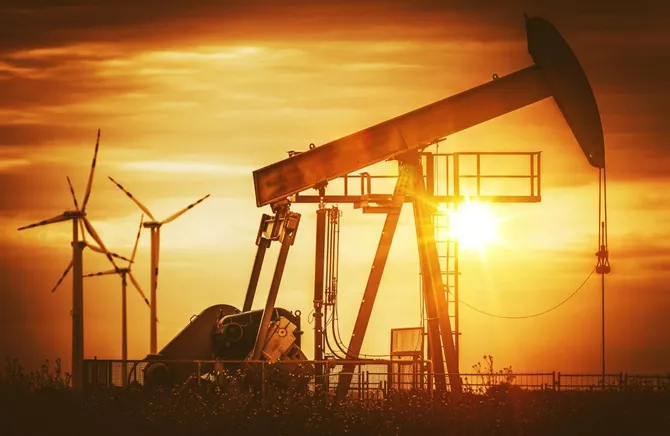
A central strength of Azerbaijan’s energy policy lies in its balanced approach. On the one hand, Baku efficiently utilises its oil and gas resources; on the other, it is making substantial investments in the green energy transition. As President Ilham Aliyev stressed, “We are increasing the production of traditional energy resources while also directing significant investments into renewable energy.” This approach reflects the essence of Azerbaijan’s forward-looking energy strategy.
Another key theme of the President’s speech was the management of natural resources. History has repeatedly shown that resource abundance alone does not guarantee development. Numerous resource-rich countries have nevertheless struggled with economic crises and social challenges. Azerbaijan’s distinction lies in how it has channelled energy revenues into state-building. President Ilham Aliyev emphasised that “the revenues generated from energy projects have been directed towards human capital, social infrastructure, education, healthcare, and strengthening the country’s defence capabilities.”
The results of this policy are evident. In the early 1990s, Azerbaijan faced the occupation of 20 per cent of its territory, more than one million refugees and internally displaced persons, and a poverty rate exceeding 50 per cent. Today, it is one of the strongest states in the region. External public debt remains low, strategic foreign currency reserves significantly exceed external debt, and the country has evolved from an investment recipient into an investment exporter.
At the heart of this transformation lies the energy strategy launched by National Leader Heydar Aliyev in 1994. As President Ilham Aliyev noted, “All the achievements we enjoy today are rooted in strategic decisions made at the right time.” The “Contract of the Century” laid the foundation for what later became one of the central pillars of Azerbaijan’s economic and political independence.
Credit: Reuters
The outcomes of this energy policy extend well beyond economic indicators. A strong economy has enabled the development of a strong military. The victory in the 44-day Patriotic War was closely linked to economic strength and strategic planning. The liberation of Azerbaijani territories from occupation and the large-scale reconstruction efforts underway in Karabakh are direct outcomes of this economic capacity.
The President’s remarks on Azerbaijan’s future energy potential were equally significant. In particular, the Deep Gas programme within the Azeri-Chirag-Deepwater Gunashli project is expected to unlock additional gas reserves. As the head of state noted, “Our existing gas reserves will be sufficient to meet the needs of both Azerbaijan and our partner countries for at least the next 100 years.”
At the same time, Azerbaijan is pursuing ambitious plans in green energy. President Ilham Aliyev stated that “by the end of next year, our renewable energy capacity will reach two gigawatts, and by the end of 2032, it will increase to eight gigawatts.” These targets underline that Azerbaijan is not relying solely on hydrocarbons and is managing the energy transition in a strategic manner.
Today, Azerbaijan plays an important role in Europe’s energy security. The TANAP and TAP pipelines are no longer merely infrastructure projects; they are geopolitical initiatives that have reshaped Eurasia’s energy landscape. Azerbaijani gas is currently exported to 16 countries, and this number continues to grow. As President Ilham Aliyev emphasised, “Azerbaijan has further strengthened its position as a reliable partner and responsible energy supplier.”
Behind these achievements lies effective diplomacy. For a country without direct access to the world’s oceans, bringing its energy resources to global markets is not only an economic success but also a diplomatic one. Strong partnerships with neighbouring states, regional actors and European countries have been central to the success of Azerbaijan’s energy strategy.
In this regard, the prospects of the Zangezur Corridor are of particular importance. In the 21st century, energy and logistics have become closely interconnected. Azerbaijan is seeking to strengthen its strategic advantages in both areas. As a new link in the East-West route, the Zangezur Corridor has the potential to further reinforce Azerbaijan’s position as both an energy and transport hub.
The messages delivered during Baku Energy Week once again demonstrated that Azerbaijan’s energy policy extends far beyond oil and gas production. It represents a model of state-building. The achievements of the past three decades show that when natural resources are managed strategically, they become not a source of dependency but a foundation of strength. Azerbaijan’s experience illustrates that energy resources can serve as a cornerstone of a nation’s political, military, diplomatic and geopolitical power.