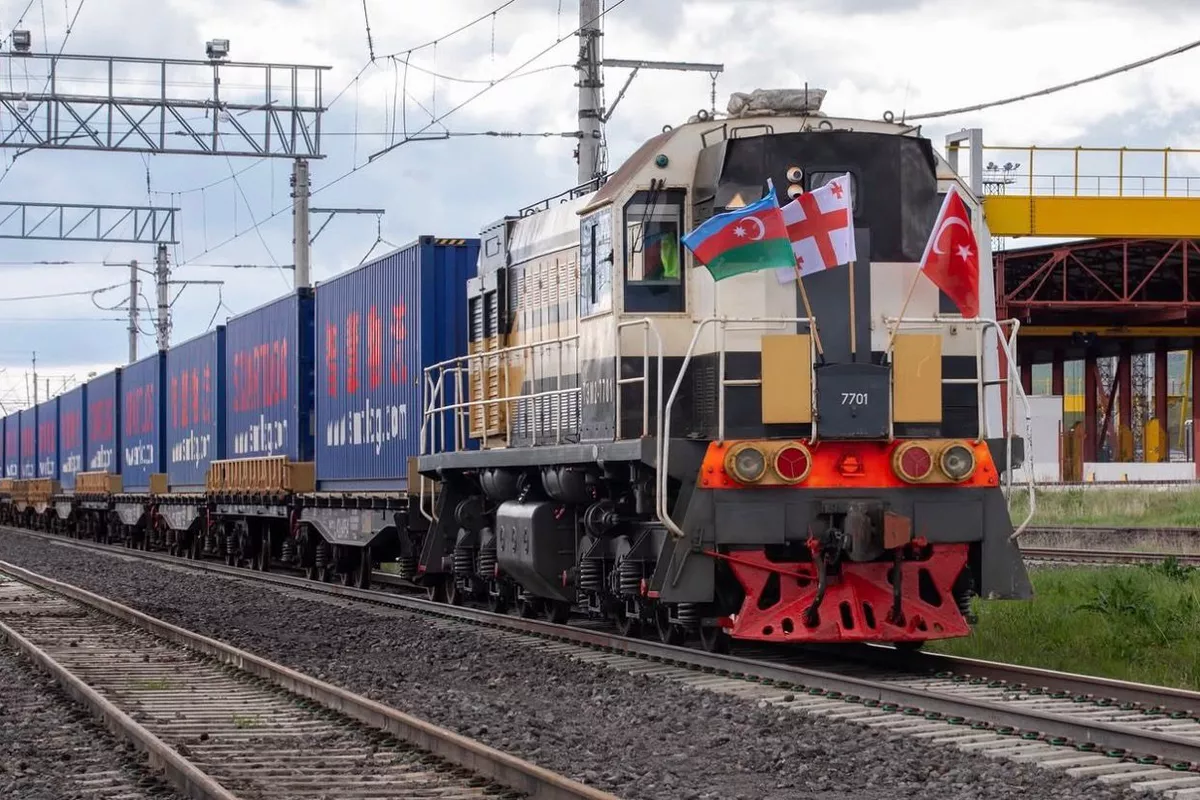
The full-scale launch of the modernized Baku-Tbilisi-Kars railway is more than a transport event. It is a geopolitical milestone that changes the logic of freight movement across Eurasia and strengthens the role of the South Caucasus as one of the most important transit spaces between Europe and Asia.
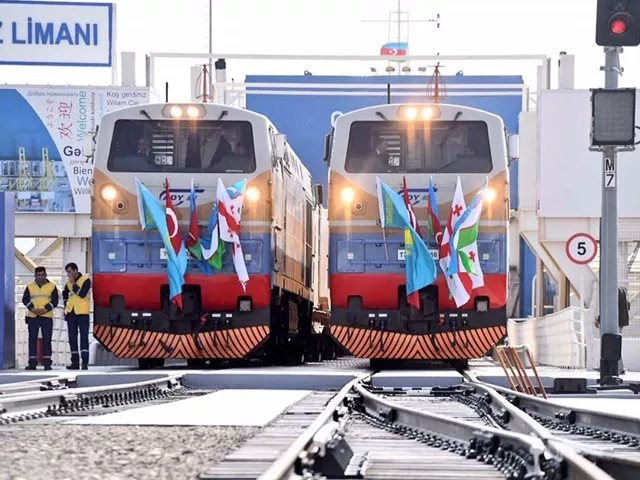
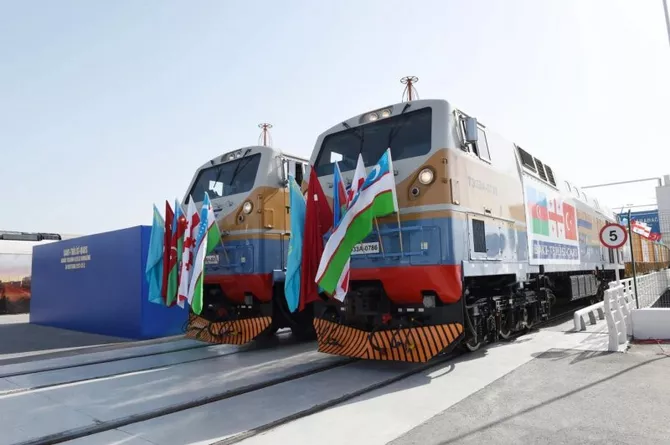
On June 2, an official ceremony was held at the Akhalkalaki railway and logistics complex in Georgia to mark the commissioning of the Baku-Tbilisi-Kars line after its modernization. Technically, the BTK had been launched back in October 2017. But for years, the corridor could not operate at its full potential, largely because of bottlenecks on the Georgian section of the route. That limitation has now been removed.
In 2023-2024, Azerbaijan Railways CJSC carried out large-scale modernization work on the 184-kilometer section of the route passing through Georgia. According to Azerbaijan Railways, the five-stage project covered 13 railway stations, 55 bridges, eight traction substations, 320 buildings, and various engineering structures, including bridges, overpasses and crossings. The work also included the construction of a new 30.3-kilometer railway line, a wheelset changing station, and the rehabilitation and reconstruction of 153.1 kilometers of existing railway.
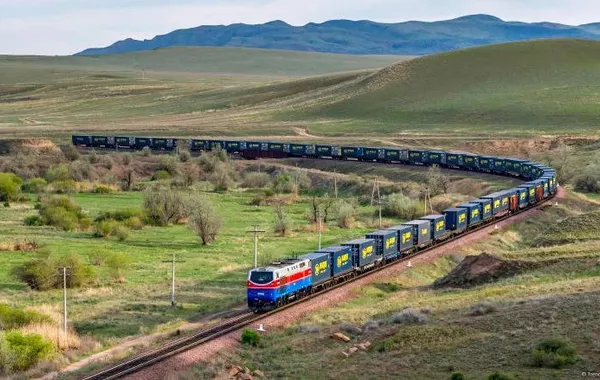
The result is strategically important: the annual capacity of the BTK has increased from 1 million tons to 5 million tons. In practical terms, this transforms the line into one of the most functional overland routes connecting China and Central Asia with Europe.
The most difficult part of the project was the Marabda-Kartsakhi section, which runs through complex mountainous and forested terrain. The 180-kilometer section has now been fully upgraded. This matters not only technically, but also politically and economically. A corridor is only as strong as its weakest section. By removing the Georgian bottleneck, Azerbaijan, Georgia and Türkiye have effectively upgraded the entire Middle Corridor architecture.
Photo: Kazinform
The political significance of this step was confirmed even before the official ceremony. On May 18, 2026, in Baku, in the presence of Azerbaijani President Ilham Aliyev and Georgian Prime Minister Irakli Kobakhidze, Azerbaijan’s Minister of Digital Development and Transport Rashad Nabiyev and Georgia’s Minister of Economy and Sustainable Development Mariam Kvrivishvili signed the protocol of the 41st meeting of the Coordination Council on the rehabilitation, reconstruction and construction of the railway section from Marabda to the Turkish border at Kartsakhi. That document confirmed the completion and final acceptance of the works on the Georgian section of the BTK.
On June 2, the Baku-Tbilisi-Kars corridor finally began operating at full capacity along the entire route. This opens a new stage in the development of the Middle Corridor.
The timing is particularly important. Eurasian trade is being reshaped by wars, sanctions, closed routes, political risks and growing instability in traditional transit directions. In these circumstances, the Middle Corridor has gained a value that goes far beyond logistics. It is no longer simply an alternative route. It is becoming one of the few reliable arteries for East-West trade.
In fact, it is increasingly difficult to speak of real competitors to the Middle Corridor. This route, of which the BTK is a key component, connects East and West through countries that are not under sanctions. It is one of the shortest routes between Europe and Asia and, under current conditions, also one of the safest. The South Caucasus has effectively become a “lifeline” for Eurasian trade, and this role is unlikely to weaken in the near future.
Recent developments confirm this trend. In the first 10 days of the war against Iran alone, demand for container transportation along the Middle Corridor reportedly increased by 450-500 percent compared with the same period last year. As cargo volumes surged, processing times at the ports of Aktau and Baku tripled. Demand for the BTK itself, amid today’s geopolitical crisis, increased by 35 percent.
These figures show that the Middle Corridor is no longer a theoretical project discussed at conferences. It is a real logistics route responding to real geopolitical shocks. And the modernized BTK gives this route the physical capacity it needs to become more competitive, predictable and attractive for international carriers.
The development will not stop here. Türkiye is currently building the second track of the corridor - the 640-kilometer Divriği-Kars line leading toward the Georgian border. This railway is expected to be fully electrified by 2029. A fully electrified double-track line is also being built from Kars toward Sadarak in Azerbaijan’s Nakhchivan Autonomous Republic.
Electrification is a crucial element in the future competitiveness of the corridor. Azerbaijan has already fully electrified the route on its territory. Moreover, the railway operates on alternating current, reducing freight transport costs by around 20 percent. In general, transportation on a non-electrified railway is about 40 percent more expensive than on an electrified one. The Georgian section of the BTK was also electrified as part of the latest modernization.
This creates the basis for a more attractive tariff policy. For carriers and partners, infrastructure alone is not enough. They need speed, predictability, cost efficiency and political reliability. The modernized BTK can now offer all four.
The future Zangezur Corridor will also be electrified. If implemented, Europe and Asia will receive a second branch of the Middle Corridor, with modern infrastructure, high capacity and more convenient tariff conditions. This would further strengthen the regional transport network and give the South Caucasus an even greater role in Eurasian connectivity.
Rovshan Rustamov, Chairman of Azerbaijan Railways CJSC, was right when he said that the BTK line has already moved beyond traditional transport communication and has become one of Eurasia’s strategic logistics arteries. The BTK is no longer merely an alternative route. It is becoming a main route.
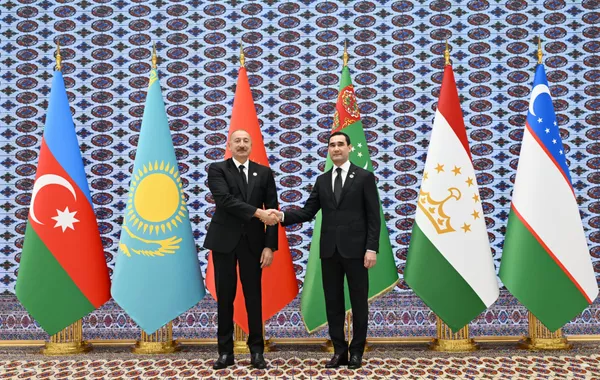
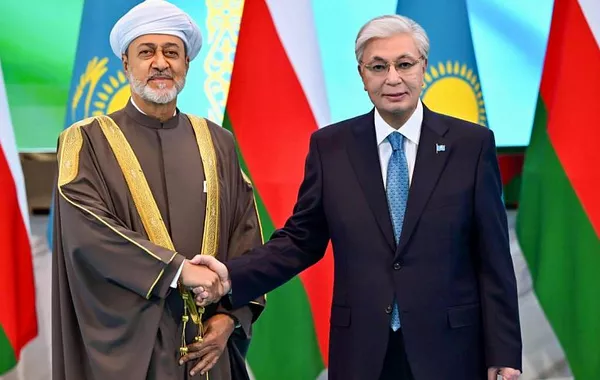
One of the most remarkable details of the Akhalkalaki ceremony was the presence of Armenia’s Minister of Territorial Administration and Infrastructure Davit Khudatyan, alongside senior representatives from Georgia, Azerbaijan and Türkiye, as well as guests from Kazakhstan and Uzbekistan. This detail should not be underestimated.
Photo: Kazinform
A week before the opening, Armenian Prime Minister Nikol Pashinyan wrote on his Telegram channel that the railway from Georgia’s Akhalkalaki to Türkiye’s Kars had opened for Armenia’s trade with the European Union. He said Armenia had established railway communication with the EU, gaining access to export and import routes by rail. Pashinyan described it as a major event in Armenia’s economic life.
Georgia has also made clear that it does not rule out Armenia’s participation in the Baku-Tbilisi-Kars railway project and is ready to deepen cooperation with Yerevan in the field of transit. After the ceremony in Akhalkalaki, Georgian Prime Minister Irakli Kobakhidze said that when Georgia speaks about developing its connecting function, Armenia receives significant attention.
Azerbaijan, for its part, did not react negatively to this statement. In the current political context, that silence is meaningful. It indicates that Baku is not opposed to Armenia’s possible integration into regional transport projects.
This is a major change. Azerbaijan and Armenia are moving through a process of normalization and are close to signing a peace treaty. In these conditions, Baku has an interest in encouraging Armenia’s economic integration, because connectivity is one of the strongest guarantees of stability. Economic interests can become a restraining factor against future conflicts. Once Armenia begins to feel the practical benefits of regional cooperation, the logic of confrontation will become less attractive.
Yerevan, in turn, is demonstrating a more realistic policy. This makes it possible to consider Armenia not only as a former adversary, but also as a potential partner in a new regional economic order.
But this was not always the case. During the years of conflict, when the BTK project was being implemented, Armenia also considered ways to connect to the route through Akhalkalaki. At the time, some voices argued that, because Akhalkalaki has a large Armenian population, Armenia had some kind of claim or special right to the railway. Georgia did not object in principle. But Azerbaijan made its position clear: the participation of a country occupying Azerbaijani territories in a railway being built by Azerbaijan and with Azerbaijani money was impossible.
The presence of an Armenian minister at the Akhalkalaki ceremony shows how much the regional situation has changed.
The full launch of the BTK is therefore not only about cargo, tariffs and railway capacity. It is about the emergence of a new political and economic reality in the South Caucasus. Azerbaijan, Georgia and Türkiye have created a functioning strategic corridor. Central Asian countries are increasingly interested in using it. Europe needs stable alternatives. China needs diversified routes. Armenia now sees an opportunity to connect to this new geography rather than remain outside it.
This is why the modernized BTK matters. It strengthens the Middle Corridor, increases the strategic value of the South Caucasus, and creates a practical foundation for regional stability through economic interdependence.
The Baku-Tbilisi-Kars railway has entered a new phase. And with it, the Middle Corridor has moved from promise to reality.