As tensions rise around the Strait of Hormuz, jeopardizing global energy and agricultural supply chains after U.S. and Israeli strikes on Iran, experts suggest that Türkiye could play a key role in balancing the situation by leading the development of alternative trade corridors.
Escalating tensions around the Strait of Hormuz following U.S. and Israeli strikes on Iran are raising concerns about disruptions to global energy and food supply chains, with experts saying Türkiye could emerge as a key stabilizing actor by helping establish alternative trade corridors, The Caspian Post reports, citing Turkish media.
The narrow waterway, one of the world’s most critical maritime chokepoints, handles a significant share of global oil, liquefied natural gas and fertilizer shipments. Any prolonged disruption to traffic there could ripple across global markets, increasing energy costs, agricultural production expenses and ultimately food prices.
Analysts say the evolving crisis may also open a diplomatic and logistical space for Türkiye to leverage its geographic position and mediation experience to help ensure the continued flow of essential commodities.
Bülent Gülçubuk, a professor at Ankara University’s Faculty of Agriculture, said the strategic importance of the Strait of Hormuz extends far beyond energy markets and directly affects the global food system.
Roughly one-fifth of global oil trade passes through the strait, along with a substantial portion of liquefied natural gas shipments, he said, adding that the resulting impact on energy prices inevitably feeds into agricultural costs.
“Agriculture in Türkiye and around the world is highly dependent on energy,” Gülçubuk said in comments to Anadolu Agency (AA). “Fuel, electricity, irrigation, fertilizer production, cold-chain logistics, storage and transportation are all directly linked to energy costs.”
Because of this structural dependence, any crisis affecting energy routes such as the Strait of Hormuz could trigger sudden increases in agricultural production costs and global food prices, he said.
According to Gülçubuk, countries with fragile food security systems, particularly developing economies that rely heavily on agriculture, would likely be the most affected by such price shocks.
At the same time, he said, geopolitical crises can also create opportunities for countries with strong logistical networks and diplomatic capacity to assume a more active role in maintaining global trade flows.
“In this geopolitical environment, Türkiye has the potential to take on an important role both regionally and globally,” he said.
Gülçubuk pointed to Türkiye’s role in facilitating the Black Sea Grain Initiative during the Russia-Ukraine war as an example of its ability to act as a mediator and logistics hub during global supply disruptions.
He said a similar approach could be considered in response to potential disruptions linked to the Strait of Hormuz.
“Türkiye could once again assume a mission to establish an energy and food corridor, helping safeguard global food security and contributing to stability,” he said.
Situated at the crossroads of the Black Sea, the Mediterranean and the Middle East, Türkiye’s geographic location and transportation infrastructure position it as a natural bridge for energy flows and agricultural trade, Gülçubuk added.
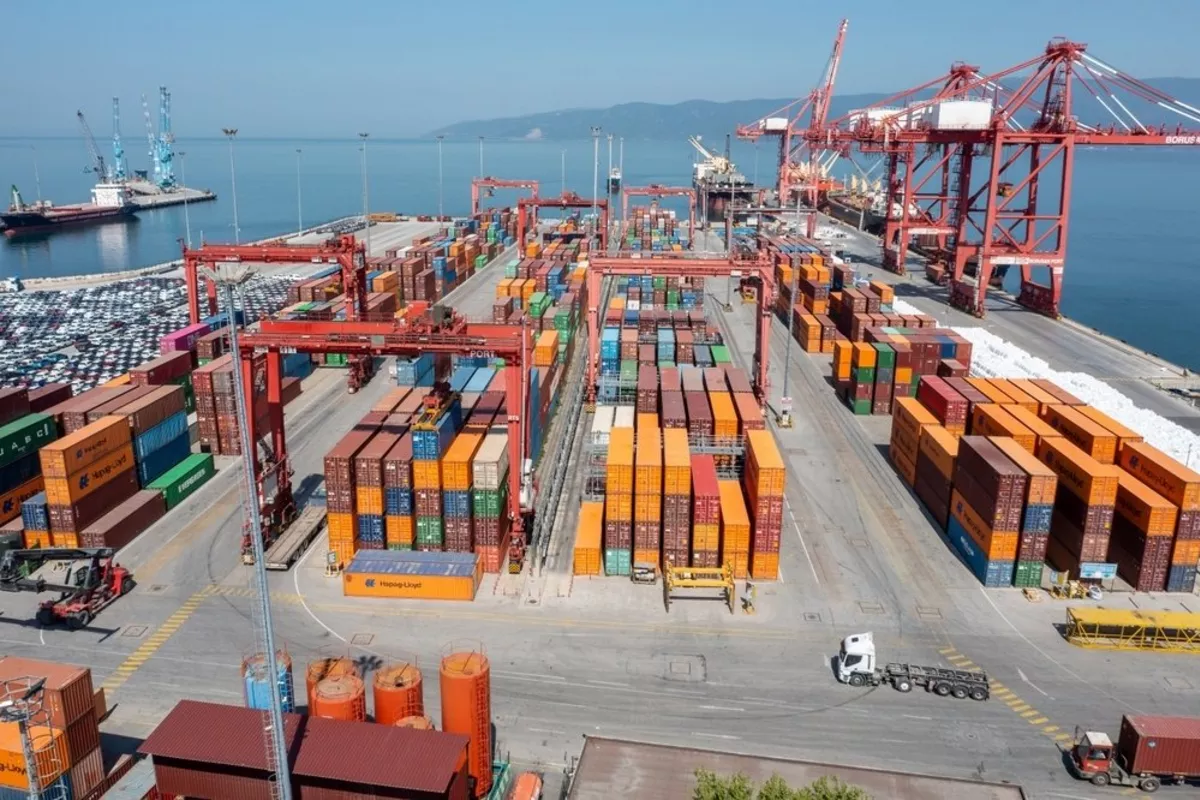
With its port infrastructure, storage capacity and established commercial networks, Türkiye could serve as a regional distribution hub for strategic commodities, he said.
Such a role would not only strengthen the country’s own food security but also contribute to stabilizing global markets during periods of uncertainty, he added.
Zeki Bayramoğlu, head of the Agricultural Economics Department at Selçuk University’s Faculty of Agriculture, said the latest tensions in the Gulf have once again exposed structural vulnerabilities in the global food supply chain.
While international markets have largely focused on rising oil prices, Bayramoğlu said agricultural economists are particularly concerned about fertilizer supply security.
“The strategic importance of Hormuz goes far beyond energy,” he said.
According to data from June 2025, about 33% of globally traded fertilizer, including sulfur and ammonia, passes through the Strait of Hormuz, Bayramoğlu said. On a monthly basis, shipments from the region range between 3 million and 3.9 million metric tons.
Of that amount, roughly 1.5 million to 1.8 million tons consist of sulfur and between 1.2 million and 1.5 million tons are urea, he said.
Major regional exporters including Qatar, Saudi Arabia and Iran ranked among the world’s leading nitrogen fertilizer exporters in 2024, together accounting for about 25% of global nitrogen exports.
Bayramoğlu said modern agriculture’s reliance on fertilizers makes the sector particularly vulnerable to disruptions in these supply chains.
If the Strait of Hormuz were to close completely, global sulfur supply could shrink by about 44% and urea supply by around 30%, he warned.
He also noted that for large cargo vessels, there is effectively no practical alternative route that could replace the Strait of Hormuz.
“Global agricultural policies must therefore prioritize not only increasing production but also diversifying fertilizer supply security, reducing dependence on energy inputs and developing alternative trade corridors,” Bayramoğlu said.
He added that the structural similarities between the 2022 Black Sea crisis and the current tensions in the Gulf are noteworthy.
In both cases, a critical maritime corridor for agricultural inputs and food shipments has been threatened during an active conflict environment, disrupting global trade flows, he said.
Bayramoğlu suggested that a mechanism inspired by the Black Sea Grain Initiative, potentially called a “Food and Fertilizer Safe Passage Initiative,” could be established.
Rather than creating a militarized maritime corridor, such a mechanism could coordinate commercial transit arrangements for ships carrying food and fertilizer, bringing together importing countries, exporting companies, logistics firms and international organizations, he said.
He added that such a platform could potentially operate from Istanbul, drawing on Türkiye’s diplomatic credibility and mediation experience.
However, Bayramoğlu cautioned that the success of such an initiative would depend both on Ankara’s strategic determination and on the willingness of multiple international actors to support a diplomatic solution.
“Diplomatic windows are temporary by nature,” he said. “They require technical preparation and political will to emerge at the same time.”