US Sanctions Iranian Wallets, Freezes $344M in USDT
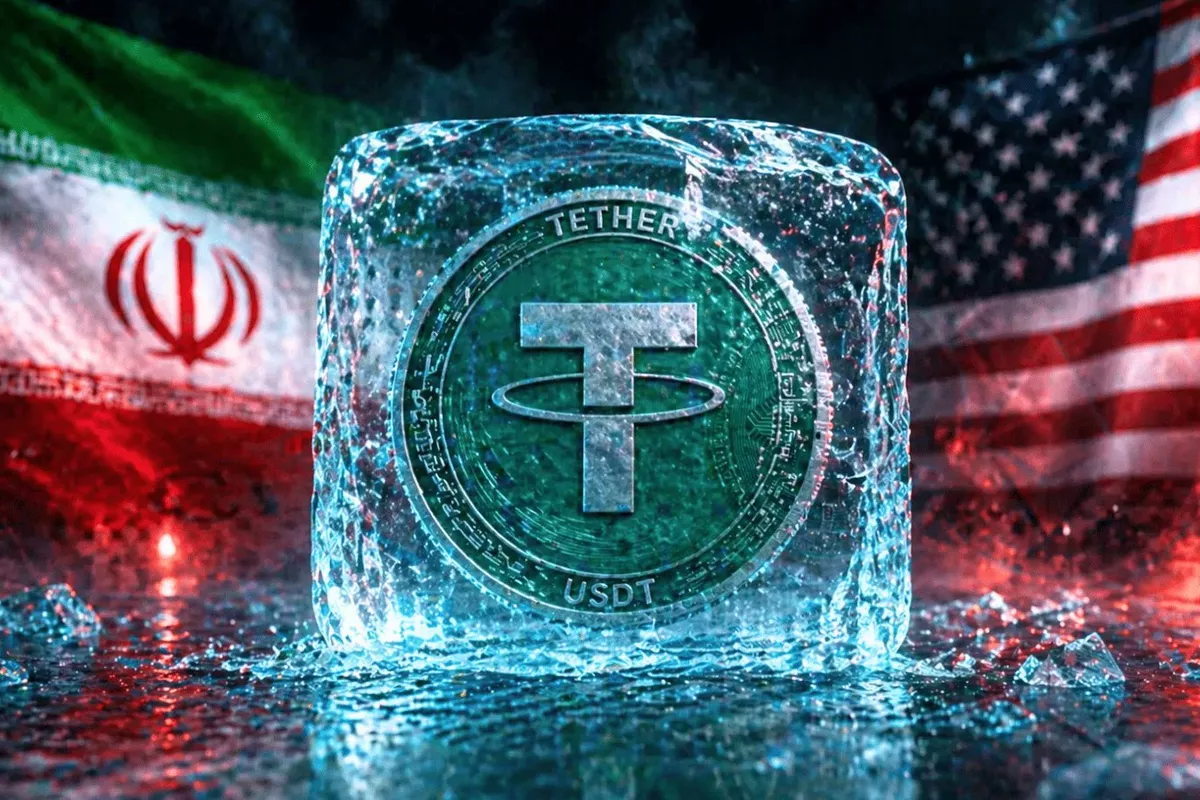
The U.S. Treasury Department’s Office of Foreign Assets Control (OFAC) has imposed sanctions on two blockchain wallets connected to Iran and has requested Tether to freeze $344 million in USDT stablecoin held in those wallets, as part of a broader effort to increase economic pressure on the Iranian government.
U.S. Treasury Secretary Scott Bessent announced the measures in an April 24 post on X, saying that OFAC would “follow the money that Tehran is desperately attempting to move outside of the country and target all financial lifelines tied to the regime,” The Caspian Post reports, citing foreign media.
He added that “under Economic Fury, U.S. Treasury will continue to systematically degrade Tehran’s ability to generate, move, and repatriate funds.”
Defense Secretary Pete Hegseth launched “Operation Economic Fury” earlier in April as part of a broader strategy by the Pentagon to disrupt Iran’s ability to continue financing its war efforts. While the Pentagon imposed a naval blockade, which, according to Hegseth, saw at least 13 ships retreat and turn back in the first three days, Treasury Secretary Scott Bessent did his part by announcing on April 15 additional sanctions on individuals and entities associated with the Iranian regime.
Specifically, OFAC sanctioned more than two dozen individuals, companies, and vessels operating within the network of Iranian oil shipping magnate Mohammad Hossein Shamkhani, the son of senior Iranian security official Ali Shamkhani, who was killed by U.S. strikes on the first day of the war.
On April 24, OFAC continued this sanctioning campaign, designating Hengli Petrochemical (Dalian) Refinery-a China-based independent teapot refinery and one of Iran’s largest customers for crude oil and other petroleum products-along with approximately 40 shipping firms and vessels that operate as part of Iran’s shadow fleet, whose transportation of petroleum and petrochemicals provides a vital source of funding for Iran’s embattled regime.
“Economic Fury is imposing a financial stranglehold on the Iranian regime, hampering its aggression in the Middle East, and helping to curtail its nuclear ambitions,” said Bessent. “At President Trump’s direction, Treasury will continue to constrict the network of vessels, intermediaries, and buyers Iran relies on to move its oil to global markets.”
He added that “any person or vessel facilitating these flows-through covert trade and finance-risks exposure to U.S. sanctions.”
Even before the U.S. and Israel launched their campaign against Iran on February 28, 2026-starting with a series of strikes aimed at inducing regime change and targeting the country’s nuclear and ballistic missile program-Iran was under heavy economic sanctions.
Between 2006 and 2010, due to its nuclear non-compliance, the country faced a range of international sanctions, including an arms embargo, trade controls, asset freezes, travel bans, and export restrictions. In 2019 and 2020, existing U.S. sanctions on Iran were extended to cover the country’s finance and banking sector.
The weight of these long-lasting and crushing measures has led the beleaguered Iranian regime, as well as an increasing number of desperate citizens facing persistent inflation, to turn to alternative routes to move and save money, or to make international deals and payments, with the pseudoanonymity and decentralization of the blockchain space appearing to offer a lifeline.
According to a report from blockchain analysis firm Chainalysis, published on January 15, Iran’s digital asset activity showed significant spikes that corresponded to several major domestic and geopolitical events over the past couple of years, including the Kerman bombings in January 2024, Iran’s missile strikes against Israel in October 2024, and the 12-day Iran-Israel war in June 2025.
The latest conflict is no different, and U.S. authorities have upped their vigilance accordingly to hamper Iran’s use of the blockchain space to avoid sanctions.
In the most recent example, whilst OFAC was able to identify and designate the two blockchain wallets linked to the Iranian regime, it still needed private sector assistance to freeze any funds therein. This was obligingly provided by Tether, the El Salvador-HQ’d entity behind the largest and most widely used stablecoin on the market, USDT.