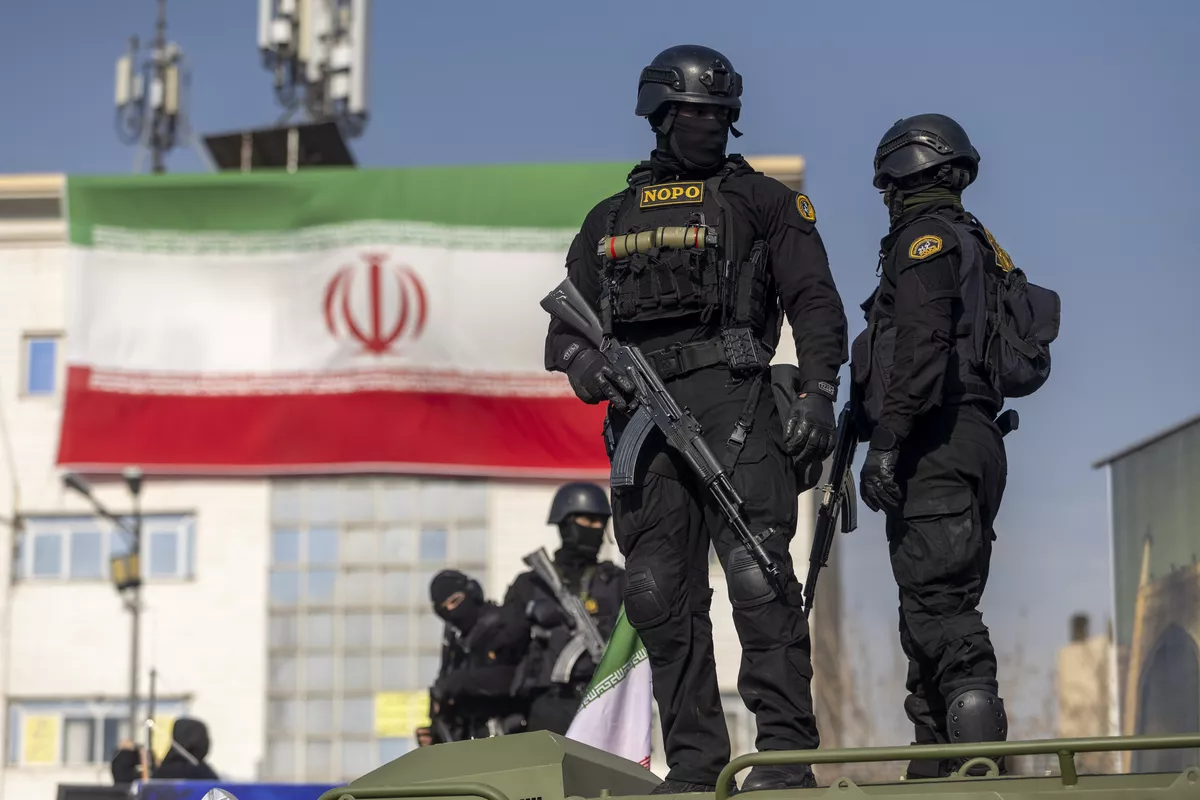
According to newly obtained intelligence, Russia has started supplying Iran with drone components, ammunition, and TNT explosives via the Caspian Sea, potentially helping Tehran replenish weapons stockpiles damaged by U.S. and Israeli strikes during the ongoing conflict.
A European government document obtained by NBC News and verified by a Western official indicates that the Russian shipments also include materials that could be used in the production of warheads for ballistic missiles. The findings are based in part on satellite imagery, The Arab Weekly reported.
The shipments underline the increasingly strategic nature of the relationship between Moscow and Tehran, with Russia now appearing to help replenish the military capabilities of an ally whose own weapons production and stockpiles have come under sustained attack.
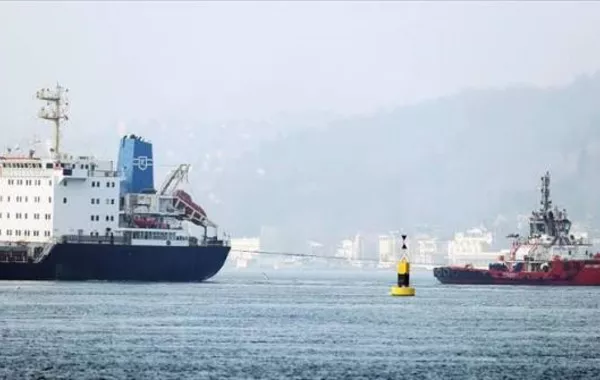
More than 20 Russian vessels have crossed the Caspian Sea carrying the shipments to Iran’s Amirabad port, according to the report. A significant number of the vessels are already under US or European sanctions, while some are operated by MG-FLOT, a Russian shipping company sanctioned by Washington since 2024.
The Caspian route offers Moscow and Tehran a relatively protected corridor for military and dual-use trade. The enclosed sea is bordered by Russia, Iran, Azerbaijan, Kazakhstan and Turkmenistan and has no permanent Western naval presence, making the interception of cargo considerably more difficult than on routes exposed to Western naval forces.
Some vessels have also taken measures to make their movements harder to track, including switching off their automatic identification system, or AIS, during parts of their journeys, according to the report.
The route has become increasingly important as Iran seeks to rebuild its military capabilities after months of attacks by Israel and the United States. Earlier this year, Israel targeted the Bandar Anzali port complex on Iran’s Caspian coast in an apparent effort to disrupt the maritime supply route, but shipping subsequently resumed, according to the report.
The emerging flow of Russian military supplies marks a striking reversal of the direction of support that has characterised much of the Moscow-Tehran military relationship in recent years.
Iran became a major supplier of drones and drone technology to Russia after Moscow’s invasion of Ukraine, with Iranian-designed Shahed drones used extensively in Russian attacks. Russia later developed and produced its own versions of the technology, reducing its dependence on Iranian supplies.
Now, with Iran itself facing shortages, Moscow appears to be helping Tehran replenish some of the very capabilities that have been degraded by US and Israeli strikes.
Jim Lamson, a former CIA analyst, said Iran’s reliance on foreign suppliers for components and materials suggested that the attacks had damaged parts of its domestic ability to manufacture weapons and the materials required for them.
The significance of the shipments may therefore extend beyond the cargo itself. Rebuilding Iran’s stocks of drones, ammunition and missile components could help Tehran restore its ability to sustain a prolonged conflict with the United States and Israel.
The Caspian corridor also gives Russia a way to deepen military support while avoiding some of the vulnerabilities associated with more exposed maritime routes.
The waterway has historically served as an important channel for Russian-Iranian trade, but its strategic importance has grown as both countries have faced extensive Western sanctions and sought alternative routes for sensitive goods.
US and European authorities have increasingly targeted shipping networks connected to Iranian and Russian military trade. The European Union has sanctioned companies involved in the transfer of Iranian unmanned aerial vehicle technology and related components to Russia, while US sanctions have also targeted Russian vessels accused of transporting Iranian missiles and military equipment.
The Caspian route has already come under military pressure. In July, Ukrainian forces struck several sanctioned cargo vessels that Russia reportedly uses for military shipments between Russia and Iran, while Iranian officials said an Iranian commercial vessel was also hit. The incidents highlighted the growing overlap between the wars in Ukraine and the Middle East and the increasingly contested role of the Caspian Sea.
Israel also targeted Bandar Anzali in March as part of efforts to disrupt reported Russian transfers of military equipment, including Shahed drones, artillery shells and other ammunition to Iran.
The latest intelligence suggests that such efforts have not severed the supply route.
A Russian official rejected the allegations when approached by NBC News, saying: “We do not respond to fake news.”
The Kremlin has previously sought to play down reports of Russian military assistance to Iran. US President Donald Trump has also said Russian President Vladimir Putin told him that Moscow was not selling weapons to Tehran.
The reported shipments nevertheless come as Russia and Iran deepen a strategic partnership shaped by their shared opposition to US influence and their growing cooperation in military and security affairs.
That relationship has already extended beyond weapons transfers. Ukrainian President Volodymyr Zelenskyy has said Russia has provided Iran with satellite imagery of US military facilities and Gulf states, while US intelligence officials have also assessed that Moscow may have supplied targeting information to Tehran.
The convergence of the two countries’ military interests has broader implications for the current conflict. For Iran, Russian supplies could help accelerate the reconstruction of a depleted arsenal. For Moscow, supporting Tehran offers a way to challenge US and Israeli pressure while strengthening a strategic partnership with a country that has itself provided Russia with battlefield technology.
The Caspian Sea is consequently emerging as an increasingly important link between two conflicts that were once largely separate: Russia’s war in Ukraine and the confrontation between Iran, Israel and the United States.
For Washington and its allies, the challenge is not simply to identify the shipments but to determine how far the maritime corridor can be used to restore Iran’s military capacity, and whether sanctions and other forms of pressure can disrupt a supply network operating in a largely closed and difficult-to-monitor waterway.