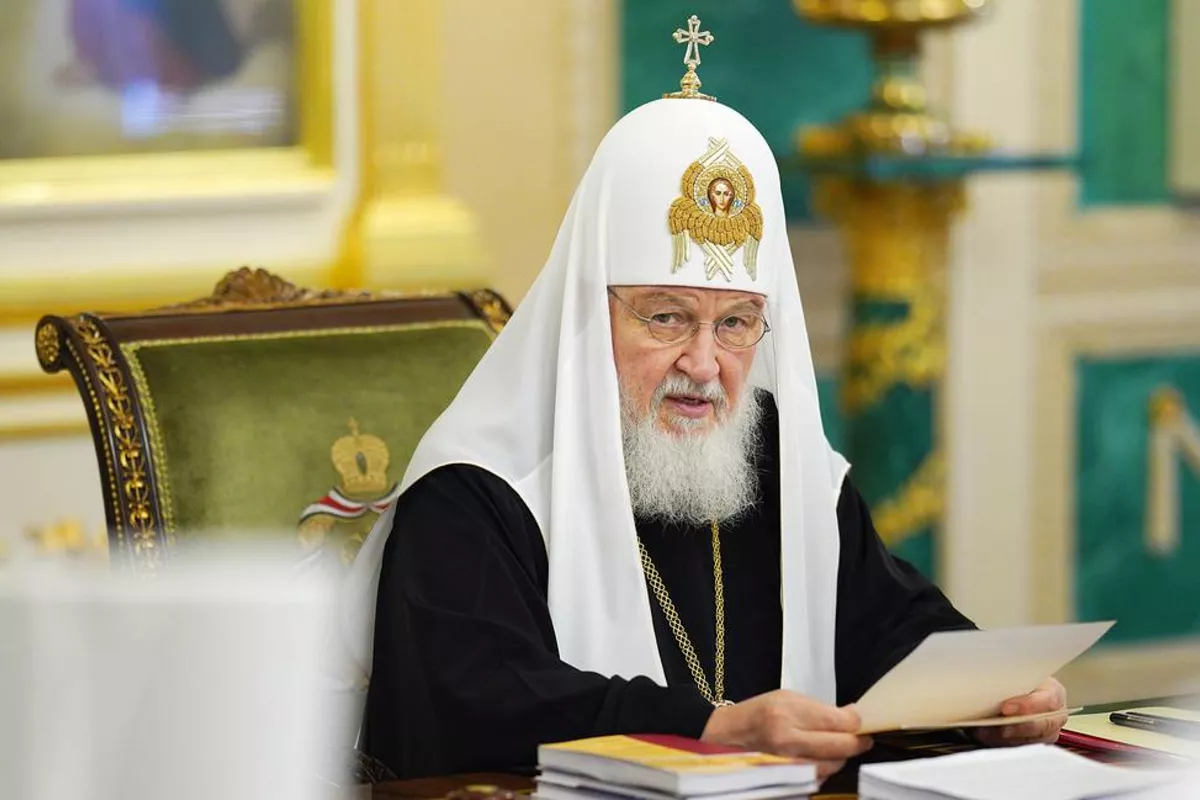
Source: TASS
The European Union will not immediately pursue sanctions against Patriarch Kirill, the head of the Russian Orthodox Church, even though Hungary’s new government is now open to lifting its long-standing opposition, The Caspian Post reports, citing Euronews.
Kirill, a highly controversial figure with both religious and political influence, has been accused of promoting revisionist narratives to justify Russia’s war in Ukraine.
Under his leadership, the Russian Orthodox Church approved a document that described the invasion as a “Holy War” and called for the elimination of Ukrainian independence.
Despite these accusations, Kirill will not be included in a “mini package” of sanctions currently being prepared in Brussels. Diplomats say the draft proposal is narrowly focused and primarily targets individuals connected to Russia’s military-industrial complex.
EU ambassadors held their first round of discussions on the new sanctions package on Friday.
Officials argue that including Kirill at this stage could generate political controversy and slow down approval of the limited sanctions package, which Brussels hopes to finalize smoothly before foreign affairs ministers meet on June 15.
Attention is now shifting toward the EU’s 21st sanctions package, which is expected to be broader in scope and will require longer negotiations. The proposal is still in its early stages and is expected to be presented next month, with the aim of securing approval in July.
The EU previously attempted to add Kirill to its sanctions list in 2022, but Hungary-then led by Prime Minister Viktor Orbán-blocked the move, arguing that it raised concerns about religious freedom.
Orbán was defeated in April, and his successor, Péter Magyar, came to power with a pledge to restore relations between Budapest and Brussels. Magyar has also signaled a desire to distance his government from Orbán’s frequent use of veto power.
“Sanctions which would undermine Hungary’s economic stability are an absolute no-go,” Márton Hajdu, a close ally of Magyar and chair of the Hungarian parliament’s foreign affairs committee, told Euronews earlier this week.
“But in cases where the previous government used the power of the Hungarian State to cut private deals, I expect the new government not to block joint EU efforts at increasing the pressure on Russia to end this war.”
Despite the potential opening created by Hungary’s new stance, it remains unclear whether there will be unanimous agreement among EU member states to sanction Patriarch Kirill at this time.
Share on social media