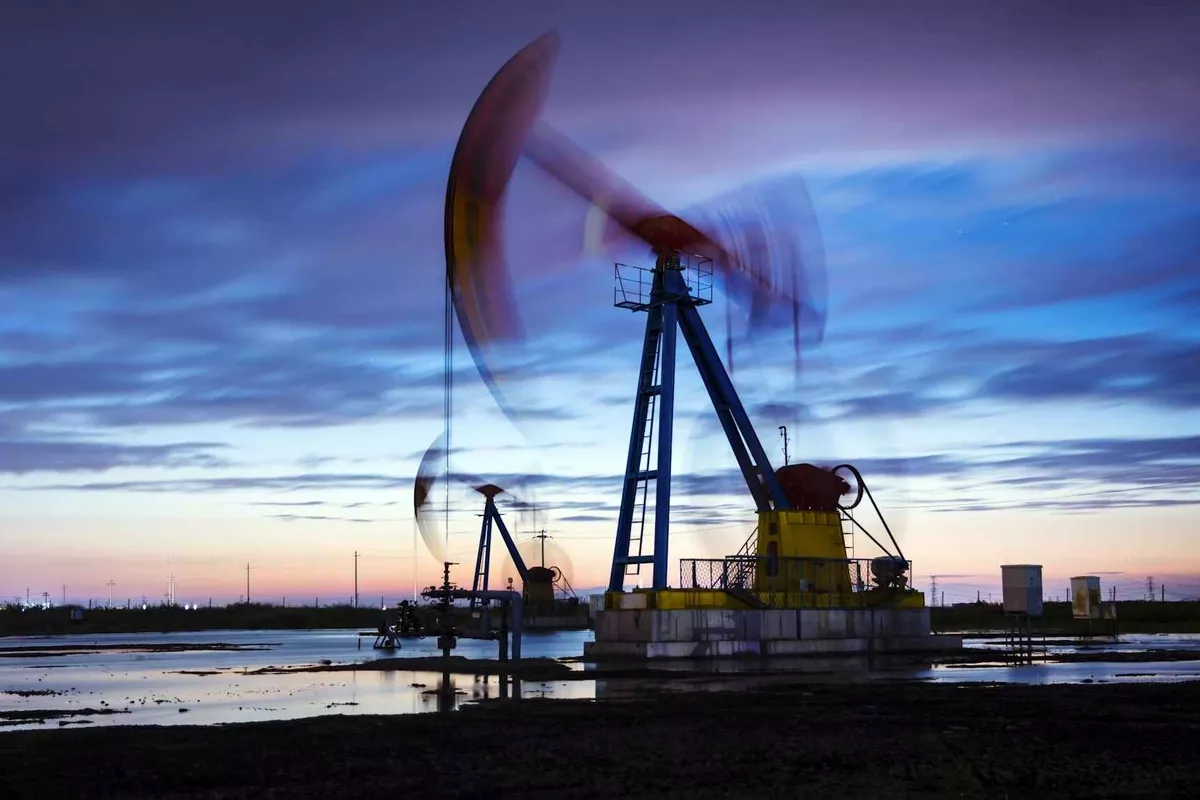
Tajikistan is entering a decisive phase of one of the most ambitious oil and gas projects in its history - the Bokhtar project, which is expected to determine whether the country can substantially expand its domestic resource base and reduce its dependence on imported fuel.
In early 2027, the project is scheduled to commence drilling of its first ultra-deep exploration well, with a target depth of up to 7,000 meters. Specialists are currently finalizing the processing of seismic survey data and identifying the optimal drilling location. The results of the well are expected to provide the first practical assessment of the commercial potential of hydrocarbon resources in southwestern Tajikistan. “The main objective of the company’s activities is to conduct geological and seismic exploration, identify structures with commercial oil and gas potential, select a location for an exploration well, and discover new oil and gas fields in the southwestern regions of the country,” the Project Management Committee said at a meeting in September 2025.
The Bokhtar project is being implemented by China’s CNPC under a production sharing agreement with the Tajik government. Exploration activities cover an area of approximately 35,000-36,000 square kilometers in the Khatlon region, which forms part of the Afghan-Tajik Basin - a geological area associated with hydrocarbon basins in Uzbekistan, northern Afghanistan, and Turkmenistan.
At the current stage, the project remains focused on resource exploration rather than confirmed reserves. The potential of the deep geological formations has yet to be established through commercial results, although years of research have identified promising structures. “This process marks not only the beginning of oil and gas activities, but also opens a new stage of economic development, investment attraction and rational use of the country’s natural resources,” Tajik Minister of Energy and Water Resources Daler Juma said in June 2025 at a ceremony marking the launch of 2D seismic exploration.
Before moving to drilling, CNPC carried out extensive preparatory work. In 2024, the company completed magnetic and gravity surveys covering 15,400 square kilometers, investing around $7.4 million. In June 2025, a new phase of 2D seismic exploration began, involving the study of around 1,017 kilometers of seismic profiles. These findings are expected to help identify the most promising location for the ultra-deep well.
However, the project remains technically challenging. Drilling to depths of up to 7,000 meters involves extreme temperatures and pressures, which may reach around 180 degrees Celsius and 140 MPa. Geologists must also account for the complex geological structure of the region, including salt formations and tectonic faults, requiring specialized equipment and technologies.
The project has a history spanning more than 15 years. In 2008, a production sharing agreement for the block was signed with Canada’s Tethys Petroleum, which estimated potential resources at up to 27.5 billion barrels of oil equivalent. TotalEnergies and CNPC later joined the project, although the Chinese company eventually became the main foreign participant. In 2024, Tajikistan’s parliament ratified the transfer of TotalEnergies’ stake to the Chinese side.
For Dushanbe, the success of the project would have strategic importance. Tajikistan remains a small hydrocarbon producer and imports a significant share of its petroleum products and liquefied gas. The discovery of new fields could strengthen the country’s energy security and create a foundation for developing domestic refining capacity.
At the same time, ensuring fuel supplies remains an immediate challenge. The Tajik government is considering expanding sources of petroleum product imports, including supplies from China. In late July, Minister of Energy and Water Resources Daler Juma discussed this issue with Chinese Ambassador to Tajikistan Guo Zhijun in Dushanbe. According to the ministry, particular attention was paid to imports of petroleum products from China.
The need to identify additional suppliers has increased amid risks facing traditional supply channels. More than 90 percent of Tajikistan’s fuel imports come from Russia, and potential supply disruptions or price increases are prompting Dushanbe to consider alternative options. Fuel and lubricant supplies were also discussed at a government meeting in July 2026.
According to official data, in the first six months of 2026 Tajikistan imported around 600,000 tons of diesel fuel, gasoline and aviation kerosene - approximately 40,000 tons more than in the same period last year. At the same time, fuel prices increased, with diesel prices rising over two months from 11 somoni ($1.19) to 17 somoni ($1.84) per liter.
It is against this backdrop that the Bokhtar project is gaining additional significance. If reserves are confirmed and commercial development follows, the project could become one of the instruments for reducing Tajikistan’s long-term dependence on external supplies and strengthening its energy resilience.
Tajik President Emomali Rahmon has repeatedly linked energy development with the goal of reducing external dependence. In his Address to the parliament in December 2025, he said: “In September 2027, the third unit of the Rogun Hydropower Plant will be commissioned, which will allow the country to fully ensure energy independence.”
At the same time, Dushanbe’s energy strategy extends beyond electricity generation. Over the past 10 years, more than 60 billion somoni ($6.5 billion) has been invested in the country’s energy sector, while electricity generation capacity has increased by 1,017 megawatts. In parallel, authorities are focusing on developing the resource base and processing industries.
In this context, Emomali Rahmon has also proposed that Central Asian nations consider the construction of a major oil refinery using advanced technologies. Speaking at an informal meeting of the leaders of Central Asian states and Azerbaijan in Cholpon-Ata, he noted that instability in global energy markets directly affects the interests of the region. “Let us all, taking into account the current situation, seriously consider this pressing issue. Specifically, I propose instructing our relevant agencies to consider the construction of a large oil refinery in the region using the latest technologies,” the Tajik president said.
For this reason, Dushanbe views the Bokhtar project not only as a standalone exploration initiative but also as part of a broader strategy aimed at strengthening energy independence. If drilling is successful and reserves are subsequently developed, Tajikistan could strengthen its domestic resource base, expand opportunities for the petrochemical sector and reduce reliance on external supplies. The start of drilling in 2027 will be the key test for a project that has evolved from initial agreements into a modern high-tech exploration effort. For Tajikistan, the results of this well could determine the prospects of the country’s oil and gas sector for decades to come.
See the original article here