Uzbekistan is entering a new chapter in its scientific and technological development with two landmark initiatives: the training of its first national cosmonaut and the creation of its first domestically produced 6U scientific satellite, “Mirzo Ulugbek.” The satellite is scheduled for launch in 2028 and is part of a broader strategy to strengthen the country’s role in the global space sector and accelerate its transition toward a knowledge-based economy.
President Shavkat Mirziyoyev has described these projects as strategic priorities, stressing that modern global competition is driven less by natural resources and more by intellectual capacity and technological progress. In this context, space development is seen not as a symbolic milestone, but as a practical instrument for innovation, economic modernization, and international visibility.
Why Uzbekistan Is Investing in Space
Space is no longer an exclusive arena for major powers. According to estimates by the Space Foundation, the global space economy surpassed $500 billion in 2023, with significant growth in commercial satellite services, telecommunications, navigation, and Earth observation technologies.
Uzbekistan, a Central Asian country with a population of more than 36 million, is positioning itself within this expanding sector. Officials note that the country has already made tangible progress in the use of satellite-based data. A national state monitoring system has been established, demand for remote sensing data has tripled in a short period, and more than ten government agencies - along with all regional administrations - are now actively using satellite data in their operations.
These applications include agricultural monitoring, water resource management, urban planning, and disaster risk reduction. Given that agriculture contributes roughly 25% of Uzbekistan’s GDP and employs about a quarter of its workforce, satellite-based analysis of soil quality, crop yields, and irrigation efficiency can directly enhance productivity and economic output.
As President Mirziyoyev has stated, space-based information enables authorities to identify economic opportunities “invisible to the naked eye” and convert them into measurable income streams.
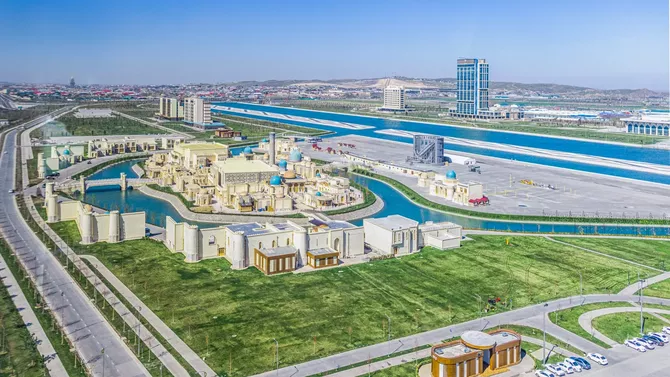
The Silk Road Complex in Samarkand will be transformed into a vibrant “Space City". Source: Silk Road Samarkand Complex Press Service
The “Mirzo Ulugbek” 6U Satellite Project
At the center of Uzbekistan’s near-term plans is the “Mirzo Ulugbek” satellite - the country’s first domestically produced 6U scientific spacecraft.
The satellite’s name honors Mirzo Ulugbek, the 15th-century astronomer and mathematician who built one of the medieval world’s most advanced observatories in Samarkand. His star catalog, completed in 1437, remained one of the most accurate astronomical references for centuries. By choosing this name, Uzbekistan connects its modern technological ambitions with its historical legacy in astronomy.
What Is a 6U Satellite?
The “6U” designation refers to a CubeSat format. In this standardized system:
-
1U equals 10 × 10 × 10 centimeters.
-
A 6U satellite typically measures about 10 × 20 × 30 centimeters.
-
Its mass usually ranges between 8 and 12 kilograms.
Despite their compact size, 6U satellites can host advanced payloads, including:
-
High-resolution imaging systems
-
Multispectral sensors for environmental monitoring
-
Scientific instruments for microgravity research
-
Communication and data relay technologies
CubeSats are significantly more affordable to develop and launch than traditional large satellites, making them attractive for emerging space nations. Uzbekistan has already defined the technical requirements for the “Mirzo Ulugbek” satellite, including standards for payload capacity and measurement accuracy. Although detailed specifications have not been publicly disclosed, the satellite is expected to support scientific research and Earth observation applications.
The launch is planned for 2028 and will likely involve cooperation with an international launch provider, as Uzbekistan does not currently possess its own launch infrastructure.
Building a National Space Ecosystem
Uzbekistan’s strategy extends beyond a single satellite. Authorities aim to establish a comprehensive national system for satellite management, data processing, and applied research.
This long-term ecosystem is expected to include:
-
Ground control stations for satellite operations
-
Data processing centers to analyze remote sensing information
-
Specialized training programs for engineers and scientists
-
Research partnerships with universities and industrial sectors
According to Euroconsult, more than 2,800 small satellites are projected to be launched globally between 2023 and 2032. Countries that combine satellite production with strong data analytics capabilities are better positioned to generate sustainable economic returns.
Uzbekistan’s broader reform agenda, underway since 2016, emphasizes digital transformation, smart agriculture, renewable energy, and infrastructure modernization - all areas where satellite data can play a critical role.
Training Uzbekistan’s First Cosmonaut
Parallel to the satellite initiative, Uzbekistan plans to train its first national cosmonaut for a short-duration space mission lasting approximately 10 to 14 days. The mission is expected to carry both scientific and symbolic importance.
The research agenda may include studies in:
-
Medicine
-
Biology
-
Plant genetics
-
Materials science
Such missions are typically conducted aboard the International Space Station or similar orbital platforms in partnership with established space agencies.
Microgravity research can produce valuable insights. For instance:
-
Studies of bone density loss in space contribute to understanding osteoporosis.
-
Plant growth experiments may improve crop resilience and productivity on Earth.
-
Materials science research can lead to new manufacturing innovations.
Beyond scientific outcomes, the mission is expected to inspire Uzbekistan’s youth. Nearly 60% of the country’s population is under 30 years old, and experience from other nations shows that sending a first astronaut often boosts enrollment in STEM fields.
International Visibility and the 2028 IAC in Samarkand
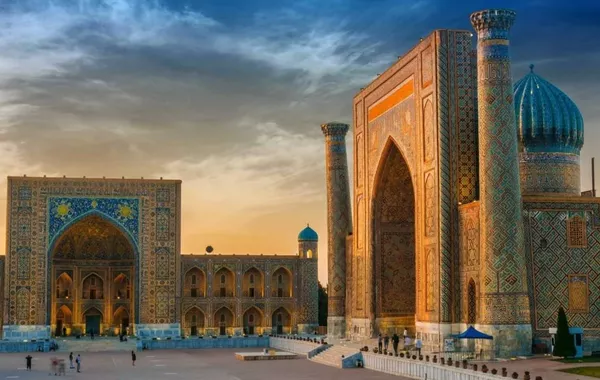
Uzbekistan’s space ambitions will receive global attention in 2028 when the historic city of Samarkand hosts the International Astronautical Congress (IAC).
Organized annually by the International Astronautical Federation, the IAC is one of the largest international gatherings of space professionals. It typically brings together thousands of participants, including:
Leading space organizations from the United States, China, India, Russia, and European countries are expected to participate in the 2028 congress.
Hosting the IAC offers Uzbekistan several advantages:
-
Increased diplomatic visibility
-
Opportunities for new partnerships
-
International exposure for domestic institutions and startups
-
Economic benefits from tourism and business activity
President Mirziyoyev has directed that preparations be conducted at the highest level, highlighting the significance attached to the event.
Economic and Strategic Impact
The practical applications of space investment are broad and measurable:
-
Precision agriculture can raise yields by 10-20% through optimized irrigation and fertilizer management.
-
Satellite monitoring improves water resource management by tracking reservoir levels and detecting system inefficiencies.
-
Early detection of natural hazards reduces disaster-related losses.
-
High-resolution mapping supports infrastructure planning and urban development.
If Uzbekistan successfully integrates satellite data into public administration and private enterprise, the economic return could exceed the initial development costs.
Strategically, developing domestic space capabilities enhances technological sovereignty. In an era when satellite data underpins telecommunications, navigation, environmental monitoring, and national security, local expertise reduces reliance on external providers.
The Road to 2028
Key milestones between now and 2028 include:
-
Finalizing and constructing the “Mirzo Ulugbek” satellite
-
Selecting and training the first Uzbek cosmonaut
-
Expanding ground-based infrastructure
-
Deepening international partnerships
-
Preparing for the International Astronautical Congress
Uzbekistan’s space strategy reflects a broader national transformation agenda centered on innovation, science, and youth engagement. As President Mirziyoyev has emphasized, the objective is not merely to launch a satellite or send a citizen into orbit, but to strengthen the country’s intellectual potential and long-term competitiveness.
In that sense, Uzbekistan’s journey toward space represents both a technological endeavor and a statement about its future direction - one rooted in knowledge, research, and global cooperation.