Antalya Diplomacy Forum and the Search for Direction in an Uncertain Order
The 5th edition of the Antalya Diplomacy Forum (ADF) will take place from 17-19 April 2026. The theme of this year's event is “Mapping Tomorrow, Managing Uncertainties”. The forum is taking place at a time when uncertainty has become a permanent feature of international politics. It has become structural. The rules that once governed alignment, security and cooperation are weakening, yet no clear alternative order has emerged.
In such an environment, states are not merely competing for influence. They are trying to determine how to position themselves in a system where direction itself is unclear. The search for a strategic 'compass' has become a defining feature of contemporary geopolitics. This is particularly true of middle and regional powers, who are increasingly exposed to systemic shocks yet lack the capacity to shape the system independently. For these actors, the challenge lies less in shaping order and more in navigating its erosion.
Turkish foreign policy reflects a sustained attempt to operate under these conditions. Rather than fully aligning with a single bloc or retreating into passivity, it has developed an engagement strategy combining diplomacy, mediation and strategic positioning. At times, these efforts have been carried out independently. At other times, they have involved coordination with partners such as Pakistan, Qatar and Egypt, as has been seen recently, as well as with international organizations. The result is not neutrality, but a form of simultaneity: the ability to engage with different -and often competing- actors without committing to a fixed alignment.
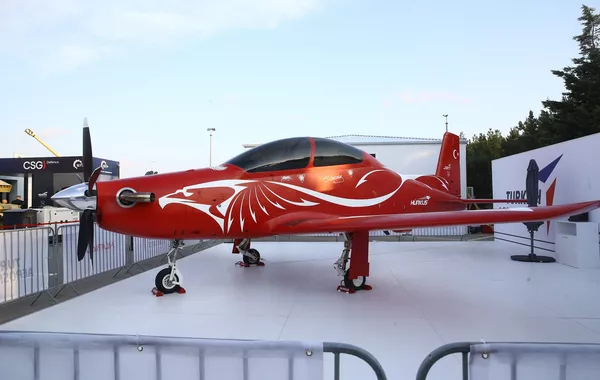
This approach is closely tied to capacity. Türkiye's growing defense industry, its operational presence in various regions and its ongoing NATO membership give it a degree of flexibility that many middle powers lack. Furthermore, it has demonstrated a readiness to bear the costs of acting based on its own assessments when necessary. This combination of capacity and political choice shapes how Türkiye is perceived by a wide range of actors, including Western allies, regional powers, and countries in the Global South.
The Antalya Diplomacy Forum is a product of this strategic stance. It is not merely a discussion platform. Rather, it reflects an attempt to translate Türkiye’s ability to engage with multiple and often competing actors simultaneously into a structured diplomatic setting. Since its inception in 2021, the ADF has brought together a diverse range of participants, including heads of state and governments, ministers, representatives of international organizations and policymakers. While the scale is notable, the composition is more important. The 2026 edition will host participants from over 150 countries, distributed relatively evenly across Africa, Europe, and Asia.
A Forum for Managing Divergence
The way interaction is structured is what distinguishes ADF. In many well-established forums, such as the World Economic Forum and the Munich Security Conference, discussions tend to follow a predefined script. Even when participation is broad, the framing of issues often reflects a particular geopolitical center. ADF operates differently. It enables a variety of viewpoints to emerge without forcing them into a single narrative.
The format of the forum reinforces this approach. It is less rigid and more open to informal interaction, encouraging direct engagement between actors who would not usually find themselves in the same space. This increases the density of interaction among such actors. It is precisely this level of interaction that creates the conditions for meaningful exchanges. The meeting between the Russian and Ukrainian foreign ministers in 2022, and the contacts between the Azerbaijani and Armenian foreign ministers in 2025, illustrate how such interactions can occur alongside broader discussions.
This approach is also linked to a broader principle in Turkish foreign policy: regional ownership. Rather than framing regional issues through externally defined priorities, it emphasizes the role of regional actors in shaping both the problem and the response. Hakan Fidan has increasingly articulated this principle. The ADF provides a platform for these perspectives to be expressed more directly, enabling regional voices to transition from the periphery to the center of global discussions.
Timing and Strategic Relevance
The timing of the 2026 edition further highlights its importance. Debates over the future of European security are intensifying, while ongoing conflicts continue to reshape regional dynamics. Instead of being seen as a peripheral actor, Türkiye is increasingly positioned within these discussions as one that can engage across different fronts. Its ability to maintain channels of communication between conflicting parties and its involvement in de-escalation efforts reflect a shift towards a more active role in shaping outcomes.
In this context, ADF serves a specific function. It provides a setting in which competing actors can engage without the expectation of alignment. It does not seek to resolve contradictions. Instead, it creates a space in which these contradictions can be managed. This reflects the broader reality of the current international system, where interaction persists despite limited coherence and divergence.
As uncertainty deepens, the importance of such platforms is likely to increase. ADF stands out because it is grounded in Türkiye's specific strategic experience and offers a format that can sustain engagement in situations of uncertainty, fragmentation and ongoing divergence.
See the original article here