The release of the Epstein archives has triggered a political aftershock far beyond the realm of scandal. What initially appeared as another wave of revelations about compromised elites is now intersecting with much deeper and more uncomfortable questions about influence, power networks, and the hidden mechanics shaping European politics.
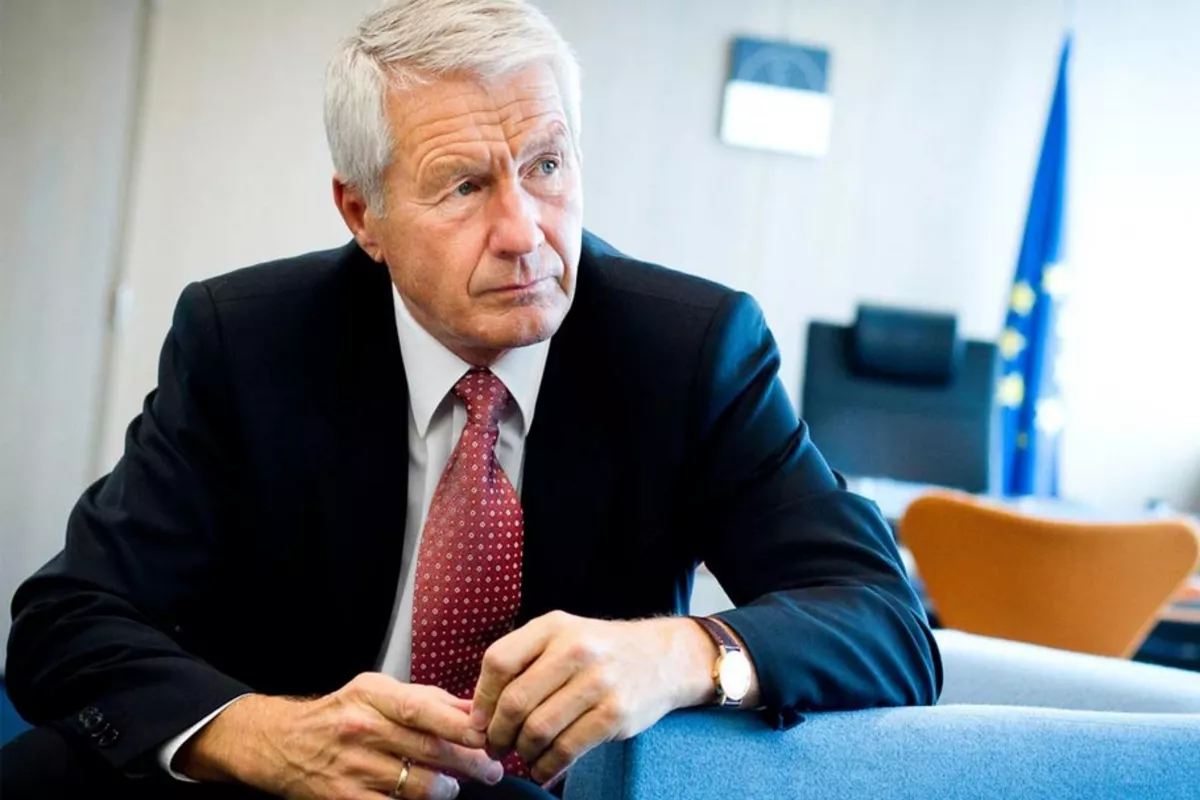
Among the most disturbing claims emerging from these disclosures is the allegation that Thorbjørn Jagland - former Secretary General of the Council of Europe and former Prime Minister of Norway - served for decades as one of Russia’s most important influence assets in Europe.
This is not a sensational claim appearing out of thin air. It builds upon a long trail of reporting, testimonies, and unresolved scandals that stretch back to the Cold War era and resurface today with renewed relevance.
Fox News recently reported, citing Epstein archive materials, that a 2018 email exchange shows Jagland thanking Jeffrey Epstein for a “pleasant evening” and noting an upcoming meeting with an aide to Russian Foreign Minister Sergey Lavrov. Epstein’s reply was telling: Jagland could inform President Vladimir Putin that Lavrov “can get insight on how to talk to me,” adding that Russia’s former UN ambassador Vitaly Churkin “was excellent” and had “understood Trump after our conversations.”
These emails portray Epstein as someone who actively marketed himself as an intermediary capable of interpreting Donald Trump’s thinking for foreign actors - including Russia. More importantly, they place Jagland directly inside this informal network of contacts.
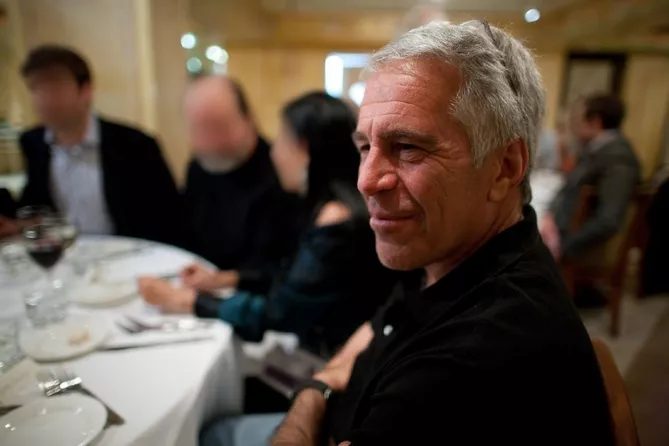
Source: House Oversight Democrats
For many observers, this merely revives questions that never truly disappeared.
Back in 2017, the English-language Ukrainian outlet Euromaidan Press published an investigation arguing that Jagland had long-standing ties to Russian intelligence services and even operated under the alleged KGB codename “Yuri.” According to the article, the KGB considered him a valuable asset as early as the 1970s. Norwegian media had reportedly raised similar concerns in the late 1990s, based on testimonies from a double agent and a high-ranking KGB defector who had fled to the West.
The name “Yuri” surfaced again in the 1997 Finnish publication The Blind Mirror: The KGB in Finland in the Party of Power, authored by former FSB defector Oleg Gordievsky and researcher Inna Rogatchi. The book claimed to identify a major KGB agent previously known only by that alias - and named Jagland as that individual.
These claims were later echoed by several regional and international media outlets. Rogatchi herself reportedly said she was shocked when Jagland became Norway’s prime minister in 1996, and even more alarmed when he rose to the position of Secretary General of the Council of Europe in 2009.
None of this ever resulted in formal charges or courtroom proceedings. Yet the pattern is striking: recurring allegations, recurring sources, and recurring behavior that consistently aligned with Russian geopolitical interests.
Nowhere was this alignment more visible than in Jagland’s campaign to rehabilitate Russia inside European institutions after the annexation of Crimea. While many European governments insisted that Moscow face consequences, Jagland pushed aggressively to restore the Russian delegation’s voting rights in the Parliamentary Assembly of the Council of Europe and to soften punitive measures.
This was not a technical debate about procedure. It was a strategic choice with enormous political implications.
At the same time, Jagland pursued an exceptionally hostile line toward Azerbaijan - a country that plays a critical role in Europe’s energy security and diversification strategy. He repeatedly raised the idea of expelling Azerbaijan from the Council of Europe, citing human rights concerns. In 2018, this intention was publicly voiced by Armenia’s Foreign Ministry spokesperson, who emphasized that the initiative originated not in Yerevan but from Jagland himself.
This episode is revealing.
If Armenia’s diplomats were openly referencing Jagland’s initiative, it suggests that the driving force behind anti-Azerbaijani pressure within the Council of Europe was not simply Armenian lobbying, but the personal political orientation of the Secretary General.
Why would the head of a major European institution simultaneously work to normalize relations with Russia - even after Crimea - and undermine relations with Azerbaijan, one of Europe’s few reliable non-Russian energy partners?
From a European interest perspective, this behavior makes little sense.
From a Russian interest perspective, it makes perfect sense.
Weakening Azerbaijan’s ties with Europe reduces Baku’s political weight, undermines alternative energy corridors, and preserves Moscow’s leverage over European energy markets. At the same time, rehabilitating Russia within European institutions blunts the impact of Western pressure.
Seen through this lens, Jagland’s actions form a coherent pattern.
Over time, the Council of Europe under Jagland’s leadership increasingly acquired the features of a politicized, radicalized body prone to one-sided judgments, selective outrage, and ultimatum-style diplomacy. Such an evolution did not strengthen Europe’s moral authority. It weakened it.
Even Norway’s own Foreign Ministry reportedly grew uncomfortable with Jagland’s conduct. He was forced to remove his Facebook account after repeatedly intervening in Norwegian domestic political debates and engaging in controversial public disputes.
Yet despite all the warning signs, Jagland remained in office for a full decade.
Photo: Anadolu Agency
The Epstein archive revelations do not prove criminal guilt. They do not constitute a court verdict. But they do something equally important: they force Europe to confront a deeply uncomfortable possibility - that one of its most senior institutional figures may have operated for years in alignment with a hostile power’s strategic objectives.
For Azerbaijan, this is not merely an academic discussion.
Baku experienced firsthand the consequences of Jagland’s hostility. Years of pressure, threats of expulsion, and constant political attacks nearly pushed Azerbaijan toward a complete rupture with the Council of Europe. That this rupture did not occur is less a testament to institutional wisdom than to Azerbaijan’s strategic patience.
Today, as Europe once again reassesses its vulnerabilities to foreign influence, the Jagland case deserves renewed scrutiny - not for revenge, but for institutional self-defense.
Because the real lesson is not about one individual.
It is about how easily European institutions can be penetrated, manipulated, and redirected when oversight fails and political convenience overrides strategic vigilance.
And it is about remembering, when pressure campaigns emerge against countries that objectively serve Europe’s interests, to ask a simple question:
Who benefits?
By Tural Heybatov