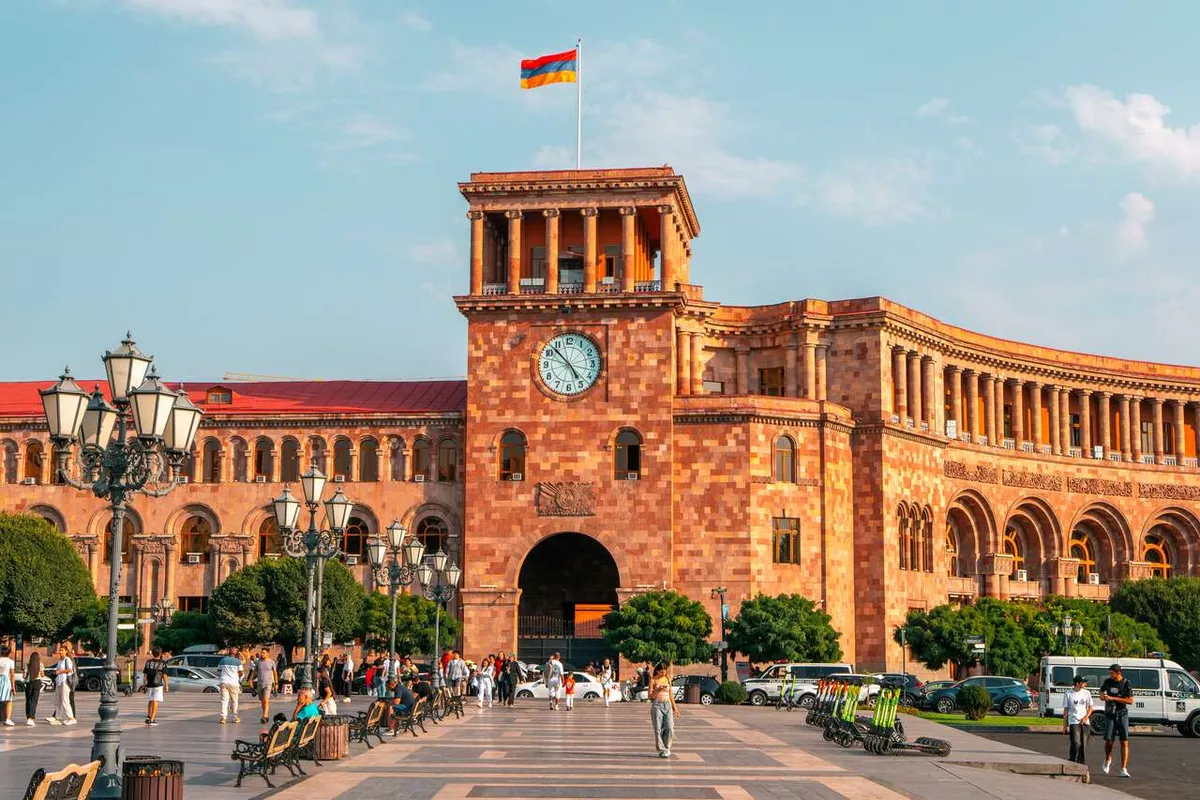
The recent meeting between representatives of Azerbaijani and Armenian civil society in Yerevan, held as part of the Peace Bridge initiative, can be seen as a significant development reflecting how new post-conflict realities are being perceived at the societal level. This format serves not only as a technical platform for dialogue but also as a mechanism for gauging public attitudes toward the peace agenda and for identifying associated risks and opportunities.
One of the most important aspects of the meeting was that Azerbaijani participants traveled to Armenia by crossing a section of the borderline that has already been delimited and demarcated. This can be seen as both a symbolic and practical step demonstrating that the peace process is moving beyond political declarations and entering an operational stage. For societies that have lived for many years in an environment of confrontation and mistrust, such crossings are particularly important in reducing psychological barriers to normalization.
The substance of the discussions indicates that certain achievements already exist on the peace agenda, yet serious uncertainties and challenges remain. Issues such as security guarantees, sovereignty, and how peace will be integrated into everyday life continue to be relevant for both societies. In this context, dialogue at the civil society level does not replace political processes but rather complements them and creates an essential social foundation.
From an analytical perspective, another noteworthy element is the expansion of participant composition, bringing new voices into the dialogue alongside experienced experts. This increases the potential for peace discussions to move beyond a narrow circle and reach broader segments of society. At the same time, the prospect of the dialogue acquiring an institutional character is coming to the fore, which is an important factor for the initiative’s sustainability.
Current political processes, particularly the upcoming elections in Armenia, are among the factors that will directly influence the future trajectory of the peace agenda. Under such circumstances, initiatives like the Peace Bridge can serve as alternative channels of communication when intergovernmental dialogue weakens or pauses.
Overall, initiatives of this nature demonstrate that peace in the South Caucasus cannot be achieved solely through political agreements. It also requires parallel efforts to prepare societies, reconcile mutual expectations, and build long-term trust. This is a complex but necessary process that demands time, patience, and consistency.
Rusif Huseynov, director of the Baku-based Topchubashov Center and a member of the Azerbaijani delegation that visited Armenia, told The Caspian Post that the meeting was held in a generally constructive atmosphere based on open dialogue and mutual respect.
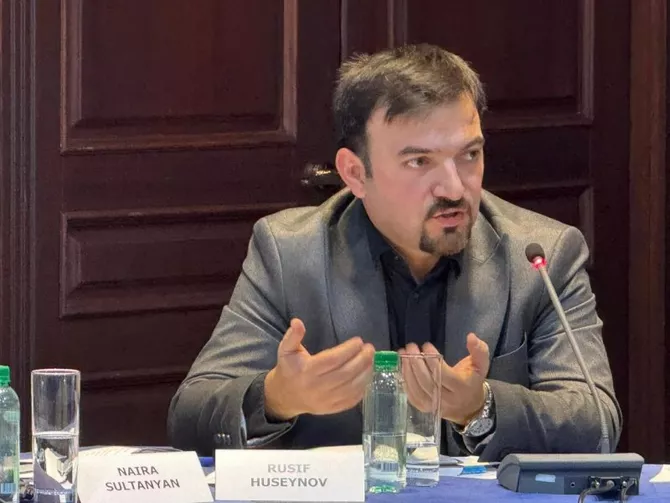
Photo: Rusif Huseynov, Director of the Baku-based Topchubashov Center
According to him, from the initial stage of the talks the parties sought to steer discussions away from topics that could create emotional tension or sharp disagreements. “From the very beginning, we proceeded from the position that we should focus more on future-oriented issues that could bring real benefit and prospects to both sides. This approach had a positive impact on the overall atmosphere of the meeting and allowed the dialogue to be conducted more effectively,” Huseynov noted.
The director of the center emphasized that despite this, full agreement was not reached on all issues. “Of course, at certain points different views and minor disagreements emerged. However, these debates were conducted within the framework of mutual respect, and both sides openly raised the issues that concern their societies and feature prominently in public discussions,” he added.
Huseynov also stated that one of the most notable moments of the meeting was crossing into Armenian territory via a section of the border already delimited between the two states. According to him, this step carries special significance both symbolically and practically. “This crossing has important symbolic meaning in terms of normalization and delimitation. At the same time, from a practical standpoint it shows that citizens of the two countries can now travel to each other’s territory and cross the border through real mechanisms operating under established rules,” he stressed.
Touching on the Peace Bridge initiative during the interview, Huseynov said that the main period of activity at the current stage covers May and June. “Elections will be held in Armenia in June, and the pre-election phase begins in May. For this reason, it may become more difficult to carry out serious and intensive work during that period. Therefore, our main goals in the coming months are to hold several more meetings and convey the peace message to broader segments of both societies, especially media organizations and think tanks,” he said.
According to him, the implementation of joint projects is also envisaged where possible, and these initiatives should help ensure the sustainable and solid development of the process.
Kamala Mammadova, editor-in-chief of 1news.az and a member of the delegation that visited Armenia, told The Caspian Post that the visit overall took place in a normal and constructive political environment.
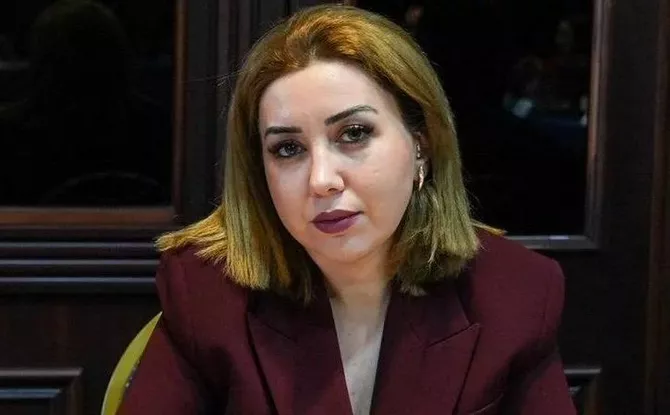
Photo: Kamala Mammadova, editor-in-chief of 1news.az
According to her, over the two days, most of the time was devoted to negotiations, with almost the only exception being transfers. In addition to roundtable discussions, a number of official bilateral meetings were also held.
Mammadova noted that within this framework, separate meetings took place with Armenia’s Deputy Minister of Foreign Affairs Vaan Kostanyan and Secretary of the Security Council Armen Grigoryan. Both officials answered questions from the delegation and engaged in an exchange of views. The discussions focused on regional security, new opportunities created by the peace process, economic prospects, future steps, and sensitive issues of concern to both societies.
For the first time, the delegation used the land border in accordance with official procedures, crossing through a delimited checkpoint and returning in the same manner. This can be seen as an important political signal indicating that the process has entered a practical phase.
The editor-in-chief added that a press conference was also organized at the end of the visit. This was the first such experience for Armenian media within the framework of the Peace Bridge initiative, during which questions from Armenian journalists were answered directly. In her view, this format is of significant importance both for increasing transparency and for shaping public opinion.