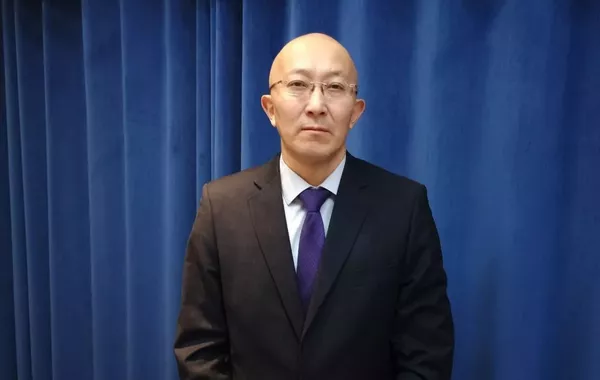
Against the backdrop of profound geopolitical shifts across Eurasia - from the war between Russia and Ukraine to the reconfiguration of trade and transport routes across the Caspian region - questions surrounding constitutional reform, regional integration, and the future balance of power in Central Asia and the South Caucasus are gaining renewed significance.
In an interview with The Caspian Post, Kazakh political analyst Madi Omarov shares his assessment of Kazakhstan’s constitutional transformation, the prospects for deeper cooperation between Baku and Astana, and the broader strategic role of regional actors amid intensifying global competition.
- What can you say about Kazakhstan’s constitutional reform? What processes will consolidate the constitutional changes?
- In my view, the discussion about a new constitutional configuration is directly linked to the fact that Kassym-Jomart Tokayev’s presidential cycle is approaching its conclusion.
There remains legal uncertainty regarding the exact date of the next election - whether it will take place in 2028 or 2029 - yet politically, the issue of a power transition is already coming to the forefront. Let me remind you that, at Tokayev’s own initiative, a constitutional amendment was adopted in 2022 establishing a single seven-year presidential term without the right to re-election. Under the current model, this means the incumbent president cannot run again. Consequently, the key question arises: how will the future distribution of power be organized?
Two basic scenarios can be identified. The first is the so-called “reset” of presidential terms through changes to the constitutional architecture. Such practice is well known across the post-Soviet space: when a new version of the basic law is adopted, previous term limits may be interpreted as nullified. Theoretically, this could open the possibility for the current leader to participate in elections once again. How likely this scenario is remains unclear; much will become clearer in the coming years.
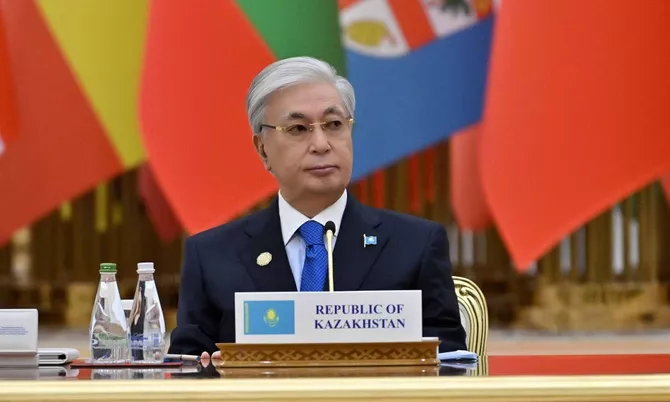
photo: ariananews
The second option involves institutional preparation for a transition of power and the establishment of a succession mechanism. The draft of the new constitution introduces the position of vice president, who would automatically assume office in the event of early termination of the president’s powers.
However, the proposed model differs from, for example, American or Latin American practice, where the vice president is elected together with the president and possesses independent electoral legitimacy. In the Kazakh version, the vice president is appointed by the president with the consent of the Kurultai and may be dismissed at any time.
This means the vice president does not necessarily become a fixed successor. Moreover, potential rotation in this position may prevent elite consolidation around a single candidate. Such a design appears quite deliberate.
Particular attention should also be paid to the redistribution of powers. Although the reform was publicly presented as a step toward modernizing the political system and strengthening parliament, the draft in fact significantly expands presidential authority.
Previously, the appointment of several key officials required parliamentary approval. Now, the heads of major institutions - the Constitutional Court, the Supreme Court, the Supreme Audit Chamber, the National Bank, and the Prosecutor’s Office - are appointed directly by the head of state. The role of the Kurultai is reduced to approving ordinary members of these bodies.
Moreover, if parliament rejects a proposed candidate twice, the president gains the right to dissolve it. In the event of the dissolution of the Kurultai, legislative authority passes to the president until a new convocation is elected. In such a configuration, it is difficult to speak of a full-fledged system of checks and balances: the dependence of the legislative branch on the executive becomes nearly absolute.
As a result, the political model acquires an even more pronounced personalist character. The rhetoric about parliamentary reform and democratization essentially diverges from the institutional substance of the proposed changes.
- In which areas do you see the greatest potential for deepening cooperation between Azerbaijan and Kazakhstan?
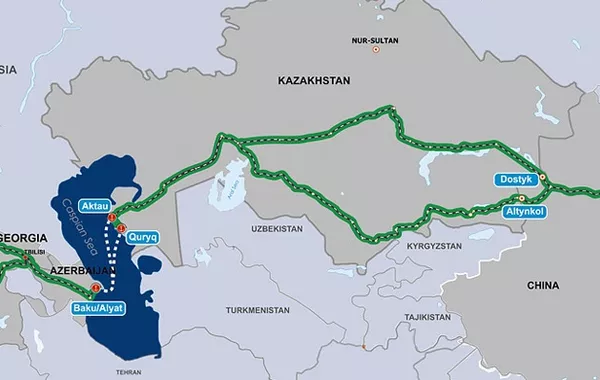
- There is indeed significant potential for cooperation between our countries. First and foremost, this concerns the transport and logistics sphere. Azerbaijan plays a key role in the Trans-Caspian International Transport Route, which is currently viewed as the main alternative to routes passing through Russia.
The war between Russia and Ukraine has seriously disrupted established logistics chains and trade routes. Against this background, the importance of the Trans-Caspian Corridor has increased sharply: in fact, it is the only sustainable option capable of linking the European Union with China.
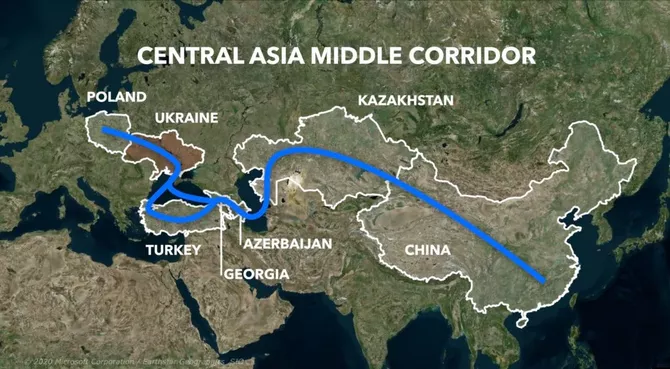
photo: Trend
Both Central Asian states and South Caucasus countries are acquiring strategic significance in this new configuration. Yet despite this potential, a fully developed format for deeper interaction between our regions is still lacking.
Today, there is no integration project that unites Central Asia, the South Caucasus, and Türkiye specifically on the basis of economic interests. Existing structures are either ineffective or focused primarily on humanitarian and cultural agendas, such as the Organization of Turkic States. The Economic Cooperation Organization, which also includes Iran, Afghanistan, and Pakistan, likewise demonstrates little real dynamism.
Therefore, the creation of a regional association is in demand - one that would begin with a free trade zone and gradually move toward more advanced forms of integration, such as a customs union and a common economic space.
Such a format could be built either on the basis of existing institutions or through the launch of a new structure - a hypothetical Caspian-Black Sea Union. In any case, such an association could become an alternative center of attraction in relation to the Eurasian Economic Union, where Russia plays the dominant role.
For many countries in both Central Asia and the South Caucasus, Russia is now perceived as a problematic and toxic partner. Accordingly, the desire to diversify external ties and reduce dependence on its influence becomes natural. Closer regional cooperation could serve as an effective instrument of such a strategy.
This does not necessarily imply a military-political bloc, especially given the continuing contradictions between Armenia and Azerbaijan. However, economic integration is entirely realistic and capable of delivering tangible benefits to all participants.
In my view, this is precisely where the main resource for deepening Kazakh-Azerbaijani cooperation lies today.
- What can you say about the strategy of the United States and the European Union in strengthening cooperation between Central Asia and the South Caucasus?
- As for the United States, it is still difficult to draw definitive conclusions. The actions of the current administration appear rather ambiguous, and the contours of its foreign policy line are not always clear. Approaches may be adjusted, so it is hard to speak of a long-term strategy in the region at this stage.
If we speak about the European Union, it is capable of becoming a powerful and much-needed partner for the countries of Central Asia and the South Caucasus. If a regional economic association were to emerge with the participation of Türkiye as well, such an entity could build stable and mutually beneficial relations with the EU.
From a broader perspective, this would create a major linkage between the European Union, our macro-region, and China. From the standpoint of trade and logistics, such a configuration appears highly promising.
Therefore, if a new integration association is created, it would be rational for it to orient itself toward gradually deepening interaction with the European Union, potentially up to the formation of an expanded free trade area or elements of a common market. This would strengthen the region’s economic capacity and give relations with the EU a more systemic character.
- What is Türkiye’s role in these processes?
- As I have already mentioned, Türkiye is a key country connecting the South Caucasus and Central Asia with Europe. Therefore, its role here is extremely important.
- Which Central Asian country is the most important player for the United States, and why?
- The most significant partner of the United States in the region is undoubtedly Kazakhstan. It has the largest economy in Central Asia both in absolute GDP and per capita income, with a substantial gap compared to its neighbors.
Kazakhstan remains the most industrially developed and relatively stable state in the region, which makes it a predictable and convenient partner for long-term cooperation. In addition, the country possesses the largest reserves of natural resources and occupies a strategically important geographical position between Russia, China, and the Caspian direction.
The combination of these factors objectively generates heightened U.S. interest precisely in Kazakhstan.
- What do you think about the future of the Organization of Turkic States? What awaits this association in the coming decades, and how might it influence the policies of Central Asian countries?
- Today, the Organization of Turkic States functions primarily as a platform for cultural and humanitarian interaction. There is no deep economic integration within its framework yet: mechanisms such as a free trade zone or a customs union are absent.
At the same time, strategically, the region should not confine itself exclusively to the Turkic format. To form a truly powerful economic space, broader participation by neighboring countries, including Georgia, Armenia, and Tajikistan, is necessary.
The involvement of such states would significantly expand the market, strengthen transit potential, and increase the political weight of the association.
Therefore, in my view, future integration processes should develop beyond the existing framework of the Organization of Turkic States and be based on an inclusive, rather than exclusively ethnocultural, principle.