Ihor Semivolos: “Power Is Shifting Away From Khamenei” - INTERVIEW
Iran remains deeply unstable despite a decline in the mass protests that erupted in late 2025. The unrest has shifted toward localized flare-ups and forms of passive resistance, unfolding against a backdrop of hyperinflation and acute shortages. Analysts warn of potential internal power struggles and escalating tensions with the United States, with the risk of military confrontation reportedly high. Tehran views increasing U.S. activity in the South Caucasus as a form of strategic encirclement and is seeking firm security assurances from Armenia.
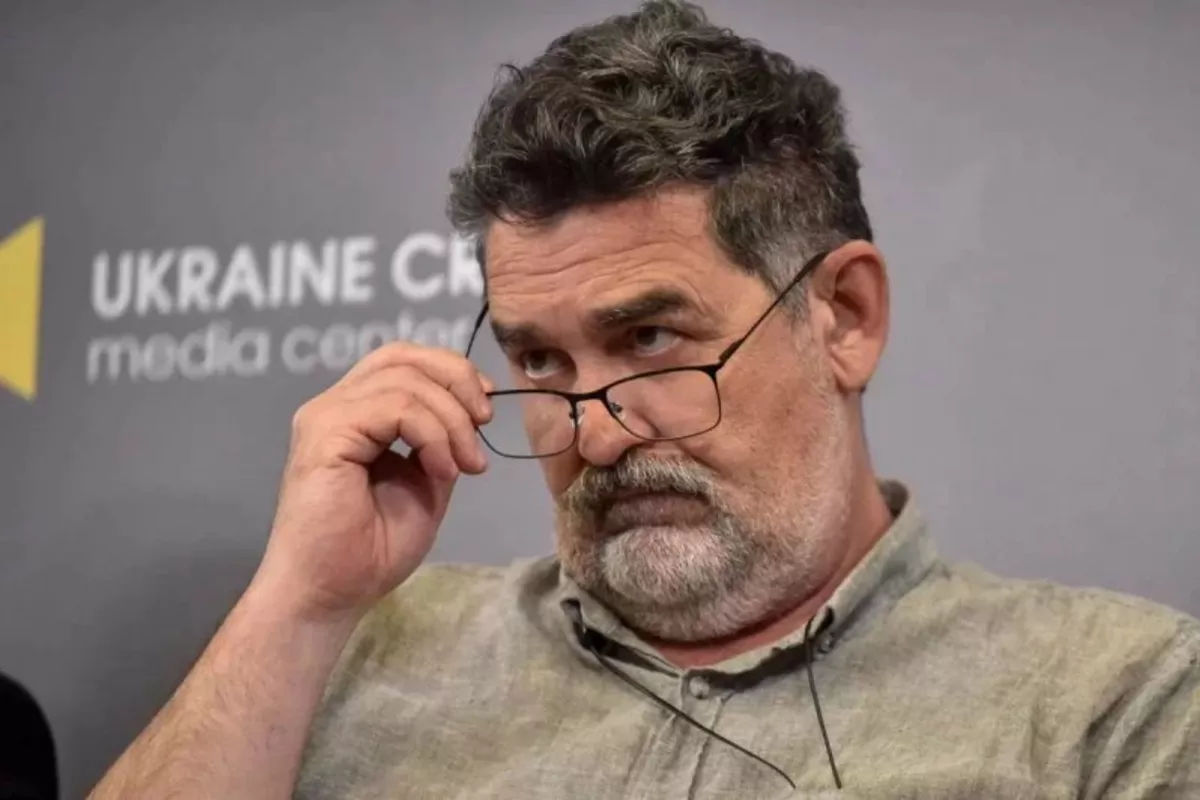
The Caspian Post reviewed Ihor Semivolos, director of the Kyiv-based Center for Middle Eastern Studies.
- Mr. Semivolos, how do you assess the current situation in Iran following the decline of the recent protests?
- Although the peak of the mass street unrest that erupted in late 2025 has subsided, the situation remains critically unstable. The protest movement has shifted into a phase of localized flare-ups, particularly at universities, combined with prolonged forms of passive resistance.
Society appears to be in a state of “frozen life” and deep depression, driven by hyperinflation and acute shortages of essential resources. There are also indications that a significant portion of authority has effectively shifted from Supreme Leader Ali Khamenei to the Supreme National Security Council, particularly into the hands of Ali Larijani. This suggests an intense internal struggle over the regime’s survival strategy.
- In your view, how likely is a military scenario involving Iran?
- In my assessment, the United States has relied primarily on a strategy of sustained strategic pressure aimed at containing Iran. However, this approach does not appear to have produced the desired results. This is reflected, among other things, in the reported frustration of the chief U.S. negotiator, Steve Witkoff, who has stated that Iran is making no concessions despite the presence of a significant American naval deployment in the region.
At present, some experts and media outlets estimate the probability of a U.S. military operation as very high - in some assessments, as much as 90 percent.
- How is the intensification of U.S. diplomacy in the South Caucasus perceived in Iran?
- Tehran views increased U.S. activity in the South Caucasus as a direct threat to its national security. Iranian officials have expressed concern that American initiatives in Armenia, including the Trump Route for International Peace and Prosperity project, could serve as potential intelligence or military footholds.
Accordingly, Iran is seeking firm assurances from Yerevan that Armenian territory will not become a source of external threat. Any Western presence near Iran’s northern borders is interpreted in Tehran as an attempt at strategic encirclement.
- Recently, Ukrainian President Volodymyr Zelensky met in Munich with Reza Pahlavi, heir to the deposed Iranian dynasty. What message did this meeting send?
- The meeting between President Zelensky and exiled Prince Reza Pahlavi became one of the most notable moments of the 2026 Munich Security Conference. In effect, it amounted to recognition of the Iranian opposition at the highest state level.
Through this step, Ukraine signaled the emergence of what could be described as a “counter-axis” in response to the Russia-Iran-North Korea alignment. For Pahlavi, the meeting marked entry into a new level of international legitimacy; for Kyiv, it served as an instrument of political pressure on the regime in Tehran, which continues to supply weapons to the aggressor.
- What scenarios for state development are possible in the event of a change in Iran’s ruling regime?
- Three principal scenarios are currently under discussion: a democratic transition, a military dictatorship, or a period of managed chaos.
The first scenario, advocated by Reza Pahlavi, envisions the establishment of a secular state centered on human rights, either as a constitutional monarchy or a democratic republic.
The prospect of a military dictatorship is primarily associated with the Islamic Revolutionary Guard Corps. In such a scenario, the security apparatus would seek to preserve the core structure of the existing power system, albeit under a revised ideological framework - potentially one rooted in Persian nationalism.
The third scenario involves destabilization along an “Iraqi scenario,” which could result in the disruption of energy supply chains and prolonged internal conflict.
- Armenia’s Defense Minister Suren Papikyan recently paid an official visit to Iran. What lies behind this trip?
- In my view, the visit reflects Armenia’s attempt to maintain a balance of power. Yerevan seeks to preserve Iran’s support as a form of “strategic rear” while simultaneously diversifying its arms procurement.
For Iran, it is essential to ensure that Armenia does not fully pivot to the West or become a platform for U.S. influence. Papikyan’s visit underscores that Iran remains a key actor in issues related to the inviolability of Armenia’s borders.