Pakistan’s Trade Push To Central Asia And Its Afghan Test – OpEd
Pakistan is ramping up its trade outreach to Central Asia while navigating the complex dynamics of neighboring Afghanistan. In his op-ed for Eurasia Review, Aarish U. Khan examines how Islamabad’s economic initiatives in the region are being tested by security, political, and logistical challenges, highlighting both the opportunities and risks of expanding its influence in Central Asia.
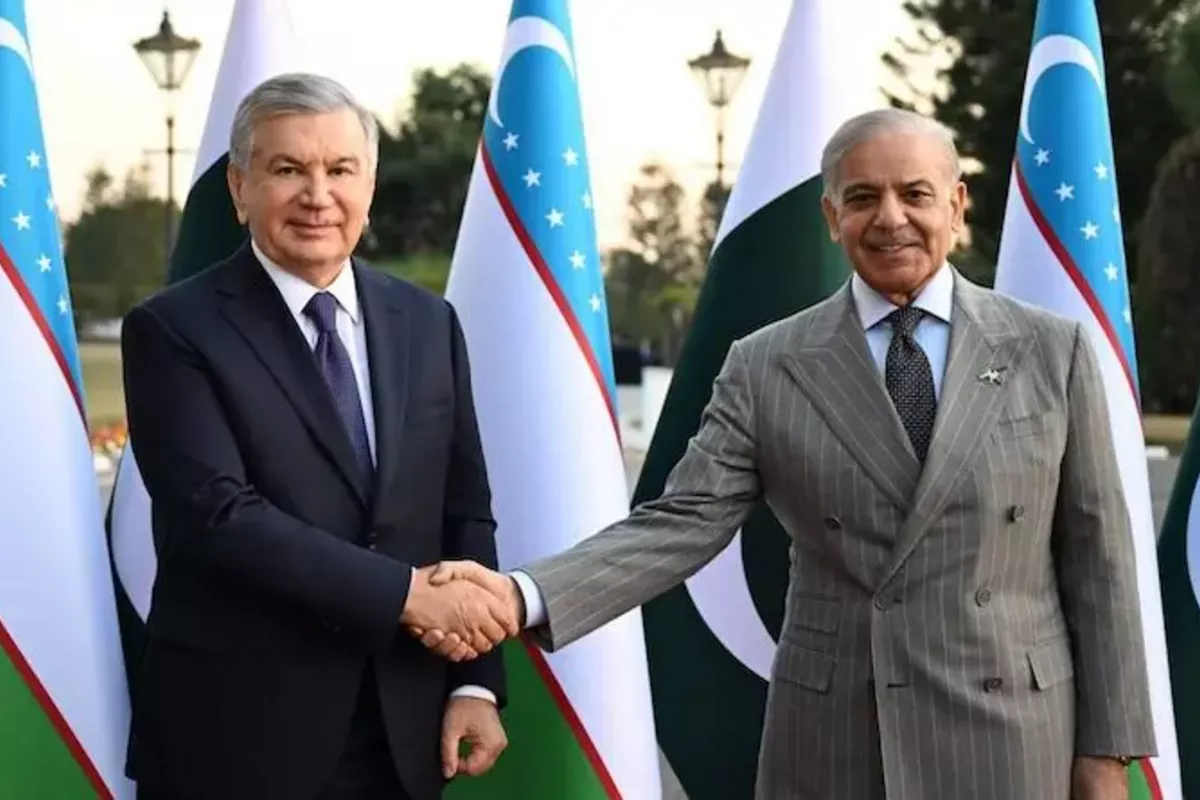
The President of Uzbekistan, Shavkat Mirziyoyev, visited Islamabad on February 5-6 to officiate the signing of 28 agreements in various fields between the two sides, along with the renewal of the previously agreed commitment to increase bilateral trade to $2 billion by 2029. Mirziyoyev’s visit followed hard on the heels of the two-day state visit of President Kassym-Jomart Tokayev of Kazakhstan, who arrived to a warm reception in Islamabad on February 3. During the Kazakh president’s visit, too, the two sides signed 37 agreements in various fields alongside the signing of a joint declaration for the establishment of a strategic partnership. Pakistan’s Prime Minister Mian Shehbaz Sharif vowed in his joint press conference with Tokayev as well to take bilateral trade between the two countries to $1 billion in just a year, The Caspian Post republishes the article.
Kazakhstan and Uzbekistan together have accounted for 85 percent of Pakistan’s trade with Central Asia, which has averaged at a modest $216 million per annum between FY 2015-16 and FY 2024-25. This is only around 0.5 percent of Pakistan’s overall trade in goods and services, which averaged at around $92 billion for the same ten years. In the backdrop of the under-utilized potential of economic connectivity with the region, the two high-profile visits are hailed as a milestone in Pakistan’s trade and investment outreach to Central Asia.
The modest figures, however, are not a commentary on the political will to improve economic relations between Pakistan and the Central Asian states. While Islamabad signed the transit trade agreement with Kazakhstan for the use of Pakistani ports to access the Arabian Sea during the visit of Tokayev, a similar agreement was reached with Uzbekistan almost five years ago, in July 2021. Pakistan has also signed agreements with both Kazakhstan and Uzbekistan under the Transport Internationaux Routier (TIR) convention that allows customs-controlled goods to be shipped from their countries of origin to their countries of destination in sealed containers via a multilateral, mutually recognized system.
Even though Pakistan’s limited exports to Central Asia remain restricted primarily to agricultural products, such as rice and fruits, as compared to, for instance, India-which is exporting more value-added items, such as medicines, smartphones, and tractor parts-Pakistan was able to send its first TIR shipment to Uzbekistan through Afghanistan in May 2021, months before the Taliban returned to power in August.
Such efforts did not bear the desired fruit, though, because of one primary hurdle: political instability in Afghanistan-which geographically lies between the Central Asian states and Pakistan-or the challenges faced by Pakistan to engage it diplomatically, which continue to this day. Even though the Taliban’s return to power was initially viewed with a lot of anticipation, Islamabad’s relations with Kabul have consistently deteriorated over increasing cross-border terrorism in Pakistan since then. Islamabad’s growing security concerns concerning terrorism emanating from Afghanistan have complicated Pakistan’s diplomatic engagement with Kabul and, thus, raised fundamental questions about the feasibility of regional connectivity in the absence of improvement in relations between the two countries.
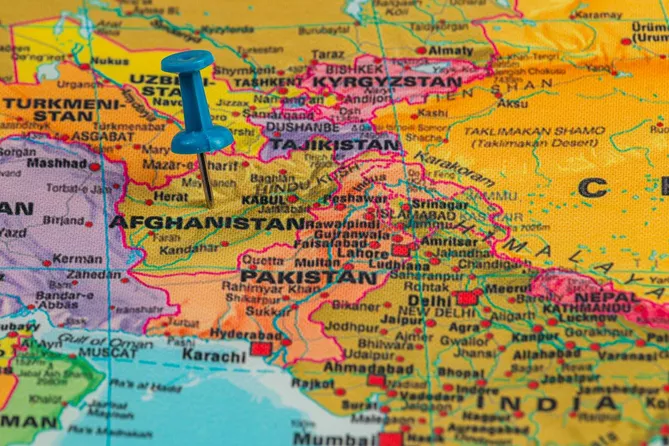
photo: Turkiye Today
Trade with and transit to Central Asia through Afghanistan have remained largely suspended since October last year after a cross-border clash between the two countries. Pakistan’s trade with all Central Asian states between July and December last year stood at around $109 million, which is not much lower than the annual average for the last ten years. The real impact of trade and transit restrictions between Pakistan and Afghanistan would, however, be more evident in the months and years to come, depending on how long it takes for Islamabad and Kabul to resolve their differences.
The centrality of improvement in diplomatic relations between Pakistan and Afghanistan for meeting Pakistan’s trade targets with Kazakhstan and Uzbekistan can be gauged from the fact that Prime Minister Sharif termed the agreement between Pakistan and Kazakhstan on connecting the Belarus-Russia-Kazakhstan-Uzbekistan route with the Afghanistan-Pakistan transport corridor as essential for regional connectivity. Similarly, the joint declaration on the outcomes of the Uzbek president’s visit “welcomed the signing of the Framework Agreement of the Uzbekistan-Afghanistan-Pakistan (UAP) Railway Project,” signed in July 2025 in Kabul.
Hopes for improvement in relations between Pakistan and Afghanistan are not high, though. Michael Kugelman, Senior Fellow for South Asia at the Atlantic Council, in a recent piece for the Foreign Affairs, argued that the Taliban had little incentive to improve relations with Pakistan, because defying Pakistan was earning their government legitimacy at home and friends like India at the international level. He further maintained that following kinetic strikes targeting terrorist hideouts in Afghanistan, border closures, and expulsion of Afghan migrants in Pakistan, including refugees, Pakistan was also running out of options to deal with the challenge without amplifying the risks.
Pakistan has been transiting some of its trade with Kazakhstan through China, for which the Quadrilateral Traffic in Transit Agreement (QTTA) between Pakistan, China, Kyrgyzstan, and Kazakhstan has been in place since 1995. The route, however, remains underutilized because the Afghanistan-Uzbekistan route is shorter, cheaper, and commercially more feasible. As far as Uzbekistan is concerned, Pakistan’s options for viable trade routes sans Afghanistan are further limited. This is the reason Uzbekistan is pushing for the UAP railway line project through Afghanistan that would originate at Termez (Uzbekistan)-where it has already built a state-of-the-art border trade facility-and terminate at Kharlachi in the Kurram district of Pakistan.
Therefore, although Islamabad has succeeded in signing dozens of economic agreements with Astana and Tashkent during the visits, its most crucial test for meeting its affirmed trade targets with the two Central Asian countries lies in improving its relations with Kabul. This will require some rethink in Islamabad to shift the focus away from its security concerns, driving its current Afghan policy. Kabul, at the same time, will also need to revisit its relations with Islamabad, not only for its economic interests but also for its longer-term neighborhood diplomacy. On the other hand, the longer it takes for the two states to improve relations, the more complicated it would get for Pakistan to materialize its trade push toward Central Asia.