Iran’s Message to Washington? Nakhchivan Strike Sparks Trump Route Debate
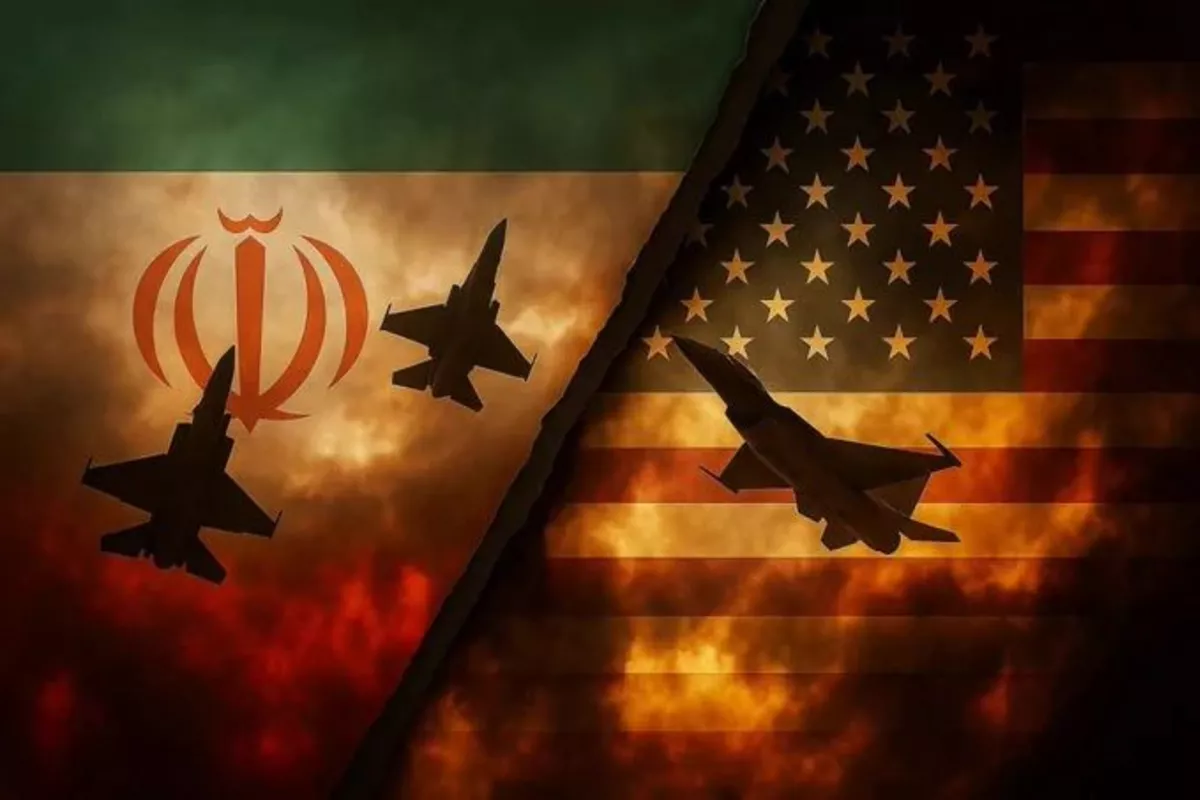
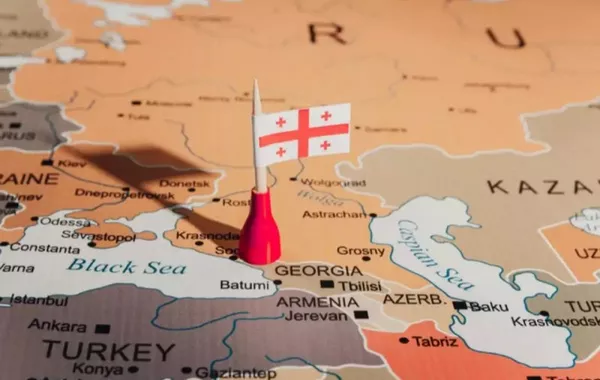
The recent strike attributed to Iran against the territory of the Nakhchivan Autonomous Republic has raised questions about Tehran’s true motives. At first glance, the incident may appear to be part of the broader escalation unfolding across the Middle East. However, a closer examination suggests that what happened may also be linked to geopolitical processes currently taking shape in the South Caucasus.
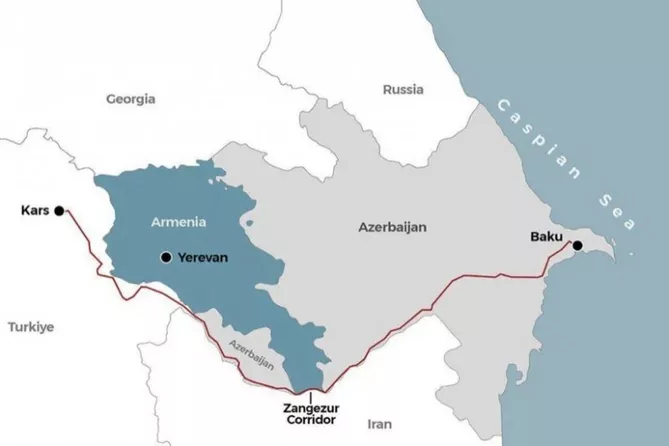
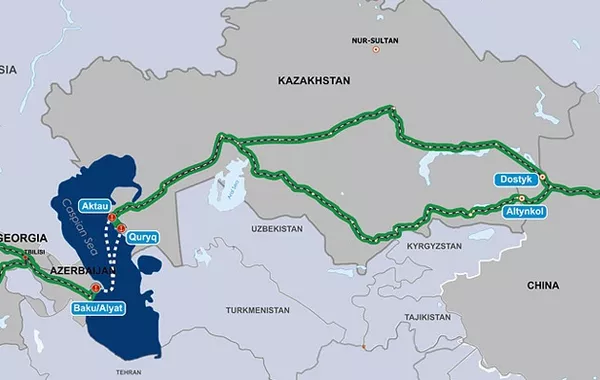
One of the most sensitive issues in the region today is the project of a new transport corridor that some experts informally refer to as the “Trump Route.” This large-scale infrastructure initiative has the potential to reshape the region’s logistics map and connect the South Caucasus to wider Eurasian transport networks.
Such projects are not merely roads or railways. They represent strategic infrastructure capable of influencing economic flows, political leverage, and the regional balance of security.
According to discussions surrounding the initiative, Western technical specialists and consultants, including experts from the United States, were expected to be involved in certain stages of the project’s planning and development. Even if the project remains at a preliminary stage, the mere prospect of American participation already creates a new geopolitical dynamic.
Source: AIR Center
For Iran, any expansion of Western presence near its borders has historically been viewed with deep suspicion. Tehran has repeatedly stated that infrastructure or facilities linked to American influence near its territory could pose potential security challenges.
Iranian officials have previously warned that in the event of a broader regional confrontation, areas hosting American bases or the presence of U.S. personnel could become potential targets.
For many years, such statements were often interpreted as political rhetoric aimed at deterring the United States and its allies. However, recent developments suggest that these warnings may increasingly be shifting from rhetoric to action.
If Tehran believes that a new transport corridor supported by Western interests could eventually strengthen U.S. influence in the South Caucasus, it may view such infrastructure projects as part of a broader geopolitical configuration.
In this context, a strike on the territory of the Nakhchivan Autonomous Republic, through which key transport routes could potentially pass, may be interpreted as a signal not only of military intent but also of political messaging.
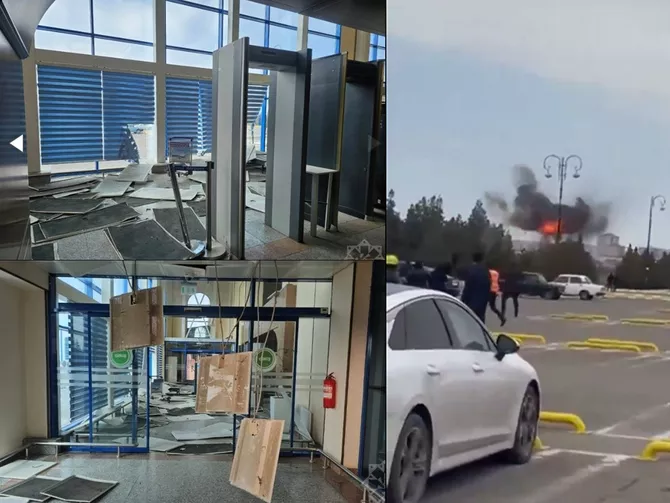
Photo: X/G_Aine
It may represent an attempt by Iran to demonstrate its readiness to challenge projects it perceives as strengthening Western presence along its northern borders.
At the same time, such incidents carry significant risks for the stability of the entire South Caucasus. The region, which has only recently begun transitioning from years of conflict toward reconstruction, economic integration, and the development of new transport links, could once again find itself at the center of geopolitical tension.
Transport corridors, energy routes, and logistics projects are intended to promote economic development and cooperation. Yet in an era of intensifying global rivalry, they increasingly become objects of geopolitical competition.
When infrastructure projects begin to be perceived as instruments of influence or elements of military strategy, they inevitably turn into potential flashpoints.
For the countries of the region, including Azerbaijan, the primary priority remains stability and economic development. Large-scale infrastructure initiatives, whether supported by Western, regional, or international partners, should ideally serve as platforms for cooperation rather than triggers for escalation.
Nevertheless, recent events demonstrate that in today’s geopolitical environment, even infrastructure can become part of a much larger strategic game.
And in that game, every new transport corridor, every route, and every logistics project is no longer solely about economics. It is also about influence, security, and the strategic balance of power.