How Pakistan Could Link Central Asia to the Abraham Accords
For more than seven decades, Pakistan’s refusal to recognize Israel has been treated as an immovable doctrine. Since 1948, Islamabad has formally tied any recognition of the Jewish state to the creation of a viable and sovereign Palestinian state with Al-Quds Al-Sharif as its capital. In theory, this position has been absolute. In practice, it is now under strain in ways that would have been unthinkable only a few years ago.
The catalyst is not ideology but geopolitics. Pakistan’s expanding role in Middle Eastern diplomacy, combined with deepening economic vulnerability at home, is pushing Islamabad into strategic terrain where long-standing red lines no longer hold as firmly as they once did.
The turning point came in September 2025, when Pakistan quietly emerged as one of the key brokers of the Gaza ceasefire, working alongside Qatar, Saudi Arabia, and Egypt. This was not symbolic diplomacy. It involved hard bargaining with Washington, regional capitals, and multiple security actors. For the first time, Pakistan was not merely reacting to events in the Arab-Israeli arena - it was shaping them.
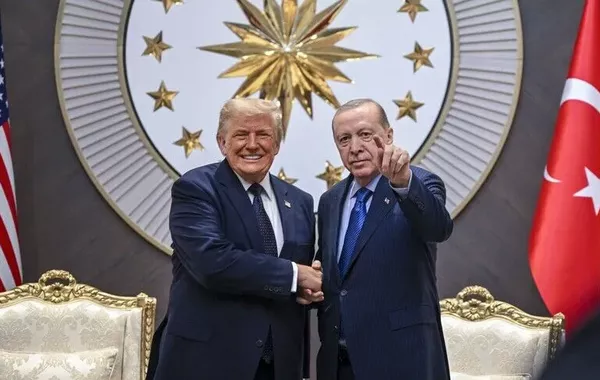
Prime Minister Shehbaz Sharif’s appearance at the multilateral summit convened by U.S. President Donald Trump marked something even more significant. Pakistan was no longer a peripheral Muslim observer of Middle Eastern diplomacy. It was now sitting at the same table where the future of Gaza, Israel, and regional security was being discussed.
Soon after, Islamabad made a move that would have been politically unthinkable in the past. Foreign Minister Ishaq Dar offered, under clearly defined conditions, to deploy Pakistani troops to a UN-mandated International Stabilization Force in Gaza. His language was careful but revealing. Pakistan would engage in peacekeeping, not peace enforcement. Humanitarian protection and reconstruction would be the focus. Yet the signal was unmistakable: Pakistan was positioning itself as a responsible stakeholder in Israel’s immediate security environment.
This shift cannot be separated from Pakistan’s economic reality. With foreign debt now exceeding $130 billion, Islamabad has limited room for ideological rigidity. The country depends on Gulf capital, IMF negotiations, and American financial leverage. In this environment, pragmatism increasingly matters more than slogans.
Washington and Riyadh have taken notice. Both now openly view Pakistan as a potential anchor for extending the Abraham Accords beyond the Gulf. The logic is strategic rather than symbolic. A Muslim nuclear power with deep military ties to Saudi Arabia and longstanding influence in Afghanistan would fundamentally alter the geopolitical meaning of the Accords.
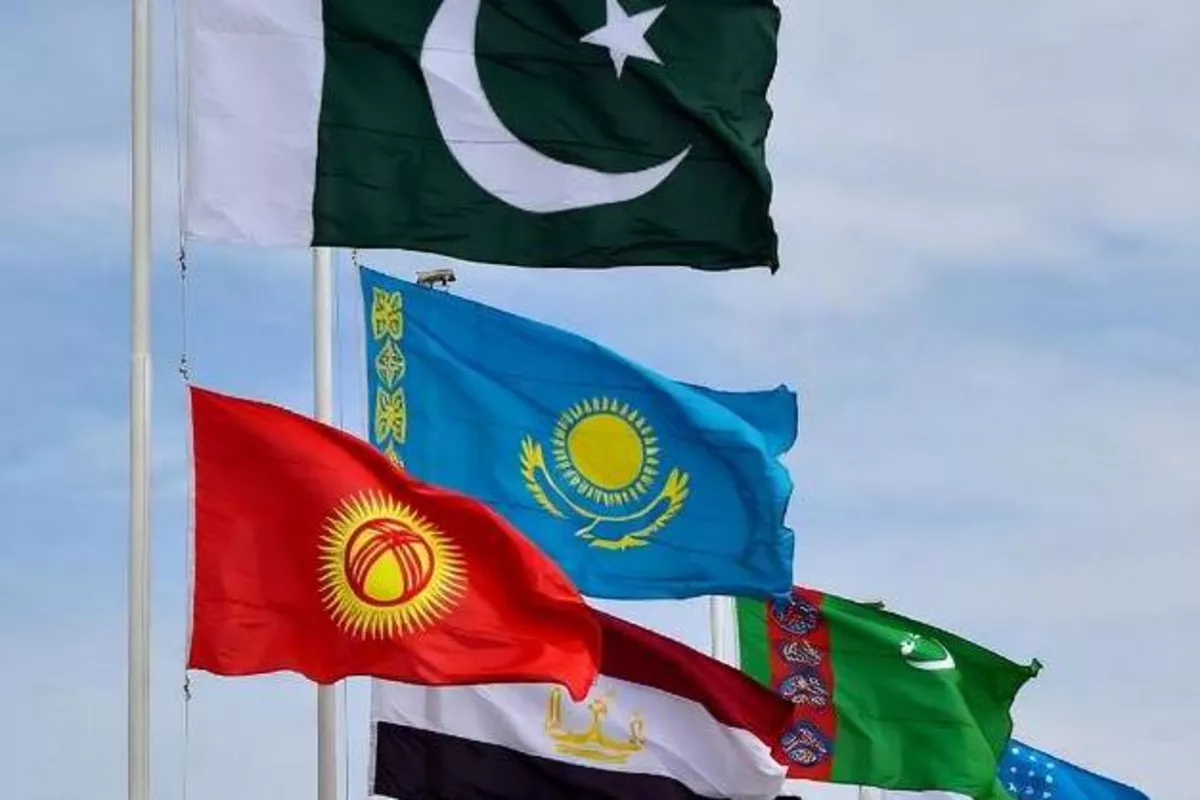
This is not an abstract vision. In November 2025, Kazakhstan joined the Abraham Accords, quietly redrawing the map of Eurasian diplomacy. For the first time, the Accords moved beyond the Middle East into Central Asia. If Pakistan were to follow, the result would be a continuous geopolitical corridor linking Israel, the Gulf, Central Asia, and South Asia.
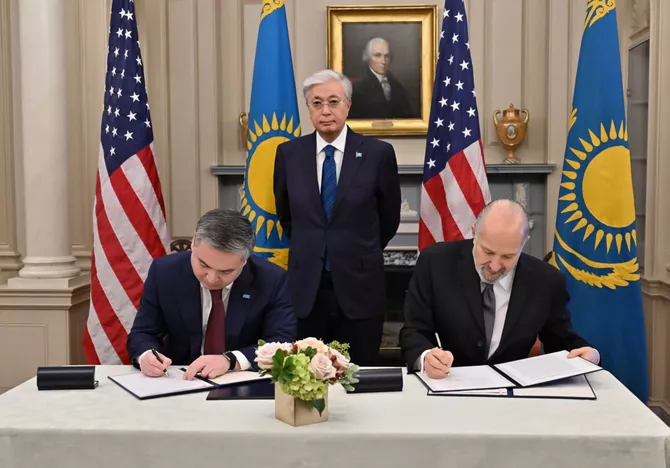
photo: Daily Sabah
The economic implications would be profound. The India-Middle East-Europe Economic Corridor (IMEC) already integrates Israeli ports, railways, and logistics hubs into a trade route designed to bypass traditional chokepoints such as the Suez Canal. Pakistan, with Gwadar and Karachi, could become IMEC’s eastern anchor. Central Asia, long constrained by geography, would gain direct access to global markets without passing through Russia, Iran, or China.
For Kazakhstan, Uzbekistan, and Turkmenistan, this would mean diversification not only of trade routes but also of political dependence. Russian and Chinese infrastructure loans already exceed $25 billion across the region. New corridors tied to Western and Gulf capital would weaken that leverage.
Security calculations are evolving in parallel. Pakistan’s new defense pact with Saudi Arabia, signed in September 2025 and structured around mutual defense and joint deterrence, points toward a new architecture of Muslim security cooperation. In time, this could resemble a C5+1 framework for stabilizing Afghanistan’s borders and containing militant spillover into Central Asia.
Yet the political risks in Islamabad are real. Public opposition to recognizing Israel remains deep and emotionally charged. Any move perceived as abandoning the Palestinian cause would carry the risk of mass unrest. Pakistan’s leadership is acutely aware of this. That is why every diplomatic step has been framed around Palestinian sovereignty and humanitarian protection.
Iran, too, will resist. Tehran views both Israel and IMEC as strategic threats. Beijing and Moscow will do the same. Their influence in Central Asia rests on control over infrastructure and transit routes. Anything that dilutes that control will be met with quiet but determined opposition.
Still, the direction of travel is clear. Pakistan may not formally join the Abraham Accords tomorrow, but the old certainties have already eroded. When Pakistani diplomats negotiate Gaza, when Pakistani troops prepare for peacekeeping near Israel, and when Pakistani ports are mapped into corridors that include Israeli infrastructure, the political meaning is unmistakable.
If this process is paired with real reforms in Palestinian governance and backed by concrete American incentive, such as security guarantees or major non-NATO ally status, Pakistan’s participation could unlock projects that have stalled for decades, including the Trans-Afghan Railway linking Central Asia to the Arabian Sea.
The Abraham Accords were never meant to stop at the Gulf. They were always designed as an architecture for regional integration. What is changing now is the scale. Central Asia is moving into their gravitational field. Pakistan stands at the hinge point.
Even if formal recognition remains politically out of reach, the conversation itself has already transformed the region. Diplomacy, economics, and security are converging. And in that convergence, the geopolitical map of Eurasia is quietly being redrawn.
By Anar Musayev