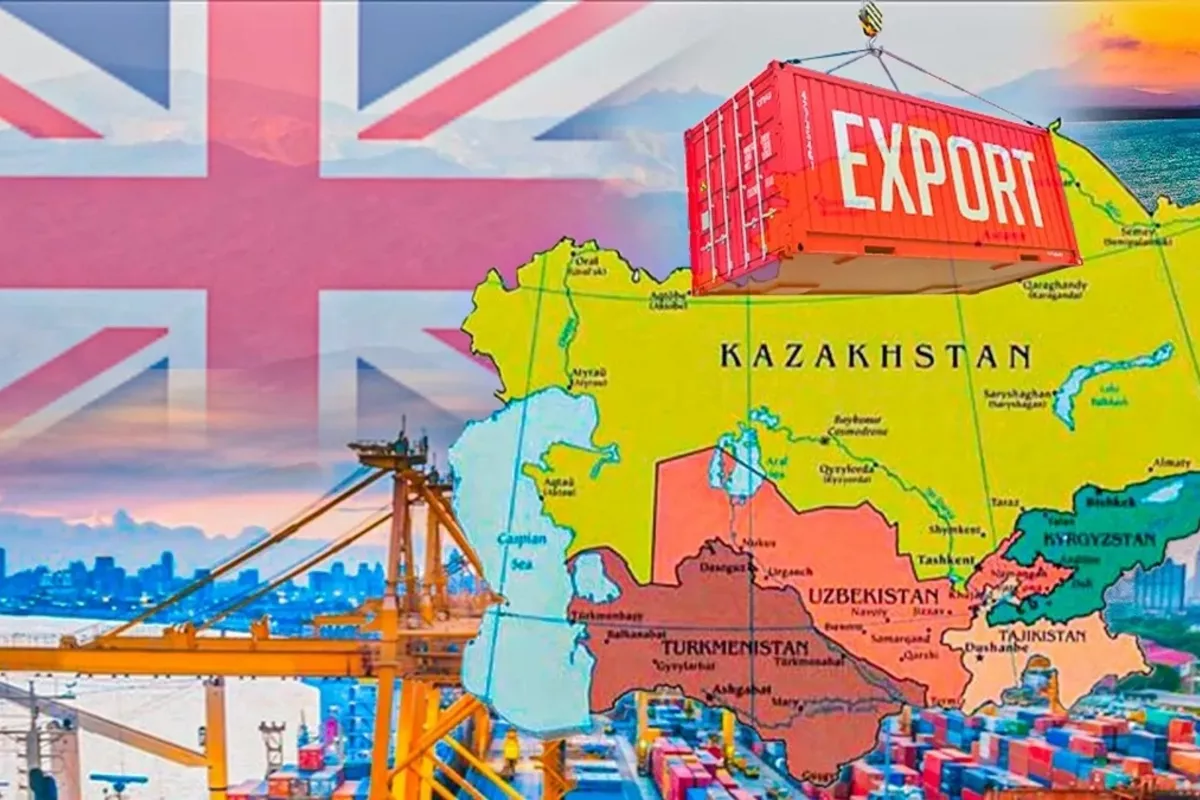
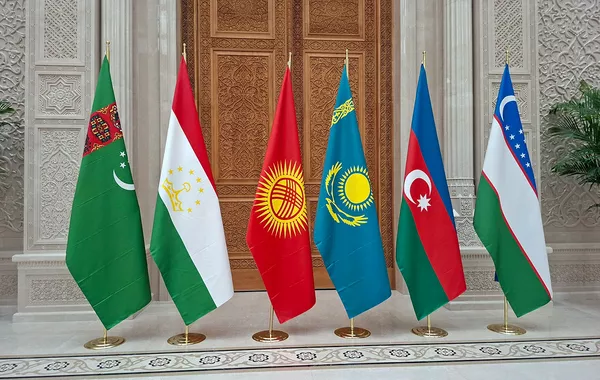
On February 26, London will host a meeting of foreign ministers under the “Central Asia-United Kingdom” framework, also known as CA5+1.
The talks are expected to serve as a catalyst for deepening partnerships and launching concrete initiatives, The Caspian Post reports via Kazakh media.
These are the first talks of their kind between London and the Central Asian countries under a model already employed by major global players, including the United States, the European Union, Russia, China, and Japan.
Agenda and Kazakhstan’s Position
The CA5+1 format involving London was first seriously discussed at the end of 2023, following the publication of the UK Parliament’s Foreign Affairs Committee report, “Countries at a Crossroads: The United Kingdom’s Engagement with Central Asia.” The report recommended that the UK government hold such a meeting to better assess opportunities for supporting regional cooperation.
Since then, the political landscape in the UK has shifted. A change in the ruling party in July 2024 and a series of domestic challenges temporarily refocused the new cabinet’s foreign policy priorities. Nevertheless, the meeting is set to take place.
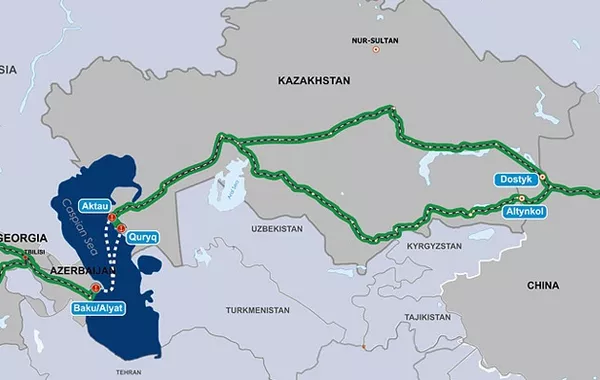
At the heart of the upcoming discussions is a trade and investment agenda. Participants plan to explore growth prospects and key challenges for Central Asian economies, expand mutual trade and investment, and coordinate efforts to strengthen regional connectivity, including the development of the Trans-Caspian International Transport Route, also known as the Middle Corridor.
- The upcoming visit of Kazakhstan’s Foreign Minister to London, along with the first ministerial meeting under the “Central Asia-United Kingdom” (CA5+1) format, is intended to give a strong boost not only to bilateral relations but also to regional cooperation. The visit aims to establish systematic, long-term engagement between the UK and Central Asia as a whole, expand economic ties, support mutual growth, and create new opportunities for business and employment in the region, - the Embassy of Kazakhstan in the UK said.
At the same time, Kazakh diplomats view the visit as a confirmation of Kazakhstan’s measured and balanced foreign policy, aimed at fostering constructive cooperation with all international partners.
Kazakhstan’s Foreign Ministry expects that the outcomes of the meeting will mark a new phase of practical engagement between Astana and London, focused on implementing concrete, mutually beneficial projects. In a rapidly changing global environment, diplomats believe the Kazakhstan-UK partnership holds significant potential for adaptation and for achieving long-term, sustainable results.
Strategic Interests of the United Kingdom in Central Asia
Today, four key priorities of the UK’s policy in Central Asia are becoming increasingly clear: education, financial services, critical minerals, and infrastructure. British ambassadors highlighted this overarching focus during a recent webinar organized by the British-Kazakh Society.
Across all five Central Asian republics, diplomats from the Foreign Office have noted a steady rise in interest in British education. Kazakhstan leads the way, hosting four branches of British universities. Through the “Bolashak” program, nearly 6,000 students have earned British degrees, and English-standard education has long been a standard part of the school system. This success story is increasingly seen as a model for neighboring countries in the region.
Uzbekistan and Kyrgyzstan have also expressed plans to establish their own international financial centers, modeled on the Astana International Financial Centre, reflecting a broader regional interest in integrating with global financial systems.
“Active work is underway to establish an International Financial Centre in Tashkent, with a strong focus on international arbitration,” noted Timothy Smart, the British Ambassador to Uzbekistan. “The new center will be based on English common law, following the model of Astana’s International Financial Centre.”
Nicholas Bowler, the British Ambassador to Kyrgyzstan, highlighted London’s role in drafting legislation for the International Dispute Resolution Centre, which will also operate under English common law and be located in the Issyk-Kul region.
The London Stock Exchange is set to play a key role as a platform for listing shares of major companies. British diplomats said that it is widely seen in the region as a natural and logical gateway to international capital markets. These assessments largely reflect reality: business communities in Kazakhstan and Uzbekistan are already pursuing this path, though not always as dynamically as desired.
British diplomats also emphasize cooperation in the field of critical minerals - a top priority on the United Kingdom’s global agenda. Specialized projects are underway across the region, agreements have been signed, and sectoral partnerships are forming. Every year, high-level delegations from Central Asia visit London to exchange expertise and secure new agreements.
Infrastructure is another key area of focus. London is ready to support Kazakhstan’s role as a regional transport hub, contribute to the development of transport corridors and urban planning in Uzbekistan, promote digital services in Tajikistan, and modernize the railway network in Turkmenistan.
In some cases, discussions are still at the conceptual and negotiation stage, while in others, projects have already moved into implementation. UK companies often act as technology providers and consultants, meaning they may not always be highly visible, but their expertise undeniably elevates the quality of these projects.
The Middle Corridor and a New Logic of Partnership
Ahead of the CA5+1 ministerial meeting, particular attention was drawn to UK trade statistics published in February. Dr. Asylbek Nurgabdeshov from the Edinburgh Business School noted that these figures highlight the evolving role of Central Asia in the United Kingdom’s foreign trade.
- Over the four quarters from October 2024 to September 2025, the total trade volume between Kazakhstan and the United Kingdom reached £2.7 billion, underscoring Kazakhstan’s status as London’s largest partner in Central Asia. Despite rapid trade growth with Uzbekistan, Kazakhstan remains the cornerstone of the UK’s economic presence in the region, noted the expert.
He highlighted the structure of this trade relationship: 75.9% of UK exports to Kazakhstan are services - including financial, legal, engineering, and consultancy - while 78% of imports from Kazakhstan are goods, predominantly raw materials.
- Essentially, a complementary model is taking shape: Kazakhstan is integrated into global commodity markets, while the United Kingdom is embedded in the institutional and financial infrastructure supporting this interaction, explained Dr. Asylbek Nurgabdeshov.
In geopolitical terms, the expert emphasized, Central Asia sits at the crossroads of the strategic interests of Russia, China, and the European Union, while the United Kingdom seeks to position itself within this landscape through the diversification of economic cooperation. In this context, the Middle Corridor takes on particular significance.
- This is not just an infrastructure project but an institutional ecosystem requiring legal predictability, digital solutions, insurance mechanisms, arbitration procedures, and financial transparency. It is precisely in these areas that the United Kingdom holds competitive advantages, he stressed.
Summing up, Dr. Asylbek Nurgabdeshov noted that trade data indicate a shift toward a networked regional structure of cooperation, yet Kazakhstan remains its cornerstone, thanks largely to its economic scale, institutional maturity, and strategic geographic position.
How London Views the CA5+1 Format
- The CA5+1 format provides a proven and practical framework for the United Kingdom to engage with all five Central Asian countries on issues where cooperation truly matters: from enhancing transport and digital connectivity and education to climate resilience and regional security, noted Sally Axworthy, the British Ambassador to Kazakhstan.
She emphasized that this regional format complements-but in no way replaces-bilateral partnerships. At the same time, Kazakhstan plays a particularly central role in this new configuration.
- Given the depth of our economic ties and political cooperation, Kazakhstan occupies a central position in the UK’s broader regional approach. We look forward to meeting with Foreign Minister Ermek Kosherbayev in London this week to discuss the further development of our relations, added the senior British diplomat.
Axworthy said that the ministerial meeting is expected to launch new joint initiatives. In London, the CA5+1 format is seen as a platform for making concrete decisions, particularly in the areas of trade and education.
- This meeting is aimed at delivering tangible results for the citizens of Central Asia and the United Kingdom. We will announce a series of new steps in trade, education, and broader cooperation, concluded the head of the British diplomatic mission.