Trade Data Gaps Between China and Central Asian States Point to Pervasive Smuggling
An investigation published by Eurasianet has cast new light on troubling discrepancies in trade statistics between China and Central Asian countries - discrepancies that experts say may signal widespread smuggling across the region. In their report, journalists Carly Brant and Sean Kearin analyze mismatched customs data that reveal billions of dollars in unaccounted goods flowing across borders. The gaps, they argue, point not merely to technical errors, but to systemic underreporting, shadow trade networks, and entrenched corruption schemes that continue to distort official economic figures.
A review of data compiled by Chinese, Kazakh and Kyrgyz government agencies reveal large discrepancies in trade volume, raising questions about widespread smuggling and sanctions-busting, The Caspian Post republishes the article.
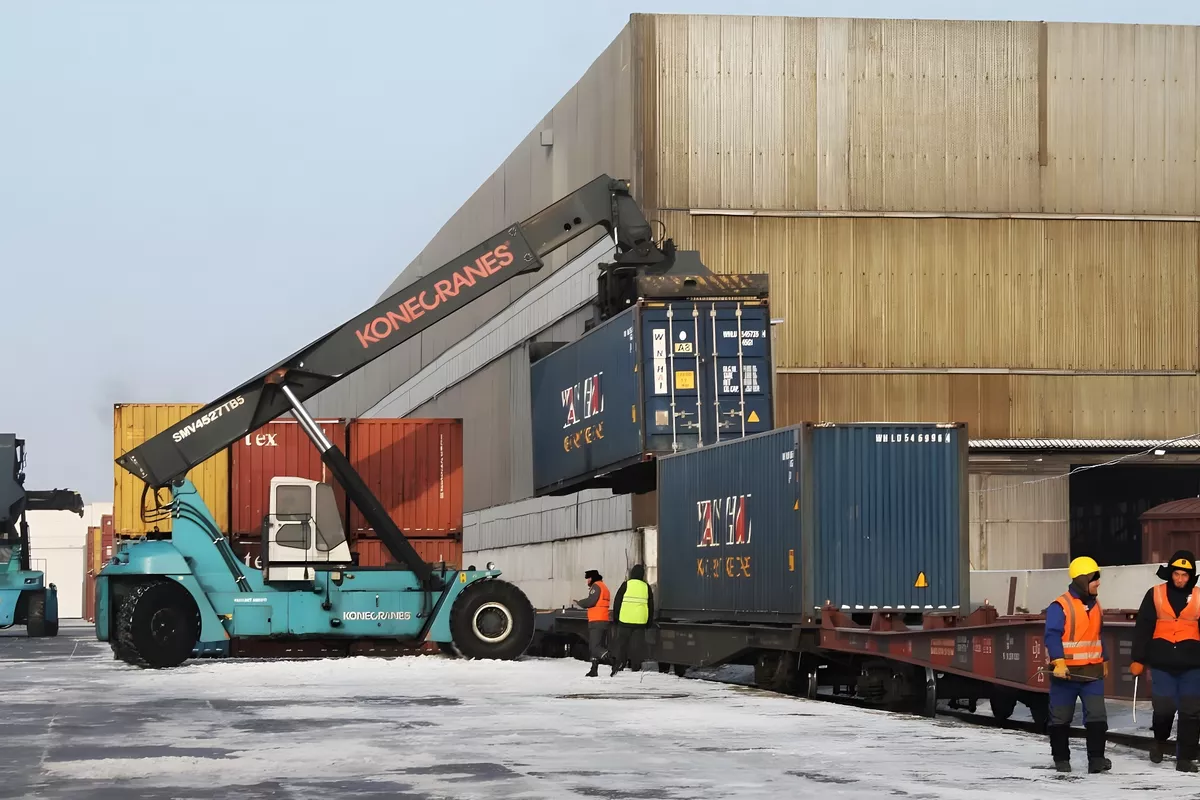
Trade in general has experienced explosive growth since the start of the Russia-Ukraine war, the data shows. In 2025, China reported supplying $48.7 billion worth of goods and services to Kazakhstan and $27.2 billion to Kyrgyzstan, whereas Kazakhstan only reported receiving $34.1 billion from the PRC and Kyrgyzstan $5 billion. The gaps indicate that tens of billions of dollars’ worth of goods are crossing the Chinese border without being registered in Kyrgyz and Kazakh official statistics. A major jump in unregistered trade followed the start of the Russia-Ukraine war in 2022. From 2018-2021, the annual difference between Chinese and Kyrgyz trade data averaged about $4 billion, but in 2022 the difference soared to $11.4 billion. The following year the gap widened to $14.4 billion, jumped to $17.1 billion in 2024, then reached $22.2 billion last year. Following a similar pattern, the discrepancy between Chinese and Kazakh statistics hovered around $7 billion from 2018-2022, even showing a slight downward trend. But the gap opened to $11 billion in 2023, $13.7 billion the following year, and $14.6 billion last year. Observers believe that much of the increase in unregistered trade is linked to sanctions-busting, with Kazakhstan and Kyrgyzstan acting as pass-throughs for Chinese goods destined for Russia and used to keep the Kremlin’s war effort in Ukraine going. Kyrgyzstan’s role has drawn particular attention from the United States and European Union. The EU is presently considering imposing secondary sanctions on Bishkek, the US has already designated some Kyrgyz entities and banks. Kyrgyz officials deny any systematic effort to circumvent Western sanctions.
Central Asia
China remains Kyrgyzstan’s and Tajikistan’s largest creditor, but their respective debts to Beijing are decreasing. The Export-Import Bank of China held 28 percent of Kyrgyzstan’s foreign sovereign debt, or $1.5 billion, at the end of 2025, down from $1.65 billion a year earlier, according to the Kyrgyz Finance Ministry. Tajikistan owed the same Chinese bank about $750 million as of February 2026, a decrease of about $70 million compared to the same time in 2025. Even so, China continues to account for about 24 percent of Tajikistan’s foreign sovereign debt, Finance Minister Faiziddin Qahhorzoda said.
Kazakhstan
The United States has accused China of conducting an illicit nuclear test, based on data registered in Kazakhstan in June 2020. A remote seismic station in Kazakhstan measured an “explosion” of magnitude 2.75 located 450 miles (720 km) away at the Lop Nor test grounds in western China. US officials maintain the data is consistent with a nuclear test, but international monitors have not confirmed the US assertions.
Kazakhstan plans to import around 50,000 tons of potatoes from China, shifting away from imports from Pakistan and Egypt, Bestnewz.kz cited Deputy Minister of Agriculture Azat Sultanov as saying. “Previously, imports came from Pakistan and Egypt, but due to the geopolitical situation, potato deliveries are now planned from China,” Sultanov told the outlet. He indicated the Chinese imports are expected to help offset a seasonal shortfall during winter and early spring, when Kazakhstan traditionally experiences a shortage of vegetables, including potatoes.
Kazakhstan’s Senate has ratified a deal with China covering the construction of two wind-power plants and one solar-power plant with a collective annual generating capacity of 5.7 billion kWh. The plants are expected to cost over $2 billion to build, and be operational in 2027-2029, Kapital.kz reports.
The launch of a major cotton-growing project by Chinese company Xinjiang Lihua helped Kazakhstan register its largest cotton harvest in over two decades. The collected crop totaled 465,900 tons in 2025, representing a 55 percent increase over the previous year’s total, reports Data Hub.
Kazakh meat industry entities are looking to expand into the Chinese premium beef market by joining forces and launching a new program to ensure Kazakh products meets Chinese and international health & safety standards, according to Kapital.kz.
Cultural exchanges between China and Central Asia are extending to comedy. A Kazakh standup comedian, Nurlan Saburov, is scheduled to perform in Shanghai and Guangzhou. His tour follows similar cultural initiatives that, as Chinese and Kazakh authorities hope, will help solidify bilateral ties.
Kyrgyzstan
Kyrgyzstan and the Asian Infrastructure Investment Bank (AIIB) have signed an agreement aimed at “developing a sustainable financing market for small and medium-sized businesses in Kyrgyzstan.” Kyrgyz President Sadyr Japarov and Prime Minister Adylbek Kasymaliev also sought AIIB assistance for the Kambarata-1 hydroelectric power plant and the China-Kyrgyzstan-Uzbekistan railway, but the bank has so far declined to commit funds for those projects.
Tajikistan
Tajikistan’s Prosecutor General, Khabibullo Vohidzoda, described the attacks on Chinese citizens at the Afghan-Tajik border region last November as the work of criminal gangs seeking to undermine Tajik relations with the Chinese government. Five Chinese nationals were killed in the attacks, prompting China to suspend infrastructure development projects in the vicinity of the Tajik-Afghan border. Earlier reports attributed the attacks to Islamic militants operating in northern Afghanistan outside of Taliban government control.
Turkmenistan
Natural gas production in Turkmenistan decreased by 1.4 percent to 76.5 billion cubic meters in 2025 compared to the previous year, writes to Itek.ru citing data published in the official government newspaper Neutral Turkmenistan. While Turkmenistan has massive natural gas reserves, and officials in Ashgabat regularly voice an intention to expand production and exports, including to China, the 2025 production decline indicates that the country is lacking in technology, expertise and policymaking capacity to realize its energy potential.
Uzbekistan
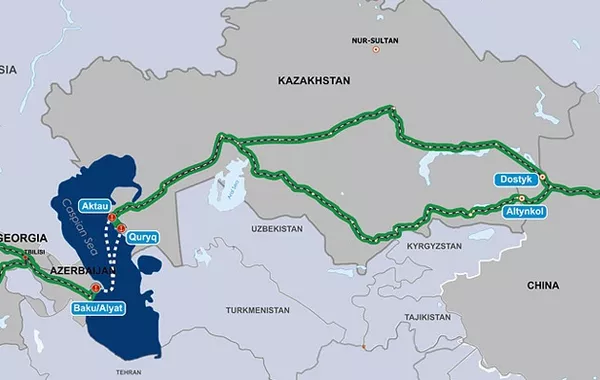
A joint Uzbek-Chinese venture, UTK International Logistics Co., dispatched its first eight-container train from China to Tajikistan via a new multimodal route. The cargo will traverse Kyrgyz and Uzbek territory before its expected arrival in Tajikistan in early March.