After the US-Iran memorandum, the key question for the global energy market is no longer only whether the political pause between Washington and Tehran will hold. The bigger question is whether the Strait of Hormuz will remain genuinely open and safe for tankers.
At first, the signals looked encouraging: after the interim deal entered into force, tankers began moving again through one of the world’s most important maritime energy corridors. Yet as of 20 June, the situation remains highly volatile. The Lebanese front, contradictory signals from Iran and the deep lack of trust between the parties show that the energy market has not yet received what it needs most - lasting confidence.
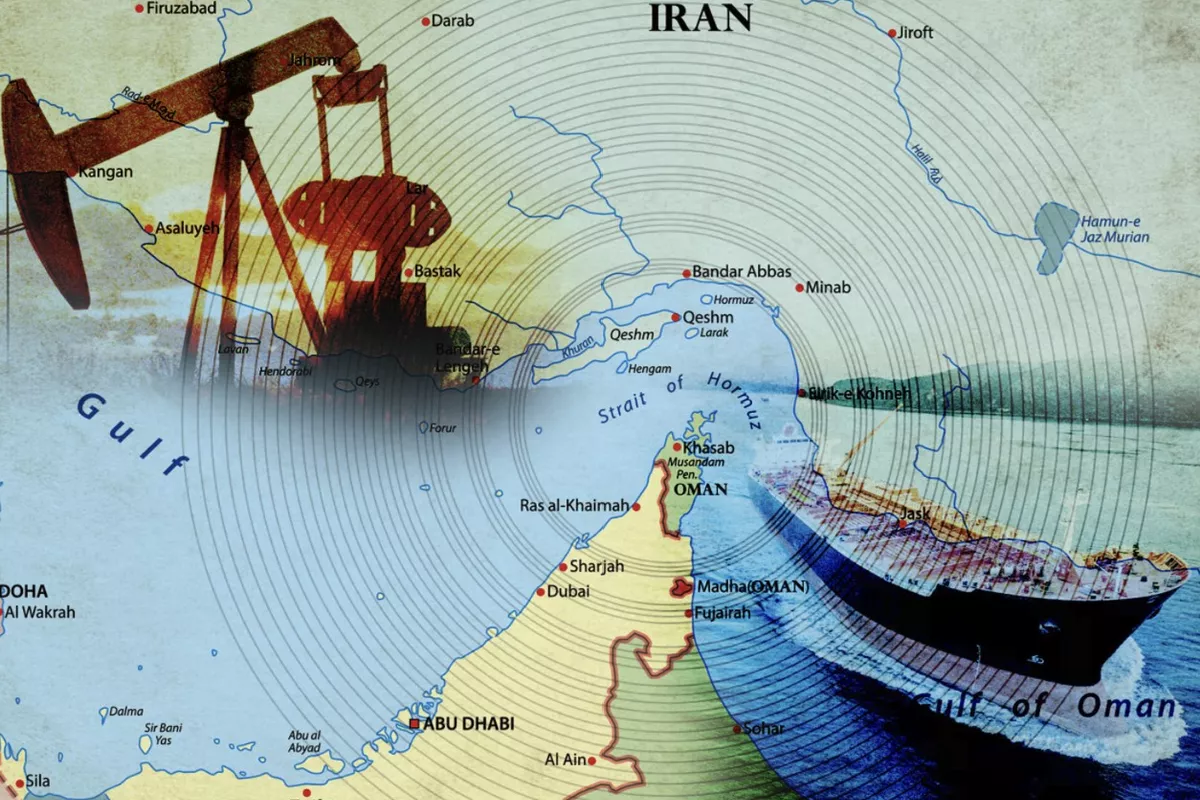
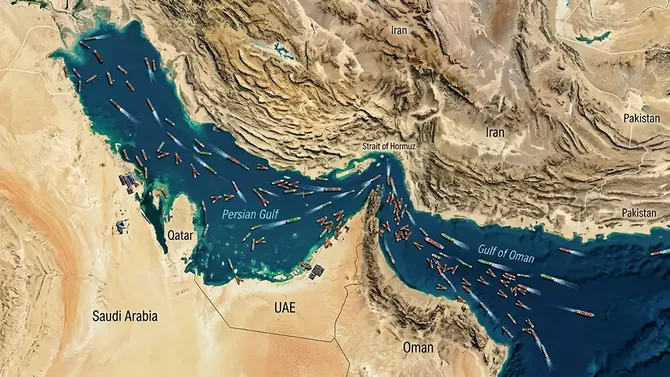
The Strait of Hormuz is not just a geographical point on the map. It is one of the central energy arteries of the global economy. A significant share of oil and petroleum products exported from the Persian Gulf passes through this narrow waterway. According to the US Energy Information Administration, around 20 million barrels per day of oil and petroleum products passed through Hormuz in 2024. That was roughly one-fifth of global petroleum liquids consumption. In the first half of 2025, flows through the strait were estimated at around 20.9 million barrels per day, accounting for about a quarter of global seaborne oil trade. For China, India, Japan, South Korea and other major Asian economies, this route is critical, as a large share of their supplies from Saudi Arabia, Iraq, Kuwait, Qatar, the UAE and Iran depends on it.
Credit: oilandgasadvancement.com
That is why any report about the closure, restriction or threat to shipping through Hormuz is immediately reflected in markets. Oil prices rise not only because of an actual reduction in supply, but also because of risk. Insurance companies raise premiums, shipping firms reassess routes, traders price in possible delays, and governments begin calculating the resilience of their strategic reserves. Even when no tanker is physically stopped, uncertainty around Hormuz alone can push up the cost of a barrel.
This is why the US-Iran memorandum was seen by markets as an important signal. If Washington and Tehran are truly ready to move from direct confrontation to managed de-escalation, the risk of disruptions in the Persian Gulf declines. For oil markets, that means a potential easing of price pressure. For the global economy, it means lower inflationary risks. For energy-importing countries, it offers a chance to avoid a sharp rise in fuel and logistics costs.
But optimism has remained limited. The main problem is that the US-Iran deal does not exist in a vacuum. Its fate depends not only on the text of the memorandum, but also on developments on other Middle Eastern fronts. The escalation between Israel and Hezbollah in southern Lebanon immediately called the stability of the entire framework into question. Hezbollah is a key Iranian ally in the region, while Israel views its military activity as a direct threat to its security. If the Lebanese ceasefire collapses, pressure on Tehran will increase, and Washington will face a difficult choice: continue talks with Iran or support a tougher Israeli line.
For the market, this means one thing: Hormuz may be open today, but that does not guarantee calm tomorrow. Investors and traders are watching not only tanker movements, but also statements from Tehran, the position of the Islamic Revolutionary Guard Corps, the White House’s reaction, Israel’s actions, signals from Gulf states and even reports about possible talks in Switzerland. One tough comment, one strike in Lebanon or one threat against shipping can change market sentiment again.
The numbers show how quickly geopolitics can redraw the map of global trade. Before the current Middle Eastern escalation, the Strait of Hormuz functioned as one of the world’s most stable energy corridors. In 2024, around 20 million barrels of oil and petroleum products moved through it every day. In the first half of 2025, that figure was estimated at around 20.9 million barrels per day. This represented about 20% of global petroleum liquids consumption and roughly a quarter of all seaborne oil trade. In other words, every fifth barrel consumed by the global economy was, in one way or another, linked to the security of this narrow maritime passage between Iran and Oman.
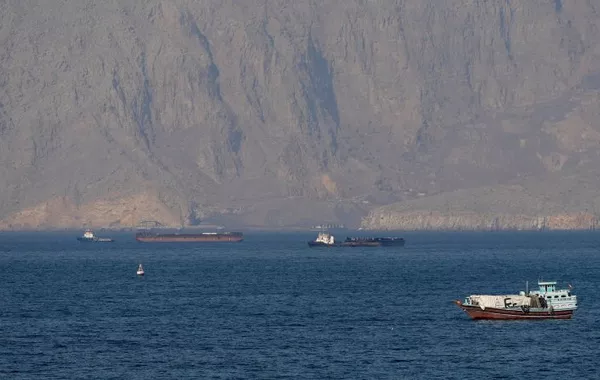
After the outbreak of war and the subsequent instability around Iran, the situation changed. Even when the strait is formally open, the market no longer sees it as a fully safe route. For tankers, the legal status of passage is not the only issue. The real risks matter just as much: attacks, threats, military activity, insurance costs, possible delays and the position of major shipping companies. That is why the first tanker movements through Hormuz after the US-Iran memorandum brought some relief to the market, but did not restore the old sense of confidence.
The market now sees that before the war, Hormuz was an ordinary energy route; after the war, it has become a political indicator. Every tanker, every comment from Tehran, every signal from Washington or Tel Aviv now affects oil expectations.
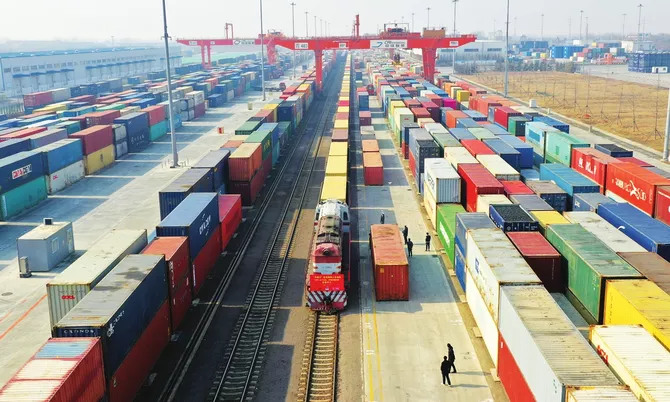
By contrast, the Middle Corridor has followed the opposite trajectory in recent years: from a supplementary route, it has begun turning into a strategic alternative. Before the war in Ukraine and before the new Middle Eastern instability, its volumes were much smaller. In 2021, around 350,000 tons of cargo were transported via the Trans-Caspian International Transport Route. After the start of the war in Ukraine, sanctions against Russia and rising risks on traditional routes, interest in the corridor increased sharply. In 2023, volumes reached 2.76 million tons; in 2024, they rose to 4.48 million tons; and in 2025, they stood at around 4.12 million tons. Compared with 2021, the route has grown more than tenfold.
Credit: cnsphoto
Container traffic also shows important momentum. In 2024, more than 50,000 TEU were transported through the Middle Corridor, while in 2025 the figure reached around 77,000 TEU. The target for 2029 is to increase this to 300,000 TEU. This means that countries in the region no longer view the corridor as a temporary solution, but as a long-term element of a new logistics architecture connecting China, Central Asia, the Caspian Sea, Azerbaijan, Georgia, Türkiye and Europe.
The difference between Hormuz and the Middle Corridor is that Hormuz remains an energy chokepoint - a narrow passage on which global oil depends - while the Middle Corridor is becoming a route of diversification. It cannot directly replace Hormuz, because the strait carries enormous volumes of oil and liquefied natural gas. But it can reduce Eurasia’s overall dependence on unstable maritime routes. If the Persian Gulf, the Red Sea or the Suez Canal face risks, the importance of the Caspian and routes through Azerbaijan increases.
The current moment is unique because energy security and geopolitics have become fully intertwined. In the past, markets reacted mainly to inventory figures, OPEC+ decisions, demand in China or US inflation data. Today, another question has been added: will the minimum level of trust between the United States and Iran survive? If it does, oil may stabilise. If it does not, the market will again start pricing in a risk premium for a wider war and a possible crisis in the Persian Gulf.
For Azerbaijan, this situation has special significance. At first glance, the Strait of Hormuz is far from the South Caucasus. In reality, any shock in the Persian Gulf affects the entire system of energy and transport routes between Asia, the Caspian, Türkiye and Europe. Azerbaijan is an important exporter of oil and gas, as well as a key transit country between East and West. Instability in Hormuz therefore creates both risks and opportunities.
On the one hand, higher oil prices may temporarily increase the revenues of hydrocarbon exporters. For countries whose budgets depend on oil and gas, this may look beneficial in the short term. But in the long run, high instability is damaging: it weakens the investment climate, complicates planning, raises logistics costs and increases pressure on the global economy. If major energy consumers suffer from expensive oil, demand eventually weakens, growth slows and financial risks increase.
On the other hand, the crisis around Hormuz increases interest in alternative routes. This is where the Caspian and the Middle Corridor become more important. The Trans-Caspian International Transport Route, running through China, Kazakhstan, the Caspian Sea, Azerbaijan, Georgia and Türkiye, is already being viewed as one of the key routes between Asia and Europe, bypassing overloaded or politically risky directions. If the Persian Gulf and the Red Sea remain zones of instability, the role of land and Caspian routes will continue to grow.
For Baku, this is a strategic moment. Azerbaijan can strengthen its position not only as an energy partner of Europe, but also as a logistics hub between East and West. As global trade searches for safer and more predictable routes, the importance of port infrastructure, railways, the Baku-Tbilisi-Kars line, the Port of Alat and links with Kazakhstan and Türkiye will increase. The more risks emerge around Hormuz, Suez or the Red Sea, the more attention the Caspian receives.
However, it is important to understand that the Middle Corridor does not replace Hormuz in a direct sense. Hormuz primarily carries huge volumes of oil and liquefied gas, while the Middle Corridor is a broader transport and logistics route for containers, industrial goods, raw materials and part of regional energy flows. But in modern geoeconomics, what matters is not the replacement of one route by another, but diversification.
The more alternatives countries and companies have, the less dependent they are on a single narrow strait or one politically unstable region.
The main conclusion for Azerbaijan and the wider region is clear: the Hormuz crisis is not someone else’s problem. It shows how fragile global logistics has become and how quickly a local conflict can turn into a global economic factor. If the US-Iran deal holds, markets will get a breathing space and oil may avoid another sharp spike. But if negotiations fail and tensions around Hormuz return, the world will again face rising prices, logistics disruptions and increased demand for alternative routes.
This is why the market is now watching every signal. Did a tanker pass through the strait? What did Tehran say? How did Washington respond? Is the ceasefire in Lebanon holding? Is there progress in talks? Each of these questions now affects not only the Middle East, but also oil prices, European energy security, Asian supplies and the strategic importance of the Middle Corridor.
Hormuz remains a small strait with enormous consequences. And as long as uncertainty surrounds it, the Caspian, Azerbaijan and the Middle Corridor will become increasingly important elements of the new map of global trade and energy security.
By Murad Samedov