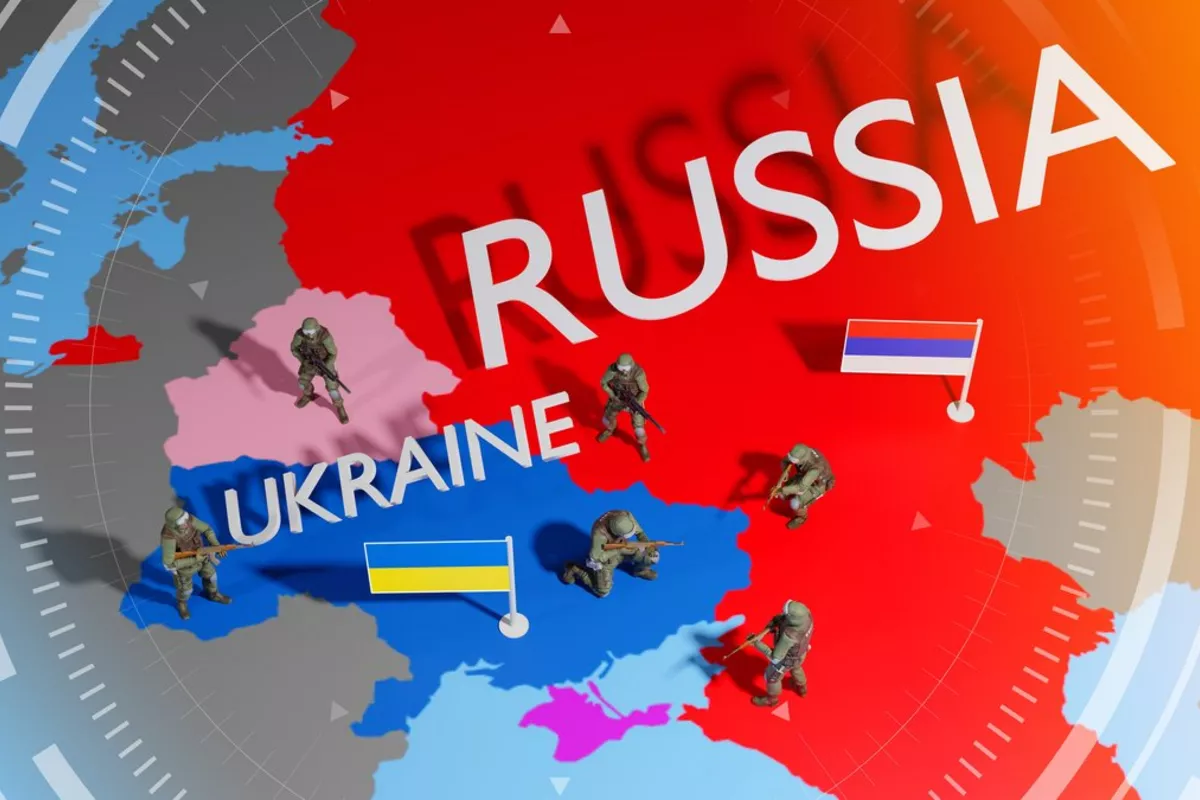
Professor of International Politics Carlo Masala’s book If Russia Wins is a stark warning framed as a political-fiction scenario. At its core lies a hypothetical Russian victory in the war against Ukraine and the far-reaching consequences such an outcome would have for Europe, NATO, and the entire global security architecture.
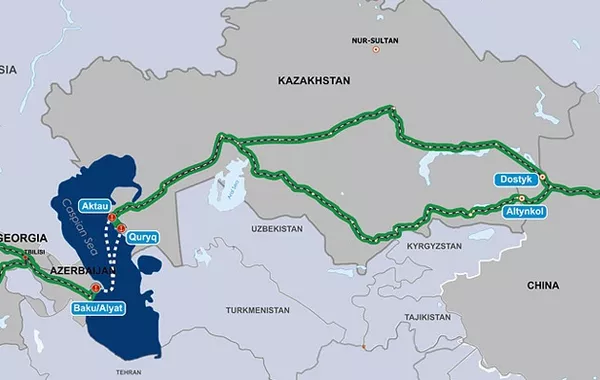
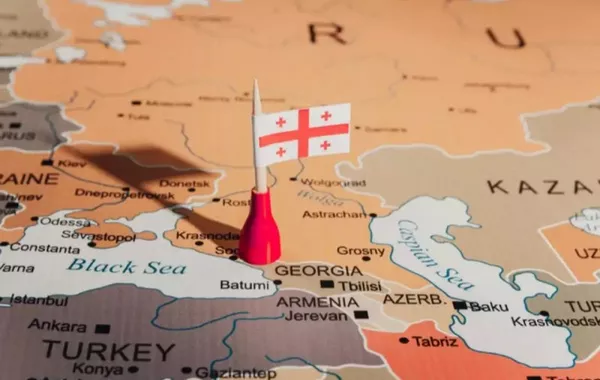
Masala does not engage in fortune-telling. He models a possible future: what happens if the collective West yields ground, if societies lose their will, and if political leaders lose their resolve. His narrative is not a prophecy but a call for reflection and action. The book’s scenario is built on data, expert assessments, military simulations, and an analysis of geopolitical trends. The central thesis is clear: if Russia wins, it will not stop at Ukraine. Estonia, Latvia, Lithuania, Moldova, and Georgia could be next.
Ukrainian Capitulation As The Start Of A Chain Reaction
The story opens with a dramatic turning point: the signing of the so-called “Geneva Peace.” Formally presented as a peace agreement brokered by China and the United States, it is in fact Ukraine’s capitulation. Under its terms, Ukraine loses more than 20 percent of its territory and commits to permanent neutrality, excluding any future NATO membership.
President Volodymyr Zelensky finds himself isolated. Under pressure from Western partners and facing total exhaustion of resources, Ukraine accepts conditions that effectively cement Russia’s victory. Western leaders express relief, declaring the conflict over, while Ukrainian society largely perceives the agreement as a betrayal. The territories occupied by Russia undergo harsh “Russification”: forced deportations, cultural assimilation, and severe restrictions on the Ukrainian language. Yet the world remains largely silent.
This moment becomes a signal that red lines can be crossed without serious consequences. Russia consolidates its political position, while the West demonstrates fatigue, loss of strategic focus, and internal division. Masala argues that from this point onward, the entire European security order built after the Cold War begins to unravel.
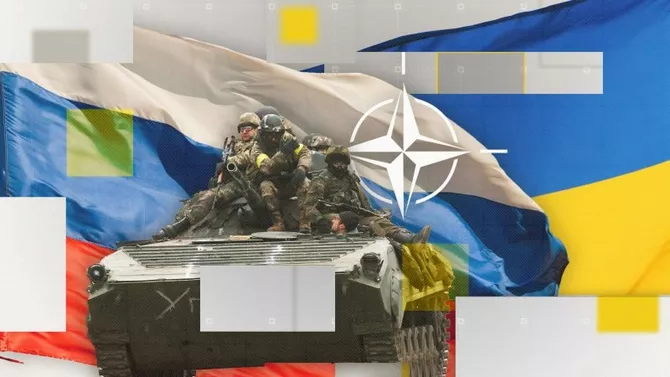
Photo: Sky News
The Invasion Of Narva: A Blow To The heart Of NATO
In Masala’s scenario, March 27, 2028, becomes a new symbol of the collapse of collective security. At 4 a.m., Russian forces cross the Estonian border and attack the city of Narva. Two mechanized brigades take part in the assault. The operation is supported by local Russian-speaking activists, armed in advance and mobilized through a disinformation campaign against the Estonian government.
Within hours, Narva falls. Russian armored vehicles roll through the streets, and the Russian tricolor is raised over the city hall. In a parallel operation, the island of Hiiumaa is seized, giving Russia a stronger military presence in the Baltic Sea and potential control over sea routes between Kaliningrad and St. Petersburg. All of this unfolds amid shock and disorganization within NATO.
Why NATO Is Paralyzed
Masala shows how, after Ukraine’s capitulation, NATO gradually loses its strategic vigilance. The United States shifts its primary focus toward China and the Indo-Pacific region. In Europe, populism grows, defense budgets shrink, and the illusion of a “new era of stability” takes hold.
Military exercises in the Baltic states are scaled back. Decisions made in 2022-2023 after Russia’s full-scale invasion of Ukraine are either reversed or left unfunded. Germany and France prioritize social spending over military modernization. NATO retains formidable theoretical power, but lacks real readiness for rapid troop deployment. British and American contingents stationed in Estonia are unable to respond effectively in the first hours of the crisis.
Masala emphasizes that political passivity, rather than technical weakness, becomes the main cause of failure. Fear of escalation, societal apathy, and the growing influence of pro-Russian parties corrode the alliance from within.
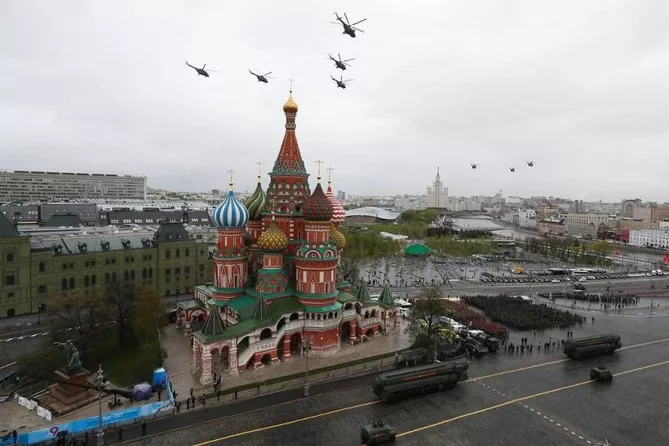
Photo: TASS
The Kremlin’s Strategy: Remilitarization à La Hitler
One of the book’s most striking scenes is a Kremlin meeting devoted to planning Russia’s next move after its victory in Ukraine. On the surface, Russia’s new leadership projects moderation and openness to dialogue. In reality, it continues to pursue the concept of the “Russian world.”
A group of FSB officials, General Staff officers, and Kremlin-linked businessmen develops a plan inspired by Adolf Hitler’s 1936 remilitarization of the Rhineland. The idea is to conduct a limited but highly symbolic military operation to test Western resolve. Narva is chosen as the ideal target: a small city, predominantly Russian-speaking, with contested perceptions of loyalty. If the West fails to respond, it will signal that further advances are possible.
The United States And Its Allies: Fear of World War III
Upon learning of the invasion, the U.S. president convenes an emergency meeting with national security advisers. The key question is how to respond. Military officials warn that direct confrontation with Russia could lead to a full-scale war. Politicians fear catastrophic consequences and propose limiting the response to diplomatic pressure and shows of force - naval movements, increased intelligence activity, and new sanctions.
This proves insufficient. Russia does not retreat. The lack of resolve only strengthens Moscow’s position. NATO fractures into camps: Eastern members demand decisive action, while Western countries urge caution. Masala underscores that political paralysis, not a shortage of military resources, becomes the decisive factor.
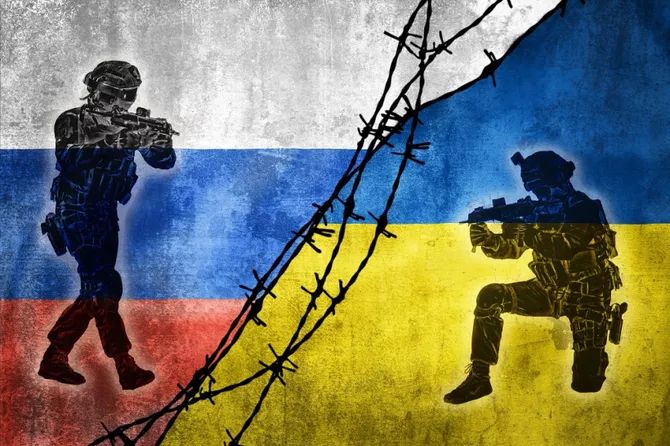
Photo credit: epthinktank.eu
Populism, Media, And Public Opinion
Masala also explores the societal dimension. Russia’s victory in Ukraine triggers a wave of populism across Europe. Elections bring to power parties that oppose sanctions, advocate restoring relations with Moscow, and reject involvement in conflicts. Media narratives increasingly speak of Russia’s “right to security,” while public opinion grows weary of war and of the costs associated with supporting refugees.
The slogan “peace at any price” gains popularity. This creates fertile ground for further Kremlin pressure. Masala argues that Western moral exhaustion is more dangerous than tanks.
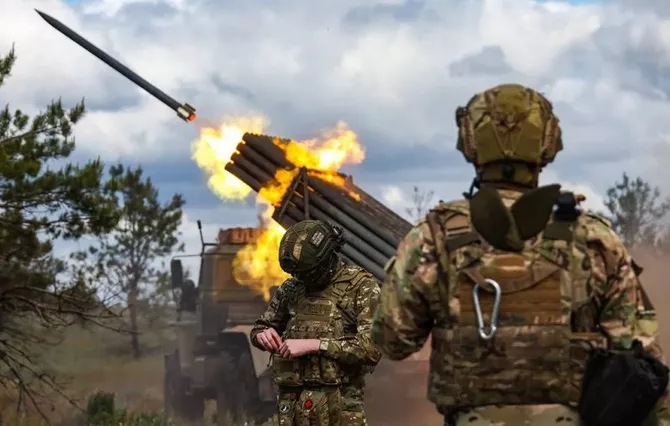
Photo: TASS
Next Targets: Moldova, Latvia, Lithuania
After the successful operation in Narva, Russia moves to the next phase. Armed activity intensifies in Transnistria, and “exercises” begin near Moldova’s borders. Latvia and Lithuania become the next targets, facing political unrest, cyberattacks, and border provocations - elements of a hybrid strategy aimed at destabilizing the region.
International organizations prove incapable of containing the aggression. The UN is paralyzed, the EU divided, and the OSCE confused. Russia employs a strategy of fragmentation, neutralizing countries and regions one by one.
Are We Back in 1938?
The book’s central question is whether history teaches us anything at all. Masala draws direct parallels between Russia’s actions and those of Nazi Germany in the 1930s - Munich, the Sudetenland, Austria. Passivity, fear, and the illusion that “it will somehow pass” are hauntingly familiar.
Masala argues that if the West continues to hide behind lofty rhetoric, a new global conflict will become increasingly likely. He does not claim war is inevitable, but insists that if we wish to avoid it, we must be prepared for it. Peace is not achieved by avoiding confrontation, but through deterrence, resolve, and a willingness to defend values.
Conclusion
If Russia Wins is an intellectual vaccine against naivety. It offers no easy solutions, but poses uncomfortable questions. What happens if democracy proves fragile? If alliances fracture? If tanks once again roll through European cities?
Masala writes: “Scenarios are not meant to be believed in, but to be prevented.” His book is an invitation to strategic thinking, to the political and moral maturation of societies and leaders, and to the recognition that history is still being written, and that its direction depends on us.
In this way, Masala paints a bleak yet persuasive picture of a world in which a Russian victory in Ukraine creates a real risk of further military interventions, beginning with Narva. The book is not a prophecy but a warning, intended to provoke debate, reflection, and action before it is too late.