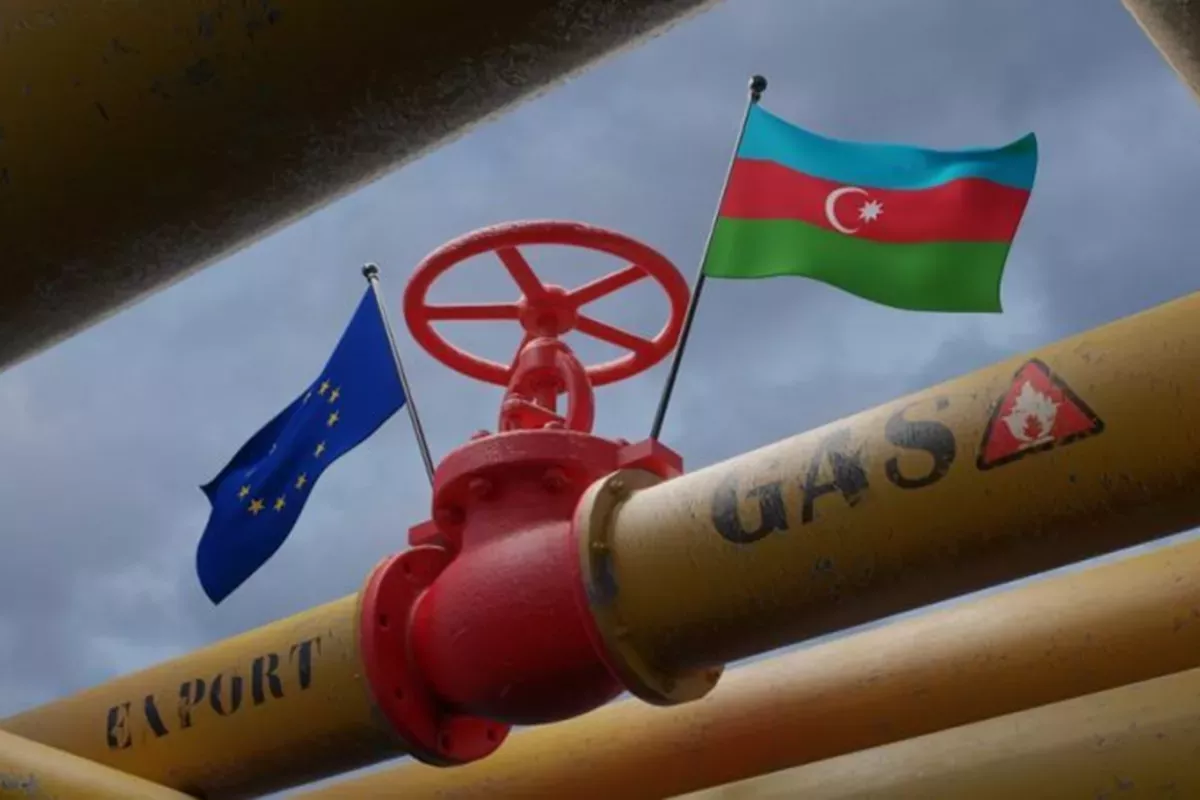
The European Union has once again declared a hardline stance: not a single molecule of Russian gas should reach European territory. The adoption of Regulation EU/261/2026, which obliges gas suppliers to prove that their exports are not of Russian origin, formalizes this ambition. On paper, the goal is noble. In practice, however, the regulation exposes not only the EU’s determination to sever energy ties with Moscow, but also a series of contradictions, selective memories, and politically convenient myths - with Azerbaijan increasingly finding itself as an undeserved target.
The new rules require exporters to present proof of non-Russian origin before gas even crosses the EU border, including at entry points such as the Strandzha-1 compressor station in Bulgaria. Gas entering via interconnections with Russia or Belarus, or through the TurkStream pipeline, is now automatically presumed Russian unless exporters can demonstrate otherwise.
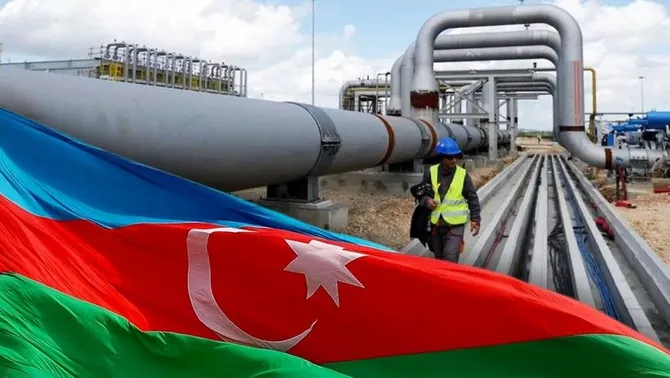
photo: AzerNews
This approach is not merely technical. It reflects an ideological shift toward a doctrine of absolute exclusion - a belief that Europe can entirely cleanse its energy system of Russian molecules. But energy flows do not operate according to political slogans. They follow infrastructure logic, geological realities, and physical constraints.
Nowhere is this disconnect clearer than in the recurring accusations that Azerbaijan might be re-exporting Russian gas to Europe under the guise of its own supplies. This narrative resurfaced prominently in 2024, when Politico alleged that growing Azerbaijani exports could conceal Russian volumes. Yet this claim had circulated long before and had already been debunked, including by EU officials themselves.
European Commission Spokesperson for Climate Action and Energy Tim McPhie stated unambiguously that there is no Russian gas in EU imports from Azerbaijan. The reasoning was straightforward: Azerbaijan exports far more gas to Europe than it imports from Russia, making any notion of large-scale re-export mathematically impossible. The EU, he stressed, imports only Caspian resources from Azerbaijan.
photo: TASS
Beyond volumes, the technical reality is even more decisive. Russian gas cannot physically enter the Southern Gas Corridor. To reach Europe, Azerbaijani gas flows from the Shah Deniz field to the Sangachal Terminal, then into the South Caucasus Pipeline, onward through the Trans-Anatolian Natural Gas Pipeline (TANAP), and finally into the Trans Adriatic Pipeline (TAP). There is no physical interconnection between this system and Russian export routes. No valves to turn. No hidden junctions. No alternative entry points.
In other words, even if someone wanted to mix Russian gas into the Southern Gas Corridor, they could not.
Yet the myth persists, largely because it serves a political function. It shifts attention away from Europe’s own prolonged dependence on Russian energy during the war in Ukraine and toward a convenient external suspect.
For nearly three years after the full-scale invasion began, Europe continued to receive substantial volumes of Russian pipeline gas, most of it transiting Ukraine. Only in January 2025 did Kyiv halt that transit. During this period, EU member states paid hundreds of billions of euros to Russia for fossil fuels. According to the Center for Research on Energy and Clean Air (CREA), by May 2025 Russia had earned more than €883 billion from fuel exports since the start of the war, including €209 billion from EU countries alone.
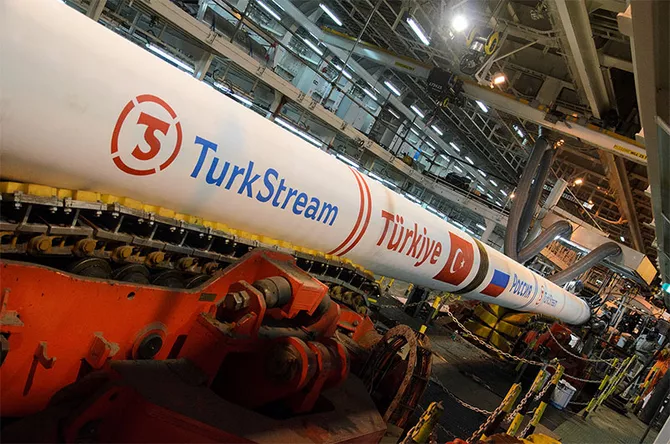
photo: Anadolu
The BBC has also reported that Russian crude oil continues to flow by pipeline to Hungary and Slovakia, and that Russian gas still reaches Europe via Türkiye, with volumes even increasing.
These facts complicate the moral clarity now projected by Brussels.
Before the Ukrainian transit route was shut down, EU officials reportedly explored ways to keep Russian gas flowing through alternative arrangements, including ideas under which European companies would purchase gas from Azerbaijan and inject it into Russian pipelines heading to Europe. The objective was continuity of supply, not moral purity.
Only after these options collapsed did the EU fully embrace the rhetoric of absolute prohibition.
None of this means that the EU is wrong to seek energy independence from Russia. Diversification is rational. Reducing strategic vulnerability is sensible. But rewriting recent history and projecting responsibility onto Azerbaijan is neither fair nor honest.
Azerbaijan has built its reputation as a reliable energy partner precisely because it delivers what it promises, through transparent infrastructure and long-term contracts. The Southern Gas Corridor was designed, financed, and constructed to bring Caspian gas - not Russian gas - to Europe. Its entire architecture reflects that purpose.
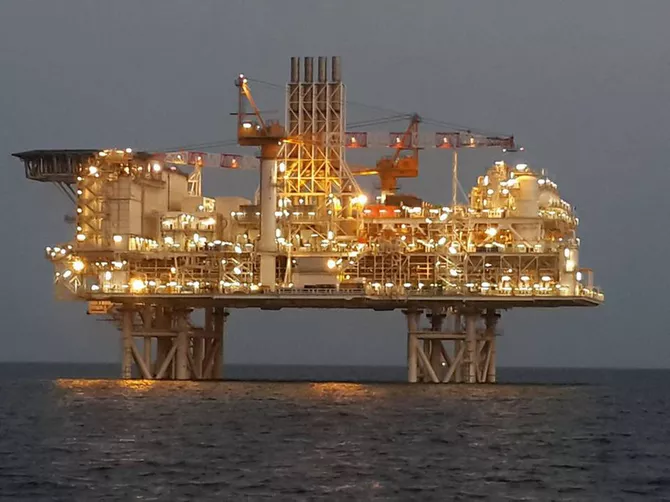
photo: caspianbarrel
Baku has no interest in jeopardizing this credibility by engaging in schemes that would be easily detectable through technical, documentary, and geochemical verification.
Azerbaijan will comply with the new EU regulation. It will provide certificates, origin documentation, technical data, and any additional proof required at border entry points. That is not in doubt.
What should be questioned is the broader narrative.
Europe’s sudden insistence on molecular-level purity comes after years of pragmatic compromise, silent tolerance, and record payments to Russia. Having benefited from those arrangements, Brussels now seeks to demonstrate moral resolve by imposing maximalist rules and by entertaining insinuations about partners who have consistently acted within transparent, physically verifiable systems.
Energy security cannot be built on selective memory and symbolic purity tests.
If the EU truly wants a sustainable post-Russian energy future, it must treat reliable partners as assets, not suspects. Azerbaijan is part of the solution, not the problem.